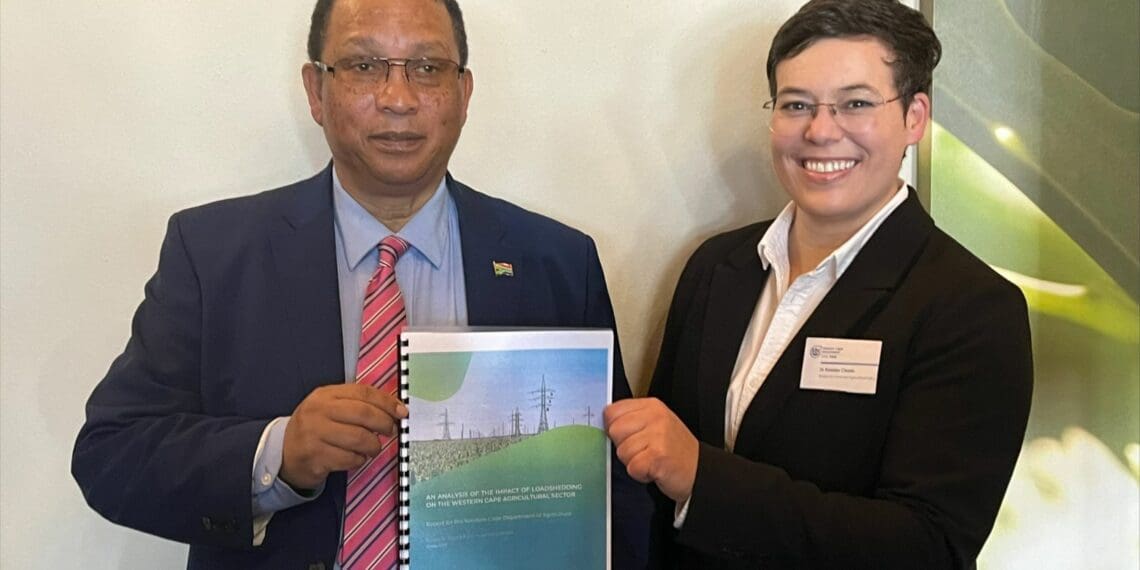
The onus is on all agricultural stakeholders to move mountains to lower the sector’s reliance on Eskom. This was the stern message shared by the Western Cape Minister of Agriculture during the opening of the Western Cape Department of Agriculture’s Energy Summit in Rawsonville.
Addressing farmers, producers, energy experts, officials and representatives from the financial industry, minister Dr Ivan Meyer called on those present to be part of the solution, as the impact of the energy crisis on the whole agriculture sector has been severe.
Highlighting a survey conducted by AgriSA on the impact of load shedding on the agriculture sector, Meyer said that 56% of farmers experienced a loss of income due to load shedding, while 75% of farmers had to change their production practices to cope with the energy crisis.
A total of 39% of farmers have had to reduce their crop yields, and 31% have reduced the number of livestock they keep due to the constant power cuts.
“The impact of the energy crisis is leading to a potential food crisis and a rise in food prices. We have no alternative but to invest in alternative energy sources like solar and wind power to reduce our dependence on traditional energy sources,” added Meyer.
Summit provides solutions
The Western Cape government, he said, is determined to create an enabling environment that creates the conditions for:
- Financial support to farmers from the financial sector (including tax relief);
- Job creation in the agriculture and agri-processing sectors;
- Encouraging energy efficiency and conservation practices in farming operations to reduce energy consumption and costs; and
- Greater collaboration between the government and private sector stakeholders to develop comprehensive and sustainable solutions to the energy crisis.
Alternative solutions include solar, and wind energy, gas to power, green hydrogen hydropower, small-scale embedded generation and containerised PV systems and biogas.
“The Western Cape has an appetite for innovation and has shown its ability to face all manner of challenges.
“I am therefore optimistic that the two-day session will provide solutions that will not only address the requirements of the sector but also protect the economy and jobs in the agriculture sector,” Meyer said.
READ NEXT: Crop farmers, keep an eye on nasty nematodes
Sign up for Farmer’s Inside Track: Join our exclusive platform for new entrants into farming and agri-business, with newsletters and podcasts.