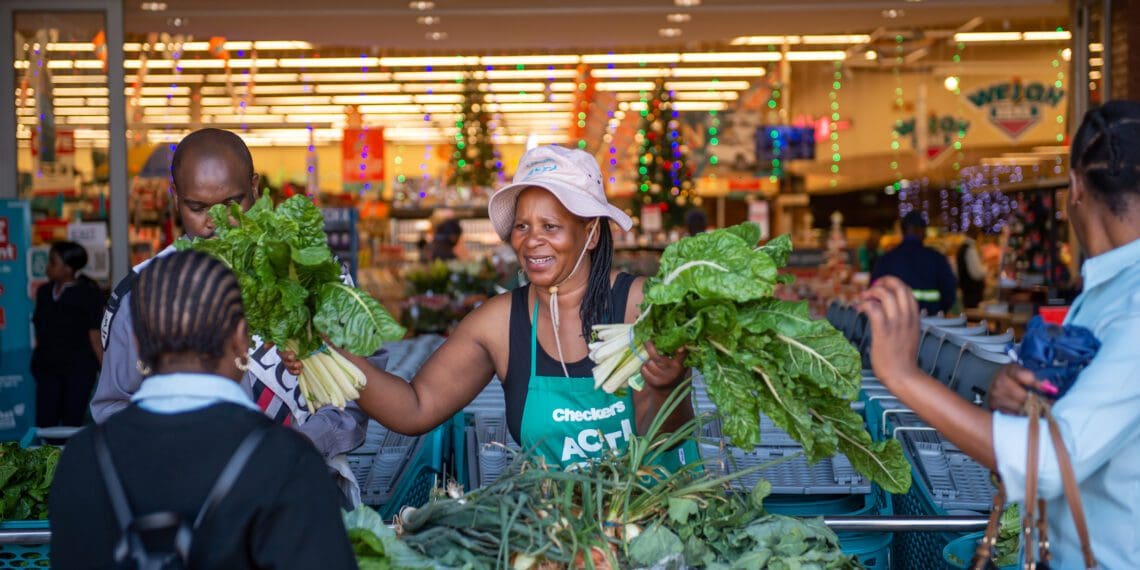
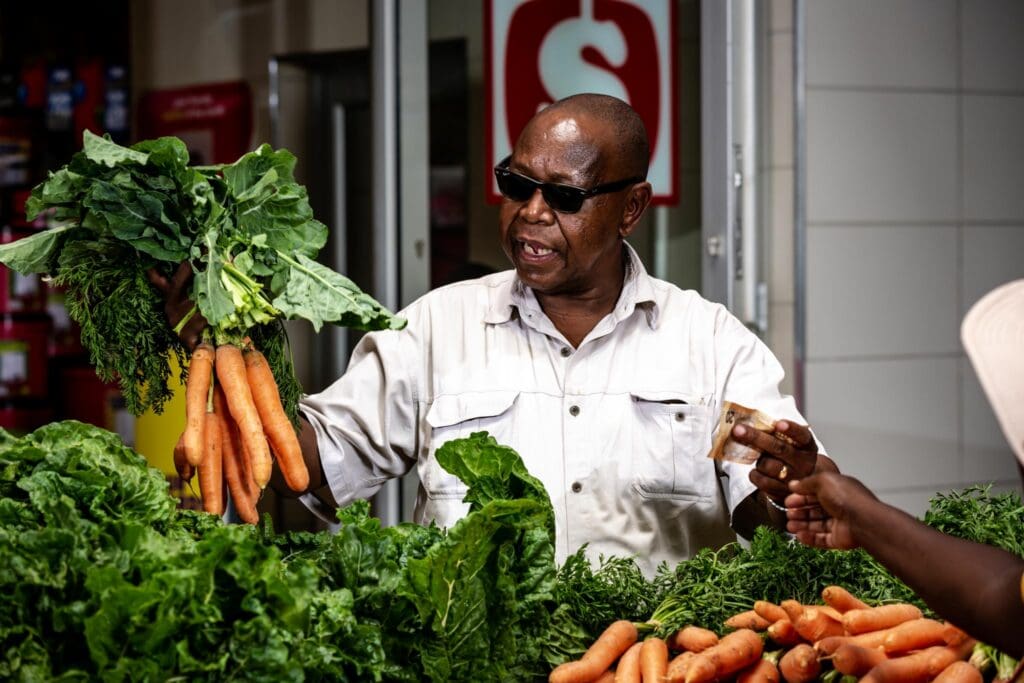
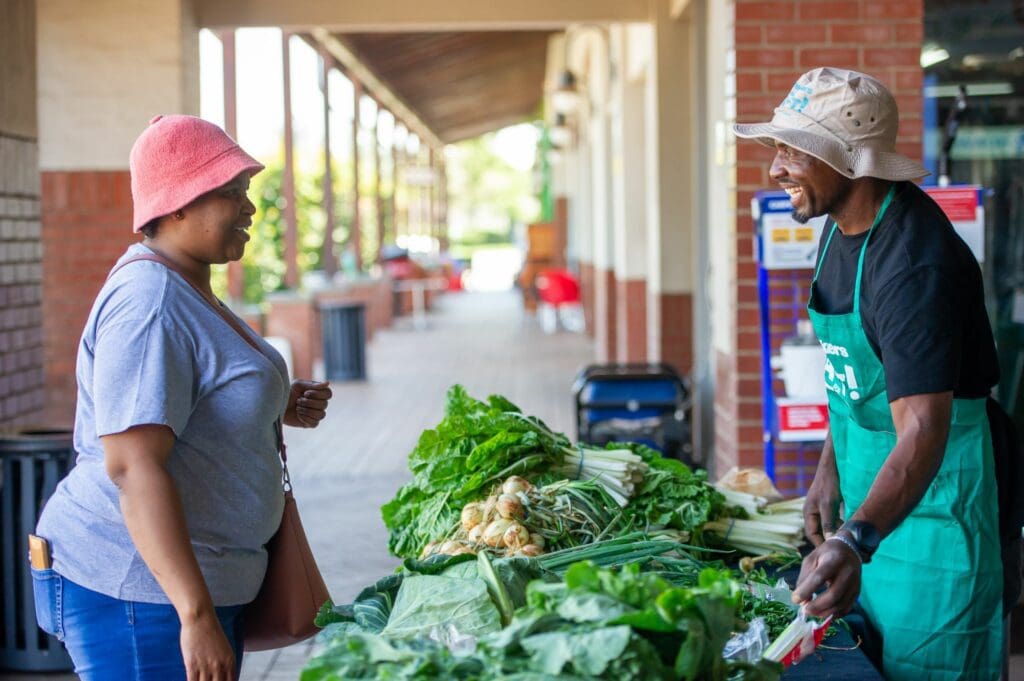
Thirty local community food gardens kicked off December with a bang when they sold their fresh and organically grown produce at Market Day, a Shoprite Group initiative.
To help vulnerable communities build resilience and alleviate hunger, the Shoprite Group supports more than 180 community food gardens and 3 500 home gardens with permaculture training and gardening resources, and gives them a platform to sell their produce to a wider customer base.
Market Day was first introduced in 2017 to further extend the retailer’s support of the many community food gardens it partners with to provide the gardens with a platform to sell their fresh produce.
Power to community gardens
Patricia Piyani from Wathint’ Abafazi in Gqeberha, said they enjoyed the Market Day opportunity at their local Shoprite store.
“It was a bit scary selling our fresh produce at Shoprite, but it was profitable for us and we’re extremely grateful to Shoprite for supporting local gardens and giving us such opportunities.”
Zimasa Mlengana from Farm to Folk in Vanderbijlpark, added, “We’re very proud that our garden is being exposed to the public. The experience of interacting directly with customers also gives us valuable insights such as how they like to purchase fresh produce and what produce they would like to purchase in the future.”
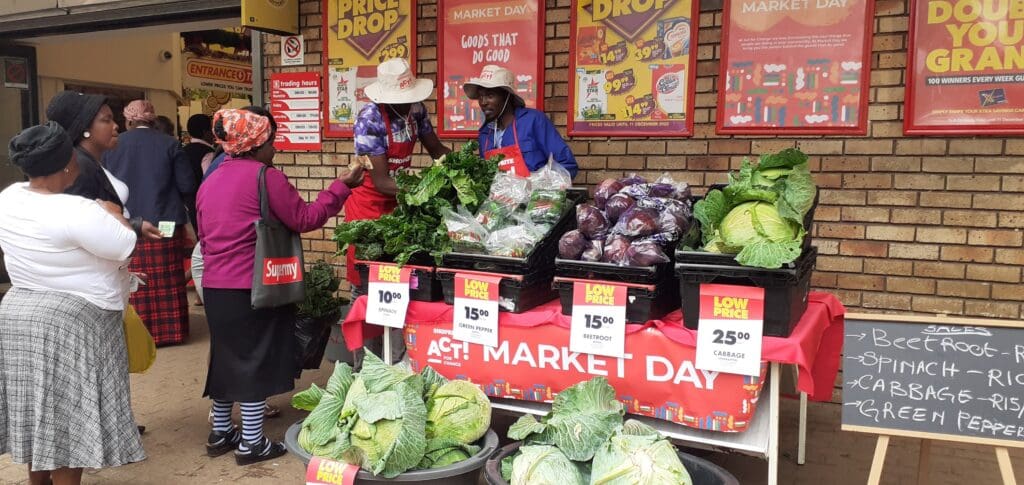
Meanwhile, Nicky Thipe from the Nthabiseng Skills Training Centre for the Disabled in Rustenburg, said, “Market Day opened our minds to other opportunities out there to generate an income and the money made will go towards helping the children at our centre.”
Battle against food security
Hunger relief and food security are at the core of the Shoprite Group’s corporate social investment programmes, they said in a press statement.
The gardens collectively produced a harvest of more than 31 500kg, providing almost 100 000 meals.
Other support includes 18 months of hands-on permaculture training for garden members, as well as water-supply infrastructure, shade-netting and garden resources – including gardening tools, seeds, seedlings and compost.

ALSO READ: Eco-projects prime learners for climate crisis
Get Stories of Change: Inspirational stories from the people that feed Mzansi.