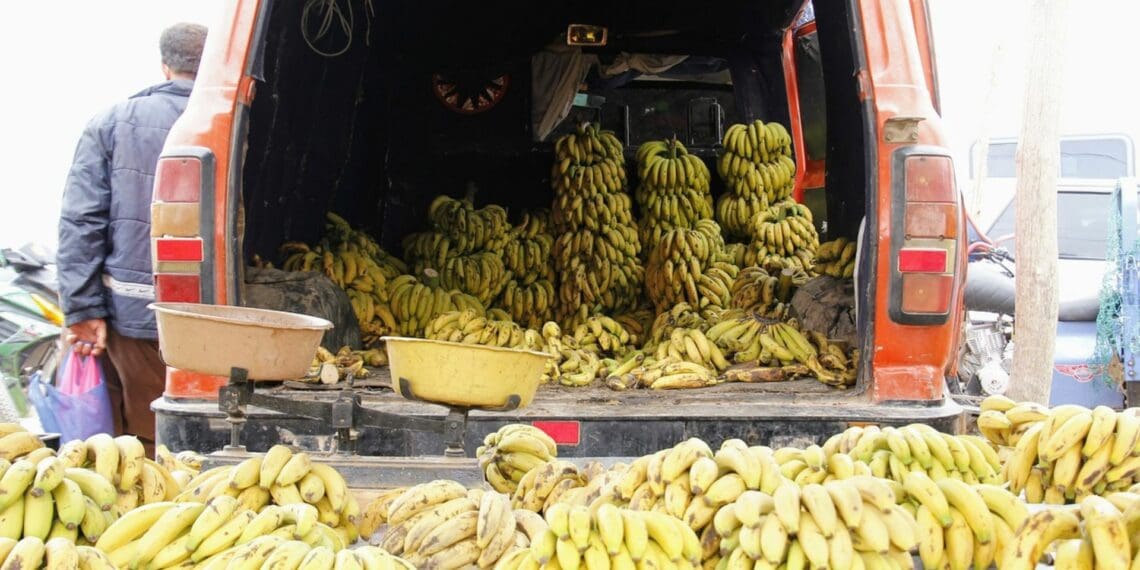
The food industry in many low- and middle-income countries is dominated by the informal sector. Numerous micro and small businesses, which are not legally registered and mostly compete on the basis of price, handle much of the food that people eat. This includes meat, fish and fresh fruit and vegetables. Informal businesses also dominate when it comes to out-of-home eating but if there’s one thing lacking, it’s food safety.
Fresh foods are important vectors of food-borne diseases, chemical contaminants and other hazards. But in the informal sector, there are widespread deficiencies in food safety awareness and in the way food is stored, prepared and handled. Hygiene is not always good at places where vendors work. Consumers are mainly focused on price and have limited ability to protect themselves from unsafe foods.
Food safety remains a huge challenge
The informal sector, therefore, poses great challenges to food safety.
We recently published a report that looked at food safety risks in the informal sector of developing countries. Our report suggests that food sourced through informal markets accounts for 80% of cases of food-borne disease in low-income countries. In lower middle-income countries, the proportion is 65%.
ALSO READ: ICYMI: Focus on food safety risks in informal sector
There has been growing attention on food safety in low- and middle-income countries by governments and international development agencies. Our report shows, however, there’s a big policy blind spot in this area.
Most food safety initiatives focus on medium or larger food manufacturers, elements of the so-called “modern retail”, food exports and commercial farms or better-organised smallholder producers. Also, most attention is given to upgrading national food safety regulations.
The informal sector is typically given minimal attention. There are exceptions. But most efforts to upgrade the food handling practices of informal food vendors have had only short-lived impacts and are not scalable.
The need for traditional food markets to be upgraded and for the capacity of towns and cities to regulate informal food businesses are glaring omissions.
We conclude in our report that tackling the food safety problem in low- and middle-income countries requires a fundamental shift in thinking and practice. Actions towards improving food safety must be implemented by local governments and municipalities where informal markets are based. There must be synergies with other goals and interventions, for example, the provision of safe water and improved sanitation. And government agencies need to balance incentives and deterrents better when trying to get informal food businesses to use better food safety practices.
Formalisation takes time
The continued dominance of the informal sector in low- and middle-income countries might be considered a transitional issue that will naturally go away with time. That is, food will become safer as economic development proceeds, food systems change, and governments become better at food safety regulation.
Certainly, we have seen supermarkets and other “modern” forms of food distribution emerge in the major cities of these countries. However, food system formalisation takes time. In poorer countries, in particular, informal markets and the traditional operators that work there will continue to dominate for many years. Further, diet and demographic changes in these countries are increasing consumer exposure to food safety hazards, especially as they eat more fresh foods.
On top of this, while significant resources have gone into strengthening national food safety agencies in some countries, the impact on the informal sector has been minimal. Central government agencies typically have little regular contact with the informal sector and even less influence over it.
The informal sector is often an afterthought when low- and middle-income countries look to upgrade their food safety controls. Worse, it is seen as a legacy of the past, not fitting with the national vision of a modern, competitive and resilient food system.
Government officials ignore many informal food businesses. Or worse, they do what they can to make them go away, for example by disrupting their commerce or imposing draconian fines.
ALSO READ: Zambian farming hero takes food safety to heart
Tailored solutions
Much of the food safety problem is a natural consequence of the limited capacity and weak incentives of informal food businesses. Sustainable improvements are needed to address both issues simultaneously.
Local circumstances, including market and administrative structures, and the state of physical infrastructure, vary greatly. There are also variations in the risk profile of different types of informal businesses, be they market sellers, micro food processors or street food vendors. A “one size fits all” approach won’t do. Solutions need to be customised to local conditions and to the targeted players.
Three fundamental shifts are needed to achieve greater and more sustained progress towards safer food in low- and middle-income countries.
The epicentre of attention needs to shift from central to local governments. It is municipal governments that interact with informal food businesses and influence the conditions in which they operate.
ALSO READ: Pioneer Foods: Mzansi concerned about food safety
These include access to clean water and sanitation and the physical condition of markets. Municipalities lay down most of the controls on the activities of local food businesses. Central governments need to empower local governments to act, giving them the legal authority and resources they need, and laying down frameworks for local action and for sharing experiences.
The focus should be on multisectoral interventions that could combine food safety with attention to animal health, environmental health, nutrition, safe water and sanitation.
Regulations need a reset
Stand-alone food safety projects and programmes may not be the best way to mobilise and use resources in the informal sector.
Regulation of the informal sector by government agencies should be reset. It should aim to enable gradual and sustained improvements in food safety practices. Government officials should mainly provide advice and support services, and be rewarded on the basis of incremental food safety improvements. Regulatory enforcement will still be needed but should be the last resort.
This article was first published on The Conversation and written by Spencer Henson and Steven Jaffee.
Sign up for Mzansi Today: Your daily take on the news and happenings from the agriculture value chain.