Wednesday, October 14, 2026
SUBSCRIBE
22 GLOBAL MEDIA AWARDS
Food For Mzansi
  • News
  • Changemakers
  • Lifestyle
  • Farmer’s Inside Track
  • Food for Thought
No Result
View All Result
  • News
  • Changemakers
  • Lifestyle
  • Farmer’s Inside Track
  • Food for Thought
No Result
View All Result
Food For Mzansi
No Result
View All Result
in News

Farmers urged to tap into recycled human waste as fertiliser

Facing soaring input costs and record-low rainfall, South African farmers are being urged to embrace the sanitation economy. Deputy minister Jack Bloom highlighted how recycling treated human waste into low-cost organic fertiliser and irrigation water can secure essential crop nutrients

by Lisakanya Venna
14th October 2026
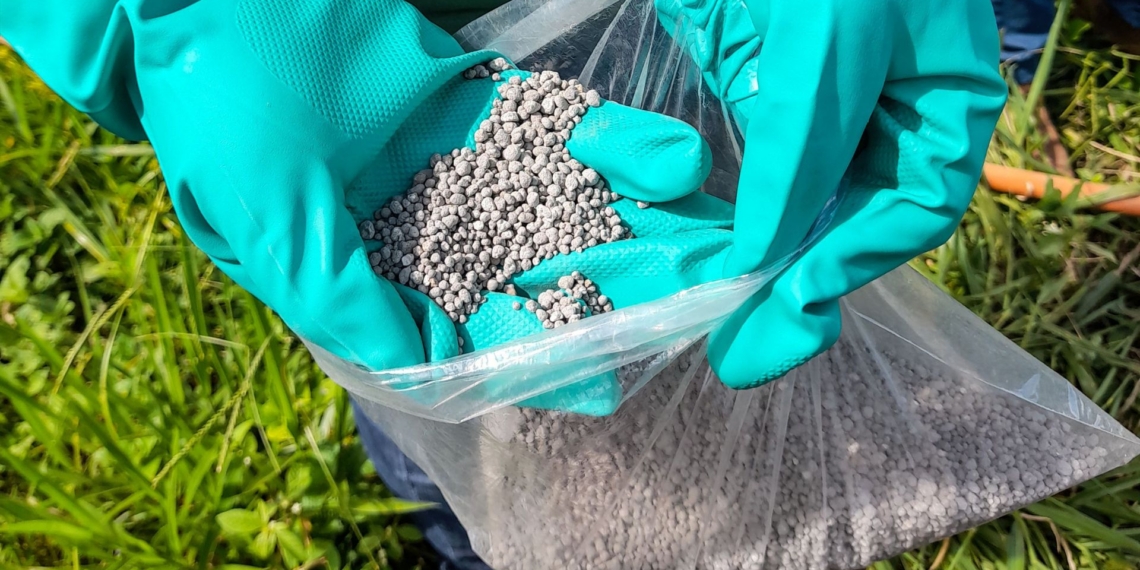
South African farmers are urged to join the sanitation economy, turning treated human waste into low-cost fertiliser and irrigation water to fight rising input costs. Photo: Pexels

South African farmers are urged to join the sanitation economy, turning treated human waste into low-cost fertiliser and irrigation water to fight rising input costs. Photo: Pexels

Share on FacebookShare on TwitterShare on WhatsApp

South African farmers are being urged to adopt the sanitation economy, recycling treated human waste into low-cost organic fertiliser and irrigation water to offset soaring input costs, improve soil health, and boost local enterprise.

Addressing grain producers and agricultural industry leaders in Bredasdorp in the Western Cape, deputy minister of water and sanitation Dr Jack Bloom highlighted the dual challenge of declining regional rainfall and skyrocketing farming expenses.

With Swartland rainfall down by 79% on average, wheat planting areas at a 97-year low, and Middle Eastern ammonia prices doubling within a single year, Bloom presented the safe recycling of human waste as a viable, locally produced solution to secure affordable nutrients and water.

“Right now, we treat what comes out of those toilets purely as a cost. I want us to turn that cost chain into a value chain: collect, treat, recover, manufacture, sell, use.

“That’s the sanitation economy. And agriculture sits right at the centre of it, because you are the biggest potential customer for what we recover,” Bloom said.


Related stories
  • New initiative aims to tackle fertiliser costs via wastewater recycling
  • Precision irrigation drives Zimbabwe’s blueberry boom
  • How to choose the right drip irrigation system for seasonal crops
  • How irrigation automation benefits farms of all sizes

Unlocking nutrients and alternative irrigation sources

Addressing input constraints, Bloom explained that safely treated human waste yields nitrogen, phosphorus, and potassium –the primary components found in commercial synthetic fertilisers. Because these products are manufactured domestically, they provide a natural buffer against severe global price fluctuations and energy shocks.

Beyond dry fertiliser, wastewater treatment offers a secondary benefit: clean effluent for crop irrigation. Bloom highlighted decentralised wastewater treatment systems, a chemical-free process using anaerobic tanks, microorganism filters, and reed bed wetlands to process waste.

South Africa currently faces a growing volume of municipal sludge, producing nearly 640 000 dry tonnes annually from large municipal wastewater treatment plants and an additional 378 000 to 567 000 dry tonnes from smaller plants and pit toilets.

“That’s not a stockpile. That’s a fertiliser factory’s worth of raw material, going into the ground instead of onto your fields every single year,” Bloom said.

Navigating technical realities and long-term soil health

As the agricultural sector explored the potential of the sanitation economy, environmental experts highlighted the importance of rigorous technical standards, site selection, and quality management when applying recycled effluent and sludge.

Environmental advisor Dr Anthony Turton noted that utilising wastewater effluent had well-established historical foundations in South Africa.

“The idea sounds good, and there is a lot of evidence that effluent was used to irrigate pastures and grow instant lawn.”

Turton referenced the Percy Stewart plant as an early example; however, he pointed out that past operational models also provided important lessons regarding long-term runoff and soil management.

“Another example is the old disposal site of AECI at Modderfontein. We have since learnt that it is the Modderfontein disposal site that is now a source of nitrates and phosphates for the Hartbeestring Dam, so it is not a good idea. We see the same at the Rooiwal WWTW, where a farmer adjacent to the plant is instituting legal action against the state because of the pollution of his land by sewage,” he said.

Turton outlined several key technical considerations that needed to be managed to safeguard agricultural soils.

“There are many risks. The major one is heavy metal contamination, mostly from eroding copper and lead-treated pipes. These are way above safe levels and eventually destroy the soil. The other risk is salinisation because the effluent has salts in it.

“The removal of salt is technically possible, but the disposal of the brine is a persistent problem not yet solved. There is technology at the Tweefontein Plant near Ogies that uses next-generation technology to concentrate the brine, but it has not resolved the disposal problem. This kills the business case,” he said.

READ NEXT: Rabies alert: Critical steps to protect your farm and livestock

Sign-up for the latest agricultural news delivered straight to your inbox every day with Mzansi Today!

Lisakanya Venna

Lisakanya Venna is a junior journalist and content coordinator with varied multimedia experience. As a CPUT journalism alumni, she finds fulfilment in sharing impactful stories and serving as a reliable source of information.

Tags: Commercialising farmerDepartment of water and sanitationFertiliserInform meWaste management
Protect your spinach crops from extreme heat this summer
News

Protect your spinach crops from extreme heat this summer

by Lisakanya Venna
12th October 2026

As extreme heat and drying weather hit South Africa, local spinach producers face severe crop wilting and disease risks. Farmers...

Read moreDetails
Land reform farm blossoms under Lipali’s leadership

This week’s agri events: 12 – 16 October

12th October 2026
Angelo Marman of Abitz Farming, Western Cape New Entrant to Commercial Farming of the Year, with Daneel Rossouw, head of sales for Agriculture at Nedbank Business and Commercial Banking, at Agricultural Writers SA’s !Xhariep regional awards. Photo: Supplied/Lucentlands

From five fish to a commercial farm: Meet the AWSA !Xhariep winners

11th October 2026
For every cup of Booberries sold, Checkers and BerryWorld will each donate R1 to PinkDrive to support breast-health education and screening services. Photo: Supplied/Food For Mzansi

Booberries campaign brings breast health to Checkers shelves

11th October 2026
Farmers face critical quarantine and vaccine shortages amid the ongoing foot-and-mouth disease crisis. Photo: Supplied/Food For Mzansi

Crucial management habits every livestock farmer must practice

10th October 2026

Hope restored as Land Bank secures R500m to end funding freeze

Palesa proves small-scale farming can feed communities, retailers

Crucial management habits every livestock farmer must practice

Energy shock, weather risks drive operational costs for SA farmers

Young Lady Grey farmer diversifies from broilers to shisanyama

Join Food For Mzansi's WhatsApp channel for the latest updates!

JOIN NOW!

THE NEW FACE OF SOUTH AFRICAN AGRICULTURE

With 21 global awards in the first six years of its existence, Food For Mzansi is much more than an agriculture publication. It is a movement, unashamedly saluting the unsung heroes of South African agriculture. We believe in the power of agriculture to promote nation building and social cohesion by telling stories that are often overlooked by broader society.

Farmers urged to tap into recycled human waste as fertiliser

Ramaphosa: Title deeds and blended finance key to farming growth

What farmers should know about diarrhoea in lambs and kids

Agricultural Writers SA North honours top farmers, stakeholders

Why Free State smallholder dairy farmers are quitting the industry

SA agricultural trusts reach R2.76 billion in growth

  • Awards & Global Impact
  • Our Story
  • Contact Us
  • Cookie Policy
  • Privacy Policy
  • Copyright

Contact us
Office: +27 21 879 1824
News: info@foodformzansi.co.za
Advertising: sales@foodformzansi.co.za

Contact us
Office: +27 21 879 1824
News: info@foodformzansi.co.za
Advertising: sales@foodformzansi.co.za

  • Awards & Global Impact
  • Our Story
  • Contact Us
  • Cookie Policy
  • Privacy Policy
  • Copyright

Chat Options

I'm Lerato, your AI assistant!
No Result
View All Result
  • News
  • Changemakers
  • Lifestyle
  • Farmer’s Inside Track
  • Food for Thought

Copyright © 2024 Food for Mzansi