 “Farming was part of a long list of chores we had to do growing up. We had no idea that what started out as a few ordinary, mundane tasks would later result in us owning a successful farm with a diverse produce offering,” Piet Erasmus says.
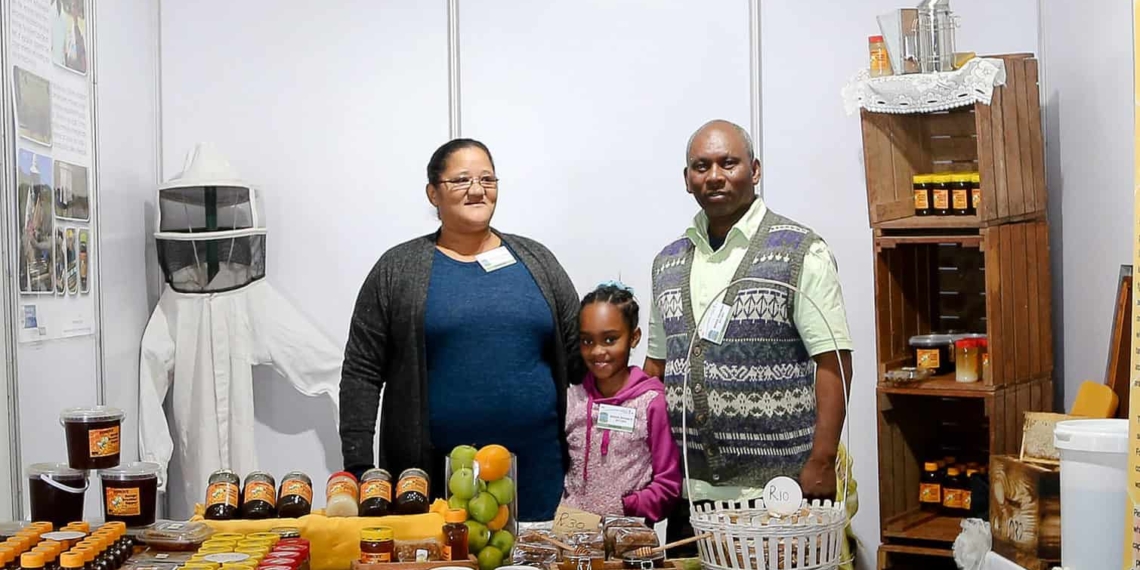
Piet and his wife Christien Erasmus farms with bees on a one-hectare piece of land that they rent from Piet’s employer in Herbertsdale, a small community edged along the Langeberg Mountains in the Southern Cape near Mossel Bay.
“When my husband and I got married, we knew that we wanted to farm, just like our parents did,” Christien explains.
ALSO READ: Weird and wonderful: The how and why of a beekeeper’s job
The self-driven farmers felt a compelling urge to farm and purchased 25 laying hens (kept primarily for laying eggs) and 50 broiler chickens (chickens that are bred and raised specifically for meat production) in 2004. It was a journey the couple felt ready to embark on and they were quite chuffed when they made their first sale.
By the end of 2005 the couple had 200 laying and 200 broiler chickens in their shed and their farming future seemed promising.
A surprise visit from the Department of Agriculture, Forestry and Fisheries (DAFF) in 2007 resulted in the department gifting them with three chicken sheds.
“We were completely shocked by their visit. We didn’t even know that we could get assistance from the department of agriculture,” Piet explains.
When the sheds finally arrived in 2009, a bird flu outbreak forced Piet and Christien to put down more than 200 chickens. “I was ready to give up on farming, but my husband refused to and instead went out to seek advice from other farmers,” she says.

Act like a farmer, think like a businessman
In an attempt to save their farm, Piet planted vegetable seedlings which they then later sold to people in the community. However, this was never going to be enough to sustain their business, and the farming couple knew it.
He explains that in 2010 God smiled upon them and an opportunity to save the business arose.
“A swarm of bees infested my employer’s house and a bee farmer was called in to remove the bees. Fortunately for me, the farmer could not afford to look after the bees and offered to sell them to me at a discounted price.”
“Besige Erasmus Bytjies” (Busy Little Erasmus Bees) was birthed and was the lifeline Piet and Christien had been looking for. “I was excited about our new venture, but I don’t think the bees liked us very much. We were stung almost every day,” Piet says, amused.
Not lucky, but blessed
Erasmus and his wife have now been farming for 17 years and throughout their journey in agriculture they have thoroughly enjoyed the support of DAFF.

The farm received another visit from the department and the officials were pleased to see that the farm pursued growth in categories outside their core business which is bee farming. “Shortly after his visit, DAFF gave us three beehives and two bee suits, veils and boots,” Piet says.
Of course, that was not the end. In 2015 the department paid them another visit, only this time it was to gift them 150 beehives.
ALSO READ: Jozi buzzes with Urban Beekeeper, Themba Mntambo.
Piet mentions that they have experienced many challenges that have disrupted their growth.
Baboons and honey badgers are frequent visitors on the farm and cause damage to the beehives. Another challenge was the drought and bad weather conditions which affected their bee farming. In an attempt to try and counter this, Piet fed the bees with a sugary liquid, which kept them alive.
Piet understands the value of knowledge and frequently asks for advice from experienced farmers. “When my wife and I started farming, we didn’t know a lot. But as we’ve journeyed through the agriculture industry, we have gained a lot of information.”
Busy Erasmus Bees have been frequent features at the Prince Albert Festival, South African Cheese Festival and George Town Festival.
Their honey sales at this year’s Cheese Festival were not that good, but Erasmus explains that they’ve identified the problem and look forward to next year’s festival. Fynbos will be blooming soon, and this means that “Besige Erasmus Bytjies” will be bottling beautiful golden liquid soon.
The farming duo says they want to grow their business and diversify their offering even further. “When we leave this world, we want to leave our children with a healthy farm,” explains the buzzing bee farmers.
MUST-READ: Queen bee set on giving beekeeping a young and vibrant face.