Saturday, October 24, 2026
SUBSCRIBE
22 GLOBAL MEDIA AWARDS
Food For Mzansi
  • News
  • Changemakers
  • Lifestyle
  • Farmer’s Inside Track
  • Food for Thought
No Result
View All Result
  • News
  • Changemakers
  • Lifestyle
  • Farmer’s Inside Track
  • Food for Thought
No Result
View All Result
Food For Mzansi
No Result
View All Result
in Between the Headlines, Economic Growth, Food for Thought, Imports And Exports, Lifestyle

Japan gives Mzansi’s Rooibos their nod of approval

by Duncan Masiwa
16th July 2019
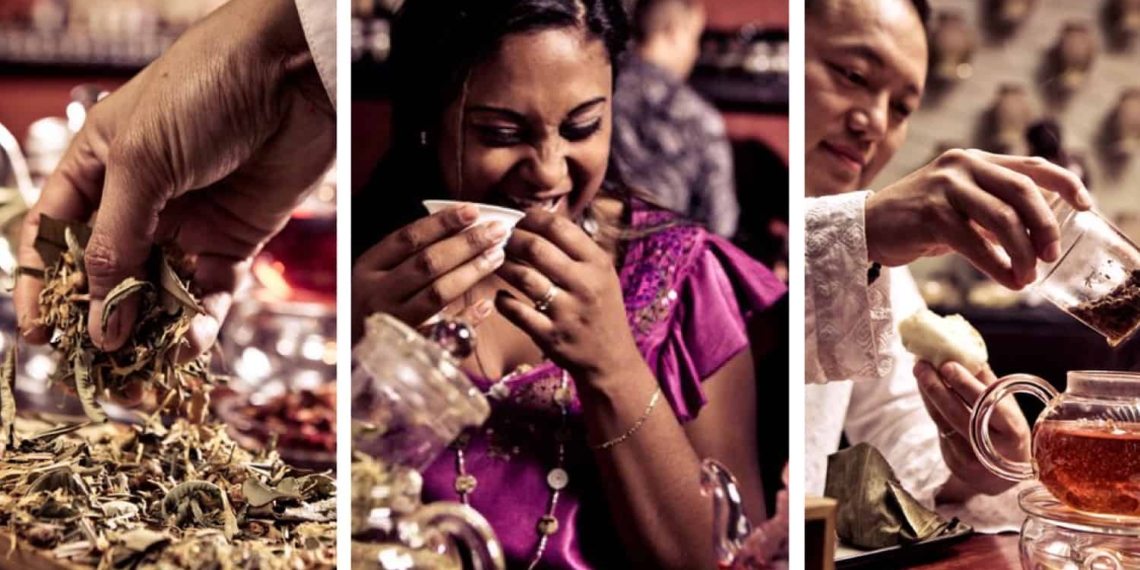
South Africa's indigenous Rooibos tea is becoming a big deal in Japan with more than 2 000 tons being shipped to its shores last year. Photo: Nigiro Tea Merchants.

South Africa's indigenous Rooibos tea is becoming a big deal in Japan with more than 2 000 tons being shipped to its shores last year. Photo: Nigiro Tea Merchants.

Share on FacebookShare on TwitterShare on WhatsApp

It is an understatement to say that Japanese folk love to drink tea. For them, it is more than just a hot drink. Mingwei Tsai, co-founder of Nigiro Tea Merchants in Cape Town says culturally the tea is ingested to acquire its energy. So, when the tea drinking nation gives Mzansi’s rooibos tea the Japanese nod, you have to sit up and take notice.

According to Martin Bergh, Chairperson of the SA Rooibos Council (SARC), 2 000 tons of rooibos was shipped to Japan last year. This was the biggest consignment since its introduction to the Japanese market 35 years ago.

“Breaking into Japan’s tea market wasn’t easy. The strong emphasis on the tea’s health properties also limited its appeal to the greater consumer market,” says Bergh.

Managing director of Rooibos Ltd in Japan, Clinton Gass explains that the unconventional business practices (of the savvy marketers they assigned to market rooibos in Japan and conduct research, also undermined the credibility of the product and made it hard to sell at the time.

People in Japan prefer drinking Rooibos tea unflavoured, without milk or sugar. Photo: Nigiro Tea Merchants.

In the early days the Japanese marketers packaged the tea in a very clinical way in an effort to push the tea’s medicinal properties. Some of these Japanese marketers made claims which included that it’s an old Japanese secret to long life. Such claims of course couldn’t be proved.

“However, by setting up a business in Japan to distribute and market rooibos we were able to change the positioning of rooibos,” Gass says.

Gass and his team then tested a different strategy by selling the tea to the Japanese market as speciality tea. The tea purists in the Japanese market loved it and exports increased significantly.

People in Japan prefer drinking Rooibos tea unflavoured, without milk or sugar. “Rooibos is mostly prepared as a hot, or cold, water infusion in large pots or servers, rather than in single servings, Bergh says. Hence they make larger teabags of 3g or more available in Japan.

It may not be first and foremost for Japanese tea drinkers, but rooibos does have significant health benefits. According to Food For Mzansi’s resident nutritionist, Andrea Du Plessis, rooibos tea may help reduce cholesterol levels, lower the effect of the body’s stress response, revive damaged liver tissue, and soothe irritated skin.


Duncan Masiwa

DUNCAN MASIWA is the assistant editor at Food For Mzansi, South Africa’s leading digital agriculture news publication. He cut his teeth in community newspapers, writing columns for Helderberg Gazette, a Media24 publication. Today, he leads a team of journalists who strive to set the agricultural news agenda. Besides being a journalist, he is also a television presenter, podcaster and performance poet who has shared stages with leading gospel artists.

Tags: Andrea Du PlessisChinaExportsJapanRooibosSouth AfricaSouth African Rooibos Council
Advertorial

Why simple farm records beat complex systems

by Lisakanya Venna
22nd October 2026

Unlocking farm profitability doesn’t require high-cost digital platforms or complex systems. Stefan Corbett, data analytics specialist at Agritistics, explains how...

Read moreDetails
Mogogelo farmers receive packhouse and cold storage facilities

Mogogelo farmers receive packhouse and cold storage facilities

22nd October 2026
Godongwana unveils fuel relief and R10 billion El Niño buffer

Godongwana unveils fuel relief and R10 billion El Niño buffer

21st October 2026

Smart irrigation: Precision tools boost crop yields while cutting costs

21st October 2026
Record farm exports overshadowed by growing drought disaster

By-laws vs. livelihoods: Barriers facing WC smallholder farmers

21st October 2026

Limpopo teen farmer turns dream into growing poultry business

Karoo sheep tallow finds new purpose in Mzansi beauty brand

Agda conference: Why giving farmers land isn’t enough

By-laws vs. livelihoods: Barriers facing WC smallholder farmers

FNB puts relationships at the heart of commercial farming

Join Food For Mzansi's WhatsApp channel for the latest updates!

JOIN NOW!
Next Post
‘I never, ever thought that agriculture could be so cool’

'I never, ever thought that agriculture could be so cool'

THE NEW FACE OF SOUTH AFRICAN AGRICULTURE

With 21 global awards in the first six years of its existence, Food For Mzansi is much more than an agriculture publication. It is a movement, unashamedly saluting the unsung heroes of South African agriculture. We believe in the power of agriculture to promote nation building and social cohesion by telling stories that are often overlooked by broader society.

Costa Rica’s banana battle offers critical field lessons for SA

Africa’s indigenous crops and youth are the secret to ending hunger

Agda conference: Why giving farmers land isn’t enough

Limpopo teen farmer turns dream into growing poultry business

How to protect poultry from damaging sticktight flea infestations

Eskort announces Herman Janse van Rensburg as group CEO

  • Awards & Global Impact
  • Our Story
  • Contact Us
  • Cookie Policy
  • Privacy Policy
  • Copyright

Contact us
Office: +27 21 879 1824
News: info@foodformzansi.co.za
Advertising: sales@foodformzansi.co.za

Contact us
Office: +27 21 879 1824
News: info@foodformzansi.co.za
Advertising: sales@foodformzansi.co.za

  • Awards & Global Impact
  • Our Story
  • Contact Us
  • Cookie Policy
  • Privacy Policy
  • Copyright

Chat Options

About this assistant

This feature generates automated answers summarised from Food For Mzansi articles. By using it, you are interacting with an AI system (provided by Google), not a human. AI can make mistakes. Please refer to the source articles for verification and citation purposes.

Our staff do not check or moderate Lerato’s answers in advance, but may review some later. Our journalists continue to write and edit all the articles Lerato uses as sources.

To estimate unique and returning web users, we store a random browser ID in this browser. WhatsApp users are counted by phone number. The same person using both channels may be counted twice.

I'm Lerato, your AI assistant!
No Result
View All Result
  • News
  • Changemakers
  • Lifestyle
  • Farmer’s Inside Track
  • Food for Thought

Copyright © 2026 Food for Mzansi