Upscaling your farming business on communal land is not the easiest thing to do, considering the challenges that come with it. However, the Kelepu brothers have found ways to navigate these barriers in pursuit of success.
From limited resources such as water, fertile soil, and equipment, to land tenure, the adoption of modern farming techniques and much more. These challenges make it hard for communal farmers to grow.
But Zukisani and his brother, Luzuko, from Centane in the Eastern Cape, have found ways around these barriers to success. They believe that one should do best with existing resources available, to shape a more promising tomorrow.
Living by this motto, the farming duo and owners of Baboons Kraal Pty Ltd have witnessed many successes in their farming business.

Growing on communal land
When their father passed away in 2008, Zukisani and Luzuko received a small livestock herd as an inheritance. They officially registered the company in 2014.
Zukisani is responsible for the management of the farm, while Luzuko only helps out occasionally.
“The Kelepus started small with 25 cattle, 20 sheep, and 15 goats, which were all left by our late father,” Zukisani says.
According to him, starting small does not mean you won’t grow but rather that you will learn while laying a solid basis for future growth.
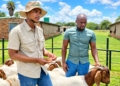
With limited resources at their disposal, Zukisani was able to gradually develop their livestock herd. Today, Baboons Kraal Pty Ltd has over 100 beef cattle and more than 40 goats grazing their land.
The power of mentorship
Zukisani also believes in the power of mentorship, saying when things do not go as planned, he calls on the knowledge and expertise of Sthembele Malgas, a commercial livestock and crop farmer. There is also Graham Sheard, a commercial auctioneer and stud breeder.
These mentors assisted them in navigating the path and guiding them to make the proper judgements when it comes to the difficult issues of farming, he explains.
He says both these mentors have offered them valuable guidance to make sound decisions, especially when faced with challenging agricultural issues.
ALSO READ: In pictures: How mentorship transformed this KZN dairy farm
Vegetable production
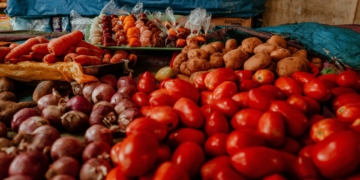
The Kelepus also produce vegetables and cabbages, spinach, butternut, beetroot, and maize can be found growing in harmony on their patch of land.
These are sold primarily to street vendors, Boxer Store and Spar in Centane, and Butterworth Superspar. Some of the vegetables are also sold to individuals or local fruit and veg shops.
“My exposure to farming at home really shaped the passion and love for agriculture, which I have today.”
Zukisani recalls growing up and being taught the fundamentals of farming by his father. He loved every moment of it, which is why ended up pursuing a national diploma in agricultural management at the Nelson Mandela Metropolitan University.

Livestock theft security measures
To prevent cattle theft in the Eastern Cape, where it is common, the Kelepus hired a full-time herdsman to watch over their livestock. He jokes and says the herdsman never leaves the field.
At first, they did not see the importance of branding cattle but Kelepu says they are now considering it. This will help to identify the cattle and make it more difficult for thieves to steal them.
“We also do cattle tagging as a form of unique identification for our cattle.”
Another beneficial technique to avoid loss is community teamwork, Zukisani says.
“Since all our livestock grazed the same area and we are all familiar with each other’s cattle, we easily identify and trace someone’s cattle should it get lost,” he shares.
ALSO READ: Top tips to protect yourself against livestock theft
There is success in hard labour
Zukisani says they have a million reasons to celebrate their small wins, especially after just obtaining a new farm measuring around 550 hectares in Hamburg in the Eastern Cape. On the leased property they are planning to run the cattle farming, while continuing with crop farming in Centane.
“We have already started moving our stock. Earlier in January we moved 55% of our cattle stock but we got disrupted by rain so we couldn’t move all of them. But soon we will move the rest of the cattle,” he says.
Getting this farm will help them to achieve their goals, which he says have always been to breed high-quality calves and participate in livestock auctions.
“We feel very happy and excited for our new journey. This has always been our dream since we started farming, so we have been planning for this new chapter since way back. [Moving] from emerging farmer to a commercial farmer won’t be an easy task but it’s something we look forward to.

He says that since they are not familiar with the Hamburg area, they plan to closely study and observe the farm, especially how their cattle adapt to their new environment.
“With regards to livestock production, we plan to have more breeding stock on the farm, which will help us to raise weaners that we will sell to livestock auctions, individuals buyers, and to some abattoirs.
“We plan to redevelop the farm and make it functional again and an accessible farm. We hope to achieve this through having more breeding stock, having more day-to-day activities on the farm,” Zukisani says.
The two brothers are ready to expand and grow what their father started many years ago. They believe in themselves and look forward to making their father proud.
READ NEXT: Former poultry farmer Zake finds a new lease on life with crops
Get Stories of Change: Inspirational stories from the people that feed Mzansi.