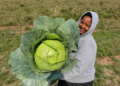
“We are 16 at home. Most of us are unemployed, and my parents and grandparents are elderly. We have been surviving with my three children’s and elders’ grant money, but it is not enough to take care of 16 people. Through this project, I have been able to take care of my family with the money I earn from the garden. I have been able to learn to save as well,” says Khanyisile Ngubane of Lindelani informal settlement.
She is one of 500 people working in seven agricultural hubs set up by the Industrial Development Corporation (IDC) in KwaZulu-Natal since August 2022. The hubs are in KwaMashu, Bester, Ntuzuma, Redhill and Tongaat.
Ndodeni Dengo, coordinator at Community Organisation Resource Centre, said they came up with the idea of community gardens after many people lost their jobs during the Covid pandemic. They approached the IDC for assistance and the hubs project was born.
People working in the gardens receive a stipend of R 1 700 a month for eight days’ work a month. There are currently 40 people employed at each garden. The gardens grow spinach, cabbage, green peppers, tomatoes, potatoes, mielies and other crops.
Dengo said some of those working in the hubs have also started gardens at their homes. In some communities, such as KwaMathambo informal settlement in Redhill, a soup kitchen was started using vegetables from the hub.

More than 500 people have found work at agricultural hubs in KwaZulu-Natal like this one in Lindelani. Photo: Nokulunga Majola
Sizwe Simelane, from Lindelani informal settlement in Ntuzuma, lives with his grandmother and children. “We survive on my grandmother’s grant money. When we were told about this project, we approached our ward councillor to ask for land and he was happy to assist. Since then, the project has grown as we have managed to buy fencing to fence the land, and Jojo tanks, since water is our main challenge,” said Simelane.
Members of the Lindelani hub are now selling their crops at stores and want to increase their customer base.
Feeding families
Lungelo Shamase, a supervisor at the Lighthouse hub in Tongaat, said that they are doing more than taking care of their families. “Besides selling our produce for money, we also distribute to the elderly in our community and to crèches as well,” said Shamase.
“My family is now well taken care of and we are grateful,” said Njabulo Ngcobo, also from the Lighthouse hub. He said the project had taught him to do new things.

Lungelo Shamase and Nomthandazo Myeza with produce from the Lighthouse hub in Tongaat. Photo: Nokulunga Majola
Snenhlanhla Khumalo, from KwaMathambo informal settlement, found solace and purpose in the garden following the loss of her mother, the family’s breadwinner.
“At the age of 23, I had hopes and dreams, but after the death of my mother, I had to take over the responsibilities at home of caring for my ailing father and my siblings. Working in the garden has taught me different skills. When I started, I didn’t know anything about farming and now I can safely say I am something of an expert,” she said.
The IDC social employment fund was set up to strengthen the work of civil society organisations undertaking “work for the common good” in communities, focusing on health, education, early childhood development and informal settlement upgrading.
Related stories
- Fight malnutrition in Mzansi with food gardens
- Triangle Project: Food gardens flourish in LGBTQI+ communities
- How Cape community gardens can make healthy food accessible
Hope on sight
Since the agricultural hub project started in these seven hubs, the IDC has paid nearly R11.8-million in wages, and more than R439 000 for tools and materials. There are 342 women and 184 men working in the gardens, including 309 young people.
But the funding is coming to an end in June.
Bhavanesh Parbhoo, IDC programme manager, said the hope is that with the skills they have acquired, the participants will be able to continue on their own and be self-reliant with the help of the women’s saving schemes to which many of the participants belong.
“The urban agriculture hub is anchored within the processes of a social movement called the Federation of the Urban and Rural Poor. Their methodology works on the idea of women-centred savings schemes. These savings schemes bring people together to save money, but most importantly, to build individuals and communities. For this project, the savings scheme anchored inside it will look to continue the process long after the IDC funding has stopped,” he said.
He said that the plan is to expand the gardens through “grow bags” so that participants currently on stipends can earn an income entirely from selling their produce. Grow bags are large, fabric-like bags that can be filled with soil and used to grow vegetables. The bags are flexible, light and easy to transport.
He said more than 10 000 grow bags had been made available.

“Grow bags” can be filled with soil and used to grow vegetables. Photo: Nokulunga Majola
Nomali Zondo, savings coordinator at the federation, told GroundUp that the saving scheme has been around since 1991. The IDC had approached them with the idea of the agricultural hub, she said, and they had been helping participants learn to save.
“Right now, we are busy checking as to how much each hub has been able to save since the project started. The participants are also encouraged to save on their own. They are also encouraged to go out there and look for funding to support themselves so that they can continue operating even after the funding from IDC has ended,” said Zondo.
Zethembe hub in KwaMashu currently has R3 709 in a bank account. In March, the hub sold vegetables to the value of R2 100 and also donated about R700 worth of vegetables to the local community.
“The aim is for people to learn how to save as a group and also individually to be able to sustain themselves. The IDC has laid a foundation and it is up to them to continue,” said Zondo.
“I believe they have been given enough skills to be able to be self-reliant.”
This article was first published by GroundUp
ALSO READ: End of term: Minister Didiza reflects on her legacy
Sign up for Mzansi Today: Your daily take on the news and happenings from the agriculture value chain.