In 2013, the gates of a reclaimed land reform farm in Senekal, Eastern Free State, opened to Maneo Lipali, who carried hope but very little knowledge of farming. What she lacked in experience, she made up for in persistence. A decade later, the 656-hectare farm has been transformed into a diversified agricultural enterprise.
Today, Gilboa Farm, under Lipali’s management, stands out as one of South Africa’s land reform success stories. The farm was originally acquired in 2009 through the Proactive Land Acquisition Strategy (Plas) and leased to Alricube (Pty) Ltd under the leadership of Daniel Lipali. He later handed over the reins to Maneo, who is Daniel’s daughter-in-law.
With consistent support from the department of land reform and rural development (DLRRD) and the Presidential Economic Stimulus (PES) initiative, the farm has steadily expanded and diversified its activities.
While the government highlights Gilboa as an example of new-era farming success, much of the vision and daily drive now comes from Lipali.
Reflecting on her early days, she recalls how a family decision changed her path, “I thought: ‘Let’s start a company and make one big farm with my father-in-law.’ My father-in-law has other interests, so he decided to leave the farm to me.”
Since then, she has firmly established herself as a farmer in her own right, proudly managing 86 Bonsmara cattle registered in her name.
From uncertainty to leadership
Lipali officially joined the family business in 2013. She admits those first steps were daunting. “I was foolish, I didn’t know anything about the farm. I had to go to courses, to study, to get the knowledge, the skills,” she admits.
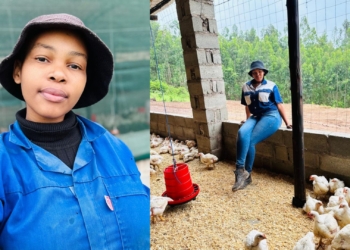
Her determination soon bore fruit. Under her leadership, Gilboa has expanded into a mixed farming enterprise. While livestock remains the backbone of the business, the farm now also produces grains such as maize, sunflowers, and soybeans. A poultry unit with 500 layers further adds to the farm’s income, supplying both formal and informal markets.
The journey has not been without its hurdles. Theft, unpredictable weather, and wildfires have all tested the farm’s resilience. Yet, Lipali and her family have found ways to adapt. “Although there’s theft, we managed to mitigate it by putting out some cameras on the farm so that we can see what’s going on while we are not there.”
Still, land size remains a pressing constraint. The 656 hectares of Gilboa cannot accommodate the farm’s growing herd. “The space is limiting us. Now we have to lease land outside so that we can keep the cattle,” she says.
Related stories
- EC student farmer turns family farm into future opportunity
- Why bull performance testing is key to herd success
- Family roots inspire Limpopo cousins’ rise in organic farming
- Solar success: Poultry farmer turns setback into comeback

A farm transformed by support
Government support has played a key role in overcoming some of these challenges. Through the DLRRD’s land development support programme, Gilboa received crucial investments, including:
- Livestock support: Establishing a commercial Bonsmara herd.
- Infrastructure: A 180m shed, two worker houses, a manager’s house, fencing, and a livestock handling facility.
- Water reticulation: Two water tanks, 27 drinking troughs, three boreholes, and three reservoirs.
- Mechanisation: Implements
- Renewable energy: A windmill-powered reservoir and solar systems that have significantly reduced electricity costs.
This backing has accelerated the farm’s progress. Daniel acknowledges just how transformative the investment has been, “We now have a fully equipped farm with essential infrastructure that would have taken years to attain on our own, and have diversified with crops.”

Inspiring the next generation
Beyond the fields, she is determined to empower others, especially young people. The farm’s permanent workers are all youth, a deliberate decision on her part. “I just want to see many young people get employed. That’s why I only employ youth on the farm because I want them to be up-to-date,” Lipali explains.
She encourages aspiring farmers to start small, stressing that one does not need vast land to make a difference. Even a backyard, she says, can provide food and sustain a family.
Her advice to new farmers is simple but powerful: be patient and committed. “Remember, farming, you cannot turn it into a million overnight. You have to work hard and be patient.”
Lipali also cautions against waiting passively for outside help. She believes progress should be visible before assistance arrives. “When government officials or other stakeholders visit a farm, they should see progress already underway, not a farmer simply waiting for assistance.”
Both Daniel and Maneo Lipali are optimistic about the farm’s future. Their plans include stud breeding, hosting Bonsmara auctions, and formal affiliation with Bonsmara SA. For her, however, the dream extends further: to one day own her own land and grow beyond the limitations of Gilboa’s boundaries.
Until then, she continues to steer the farm with resilience and vision, proving that women can play a leading role at the heart of South Africa’s farming transformation.


READ NEXT: Mixed farming: Double the hustle, double the rewards