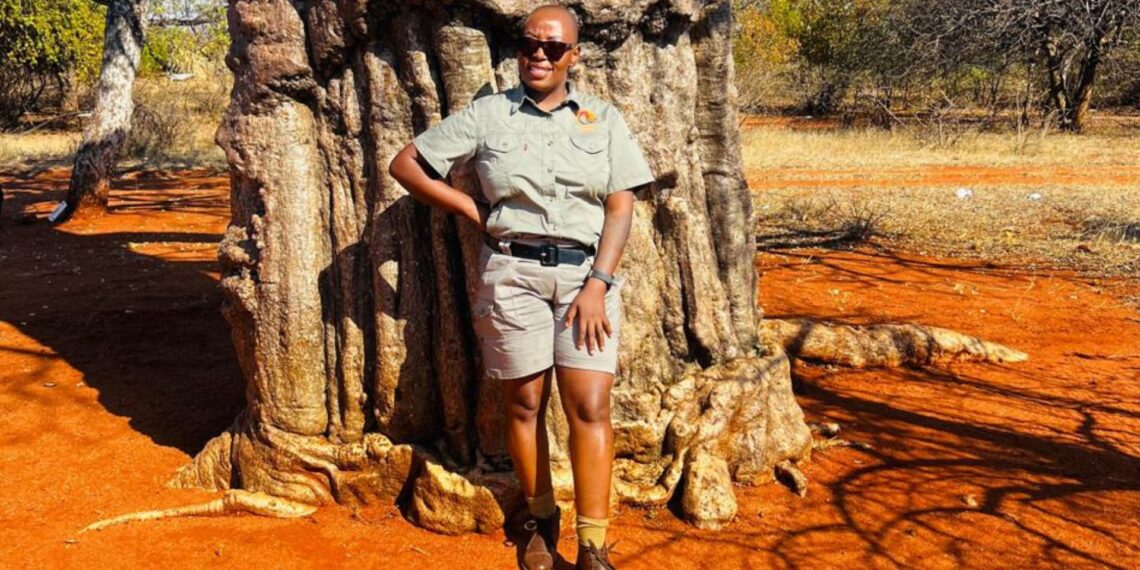
Faced with constant setbacks – from balancing a full-time job with farm duties to the crippling blows of Covid-19, power outages, and even retrenchment – Lindiwe Molele never gave up. Instead, she rebuilt her poultry operation again and again, navigating each hurdle with determination.
Molele’s story begins in Musina, Limpopo, where she grew up before moving to Tshwane University of Technology (TUT) to study entrepreneurship. However, financial difficulties pushed her to leave, and she later pursued marketing at college instead, completing her N4 and N5 qualifications.
After graduating in 2015, she returned home and registered a company. The business remained dormant for two years until she officially launched her farming venture in 2018.
Her inspiration to enter agriculture came from her mother, Elisa Sembo, who still farms cattle and goats on the family’s seven-hectare property. “When she was not around, she would ask me to go take care of her livestock. Obviously, when you do those little things, you find interest in it. That’s how I fell in love with farming,” Molele says.
From layers to broilers
When Molele first began, she focused on layer production, buying point-of-lay hens and selling eggs to local households and spaza shops. However, trying to juggle a full-time job at a mine with running the farm soon proved overwhelming.
“The business was not going that well when it started. Then I also had a big challenge when Covid hit us. I didn’t know that there were things like relief funds and all that, so then I opted to also go out of business.”
By 2020, operations had slowed to a halt. She had invested in a large incubator to help her become self-sufficient, but the blow of load shedding caused major losses. “I hit rock bottom,” she recalls, and stepped away from farming for two years.
A turning point came in January this year when Molele was retrenched from her job at the mine. With no safety net, she decided to return to poultry farming full-time – this time adding broiler production to her layers.
“This is my first time trying broilers. My customers want it, so I thought, why not try it out?”
Today, her incubation process runs with 560 eggs per cycle, with a two-week gap between batches to give the incubator time to rest. This system allows for steady and manageable production that meets the needs of her growing market.
Related stories
- Chicken farming for beginners: Your poultry path starts here
- Khanyile’s comeback: Turning poultry failure into seeds of success

Shifting to solar power
One of the biggest changes in her second chapter as a poultry farmer has been her move to renewable energy. “The huge challenge I’ve had was the load-shedding issue. With the money that I started the business with, I managed to get a fund from the Industrial Development Corporation (IDC). They installed my solar panels,” Molele shares.
This shift has been a game-changer. With reliable power, her incubator can now run without interruptions, giving her the consistency she needs to grow. For now, her main customers remain local households and spaza shops, with eggs and broilers sold directly to buyers in her community.
Looking ahead, Molele aims to make her business financially self-sufficient within six months, with operational costs fully covered by farm income.
Even if profitability takes longer, she is determined to keep building. She credits her marketing background with helping her plan strategically. “Certain things, when you do them, you need to put a time frame. This helps to know if you’re going the correct way. Go back to that other one that you planned, that’s already on paper.”

For other women hoping to enter farming, Molele’s advice is simple: just start.
“You cannot have an idea and not put it into life. If you start, you have the potential to grow. That’s why I started; I failed. I took time off, but I came back. Having a plan is the most important thing, and starting is the most important thing,” she says.
To her, farming is more than a livelihood; it is also a safety net in an uncertain economy. Building something of her own has given her resilience, and she believes that persistence is the key to overcoming any obstacle.
“If the door doesn’t open today, it doesn’t mean you need to give up. Keep on trying until something happens,” she says.
READ NEXT: Dirt, determination, and deliveries: Leydah’s farm triumph