South Africa loses Agoa preferences in 2027. NAMC economist Buhlebemvelo Dube analyses the impact on citrus, macadamia, and wine exports to the US.
The announced termination of South Africa’s beneficiary status under the African Growth and Opportunity Act (Agoa), effective January 2027, comes amid deteriorating diplomatic relations with Washington. This is a serious economic concern for South Africa, as it will face a significant erosion of tariff preferences, though it does not entail a loss of market access.
South Africa’s merchandise exports to the US increased from US$3.6 billion in 2001 to US$8.3 billion in 2025, despite contracting at an average of 10.9% per year from their 2021 peak of US$13.1 billion. Agricultural exports expanded from US$114.9 million to US$503.4 million over the same period, remaining above US$480 million annually since 2021.
This sustained trade provides grounds for cautious optimism. Agoa exclusion does not constitute a trade embargo, but withdrawing preferential tariffs may weaken price competitiveness and divert trade to competing suppliers. Policymakers must contain the resulting tariff disadvantage while preserving South Africa’s established commercial position in the US market.
The numbers: Two decades of SA-US agricultural trade
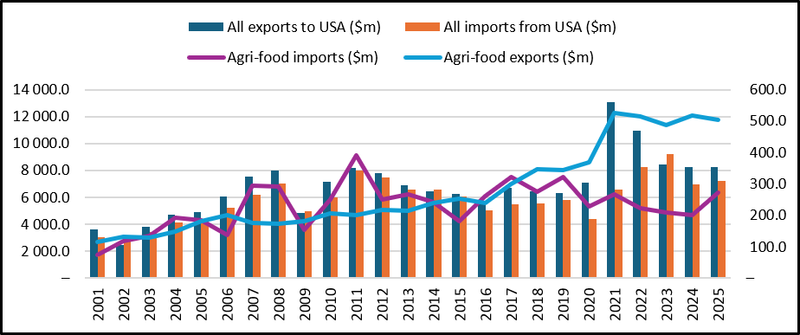
Figure 1: South Africa’s exports to the United States, 2001–2025. Source: NAMC calculations from ITC (2026)
Table 1 shows that South Africa’s agricultural and food exports to the US increased from US$114.9 million in 2001 to US$503.4 million in 2025; over the same period, agricultural imports from the US rose from US$74.1 million to US$272.2 million.
South Africa consequently recorded an agricultural trade surplus of US$231.2 million in 2025. Agricultural exports represented 6.1% of South Africa’s total merchandise exports to the US that year.
The recent performance is less encouraging. Agricultural exports declined from US$526.7 million in 2021 to US$503.4 million in 2025, an average annual contraction of approximately 1.1%.
Although much smaller than the contraction in total merchandise exports, this decline reflects what most economists have feared, suggesting that agricultural export growth was already under pressure before the announced change in AGOA eligibility.
Table 1: South Africa’s ten leading agricultural exports to and imports from the US, 2025
| Exports to the US | Value | Share | CAGR | Imports from the US | Value | Share | CAGR |
| Oranges | 57.1 | 11.3% | −0.5% | Wheat | 44.1 | 16.2% | +45.4% |
| Mandarins | 42.8 | 8.5% | −7.5% | Maize (excluding seed) | 36.0 | 13.2% | +256.6% |
| Shelled macadamias | 42.4 | 8.4% | −19.2% | Soybeans | 23.2 | 8.5% | +0.8% |
| Ice cream | 37.8 | 7.5% | +11.7% | Food preparations | 21.2 | 7.8% | −5.7% |
| Other dried fruit | 30.8 | 6.1% | +47.0% | Shelled almonds | 17.6 | 6.5% | +10.2% |
| Fresh grapes | 27.7 | 5.5% | +24.5% | Maize seed | 13.3 | 4.9% | +6.4% |
| Bottled wine | 26.9 | 5.3% | −9.4% | Frozen poultry cuts | 12.1 | 4.4% | −30.4% |
| Other fruit and vegetable juices | 26.5 | 5.3% | +53.4% | Whisky | 11.5 | 4.2% | −5.4% |
| Fresh plums | 17.3 | 3.4% | n.a. | Animal feed preparations | 6.9 | 2.6% | −1.4% |
| Apple juice | 14.9 | 3.0% | +17.3% | Animal guts and stomachs | 5.8 | 2.1% | −1.9% |
| Exports to the US | Value ($M) | Share (%) | CAGR (%) |
|---|---|---|---|
| Oranges | 57.1 | 11.3% | -0.5% |
| Mandarins | 42.8 | 8.5% | -7.5% |
| Shelled macadamias | 42.4 | 8.4% | -19.2% |
| Ice cream | 37.8 | 7.5% | +11.7% |
| Other dried fruit | 30.8 | 6.1% | +47.0% |
| Fresh grapes | 27.7 | 5.5% | +24.5% |
| Bottled wine | 26.9 | 5.3% | -9.4% |
| Other fruit and vegetable juices | 26.5 | 5.3% | +53.4% |
| Fresh plums | 17.3 | 3.4% | n.a. |
| Apple juice | 14.9 | 3.0% | +17.3% |
| Top 10 Total | 324.2 | 67.3% | — |
| Imports from the US | Value ($M) | Share (%) | CAGR (%) |
|---|---|---|---|
| Wheat | 44.1 | 16.2% | +45.4% |
| Maize (excluding seed) | 36.0 | 13.2% | +256.6% |
| Soybeans | 23.2 | 8.5% | +0.8% |
| Food preparations | 21.2 | 7.8% | -5.7% |
| Shelled almonds | 17.6 | 6.5% | +10.2% |
| Maize seed | 13.3 | 4.9% | +6.4% |
| Frozen poultry cuts | 12.1 | 4.4% | -30.4% |
| Whisky | 11.5 | 4.2% | -5.4% |
| Animal feed preparations | 6.9 | 2.6% | -1.4% |
| Animal guts and stomachs | 5.8 | 2.1% | -1.9% |
| Top 10 Total | 191.7 | 70.8% | — |
Source: NAMC calculations from ITC (2026)
The composition of agricultural exports suggests that the consequences of losing AGOA preferences will be unevenly distributed. Oranges, mandarins and macadamias alone accounted for US$142.3 million, or 28.3% of agricultural exports to the US in 2025. Including grapes, plums and dried fruit further concentrates exports in horticultural products.
These industries are exposed to changes in landed prices because they compete with established suppliers and depend on reliable market access to recover production, packaging and logistics costs.
Macadamia export values contracted by an average of 19.2% annually between 2021 and 2025, while mandarins and bottled wine declined by 7.5% and 9.4%, respectively. By contrast, fresh grapes, dried fruit and selected juices recorded substantial growth. This shift in preferences may compound existing difficulties for some products while constraining expansion for others.
Related stories
- Agoa extension offers relief, but SA agri needs long-term certainty
- Agoa extension could boost SA’s value-added exports
- SA cheers Agoa renewal amid exporter relief
- Farmers speak out: What they need from municipal leadership now
Mitigating the blow: Negotiation and market retention strategies
Agoa exclusion entails the withdrawal of preferential tariff treatment, not a prohibition on South African exports to the US. Its economic consequences will depend on the applicable tariff differentials, preference utilisation and the incidence of additional duties between exporters and US importers.
South Africa should therefore prioritise negotiations to restore favourable tariff treatment while addressing the eligibility requirements. Product-level estimates of preference utilisation and tariff incidence are needed to assess exposure and inform negotiations with Washington.
Although market diversification could reduce dependence on the US, phytosanitary barriers, distribution costs and established buyer networks constrain short-term market substitution. The current economic mindset must be to limit trade diversion and protect South Africa’s competitiveness in a market developed over more than two decades.
- Buhlebemvelo Dube is a trade economist at the National Agricultural Marketing Council (NAMC). The views and opinions expressed in this article are those of the author and do not necessarily reflect the views or positions of Food For Mzansi.
READ NEXT: Agoa blow: SA faces higher tariffs, but US market stays open