South Africa’s feed manufacturing industry is undergoing a major shift driven by biosecurity risks, climate pressures, and changing production needs. AFMA chairperson Anina Hunter outlines five key priorities to build a resilient feed-to-food chain and keep animal protein affordable.
Feed manufacturing plays a critical role in South Africa’s food system, influencing animal protein supply, food affordability and safety, agricultural competitiveness and the resilience of the wider food chain.
But as the industry looks ahead, growth alone will not be enough. Animal disease, changing production requirements, resource pressures, regulatory change, new technologies and increasingly complex supply chains are reshaping what it means to be competitive and resilient.
The challenge is not simply to produce more feed, but to strengthen the feed-to-food chain so South Africans continue to access safe, nutritious and affordable animal protein.
Here are five priorities set to shape the future of the feed industry:
1. Science-led nutrition will become increasingly important to feed performance and efficiency
The focus of feed manufacturing is shifting beyond individual ingredients towards the performance of the finished product.
The interaction between ingredients, formulation, processing and animal requirements means manufacturers are increasingly focused on delivering consistent, measurable outcomes. A science-based approach to nutrition formulation and feed development is central to achieving these outcomes, with greater emphasis on precision nutrition, formulation expertise, feed conversion, animal health and innovation.
Advances in nutritional science and improved formulation tools are creating opportunities to use feed more precisely, while better performance monitoring can help manufacturers and producers understand how nutrition translates into animal performance, health and resource efficiency.
Related stories
- Experts call for feed efficiency in dairy, meat industries
- How Africa’s poultry feed crisis could hatch youth enterprises
- Maize surplus eases feed costs, but fuel and drought threaten gains
- How to unlock maximum feed energy from your maize silage
Feed manufacturers are also increasingly having to consider what happens further along the value chain, including the affordability, safety and sustainability of the animal protein eventually reaching consumers.
For South Africa, where affordability remains an important consideration, the challenge is finding the right balance between nutritional performance, production efficiency, animal health and the need to keep animal protein accessible.
Ultimately, the question is becoming less about simply what goes into feed and more about what the feed delivers.
2. Technology and data will transform feed manufacturing
Artificial intelligence (AI), digitalisation and automation are creating new opportunities to make feed manufacturing smarter and more efficient.
From real-time quality monitoring and predictive maintenance to improved formulation tools, these can support faster, more informed decision-making across feed operations.
The “mill of the future” is likely to be more integrated, automated and data-driven, while placing greater emphasis on reliability, quality, traceability and operational control.
Data also has the potential to strengthen industry-wide decision-making. Better monitoring, reporting and early-warning systems can help manufacturers identify risks earlier and respond more effectively.
Technology, however, will only deliver value if businesses also develop the skills needed to use it effectively. Technology will not replace industry knowledge. Rather, it will allow that knowledge to be applied with greater speed, precision and consistency across the feed-to-food chain.
3. Feed safety, biosecurity and industry assurance will become even more critical
Animal health and biosecurity have become increasingly important considerations for South Africa’s agricultural sector. Disease outbreaks can disrupt livestock movement, production, trade and investment, with consequences that extend well beyond individual farms.
Feed manufacturers have an important role in reducing these risks through feed hygiene, traceability, raw-material controls, responsible transport practices and sound biosecurity within manufacturing facilities.
Feed safety and industry assurance will also become increasingly important as regulatory frameworks evolve. The move towards more science-based, risk-based and preventive approaches places greater emphasis on traceability, preventive controls, effective auditing and accountability throughout the feed chain.
For manufacturers, these systems are about more than compliance. They help protect animal health and food safety while strengthening confidence in the integrity and professionalism of the industry.
4. Resource efficiency and resilient value chains will become competitive advantages
Sustainability in feed manufacturing is increasingly about using resources more effectively while remaining commercially viable.
Reducing waste, improving production efficiency and making better use of available raw materials and agricultural by-products can contribute to both resource efficiency and long-term resilience.
Practical sustainability also means using energy and water more efficiently, supporting responsible sourcing, improving logistics and contributing to more climate-resilient food systems.
But resilience extends beyond the factory gate. Climate variability, geopolitical uncertainty, currency movements, freight disruptions and infrastructure constraints can quickly change the economics of feed production and animal agriculture.
This makes stronger connections across the value chain increasingly important. Feed manufacturers, grain producers, oilseed processors, livestock farmers, veterinarians, researchers, regulators, financiers and retailers all have a role to play in building a more resilient agricultural system.
No single part of the chain can address the challenges of affordability, animal health, competitiveness and food security on its own.
For manufacturers, resource efficiency and supply-chain resilience are therefore no longer simply sustainability considerations; they are becoming important drivers of long-term competitiveness.
5. New skills will be critical to the industry’s future
As feed manufacturing becomes more technologically advanced, the skills required to operate the industry will change too.
Future employees will increasingly need to combine traditional manufacturing and technical expertise with digital, data and project-management capabilities.
Nutritionists, engineers, millers, quality specialists, data analysts and emerging industry leaders will all have an important role in building a sector that remains competitive and prepared for change.
Building technical capability, attracting young professionals and developing future industry leaders will therefore be critical to helping the sector adapt.
This means strengthening the skills pipeline and continuously developing people already working in the industry. Greater collaboration between industry, universities and professional bodies can help young professionals gain practical exposure to feed manufacturing while creating stronger pathways into the sector.
Technology may change how feed is manufactured, but people will remain central to making that transformation work.
Looking ahead
The future of the feed industry will be shaped by how effectively it combines science, technology, feed safety, collaboration, resource efficiency, resilience and people.
Feed is not simply an input into animal production. It connects crop producers, processors, feed manufacturers, livestock farmers and consumers, influencing the affordability, safety and sustainability of food throughout the value chain.
As South Africa works to strengthen food security, the feed industry will therefore be increasingly important in supporting efficient animal production, protecting feed and food safety and helping keep nutritious animal protein accessible to consumers.
The opportunity is not simply to respond to change, but to help shape an animal feed industry that is safe, competitive, innovative, sustainable and resilient.
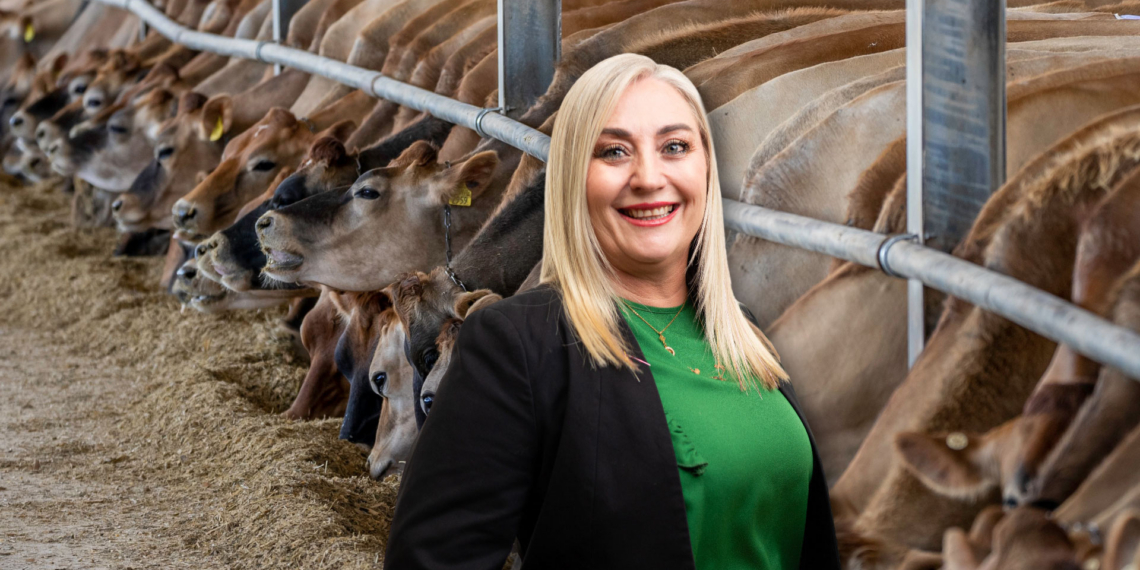
- Anina Hunter is the managing director at Feed Rainbow Chicken and chairperson of the Animal Feed Manufacturers Association (AFMA). The views and opinions expressed in this article are those of the author and do not necessarily reflect the views or positions of Food For Mzansi.
READ NEXT: Climate change could force redesign of SA’s farming regions – ARC