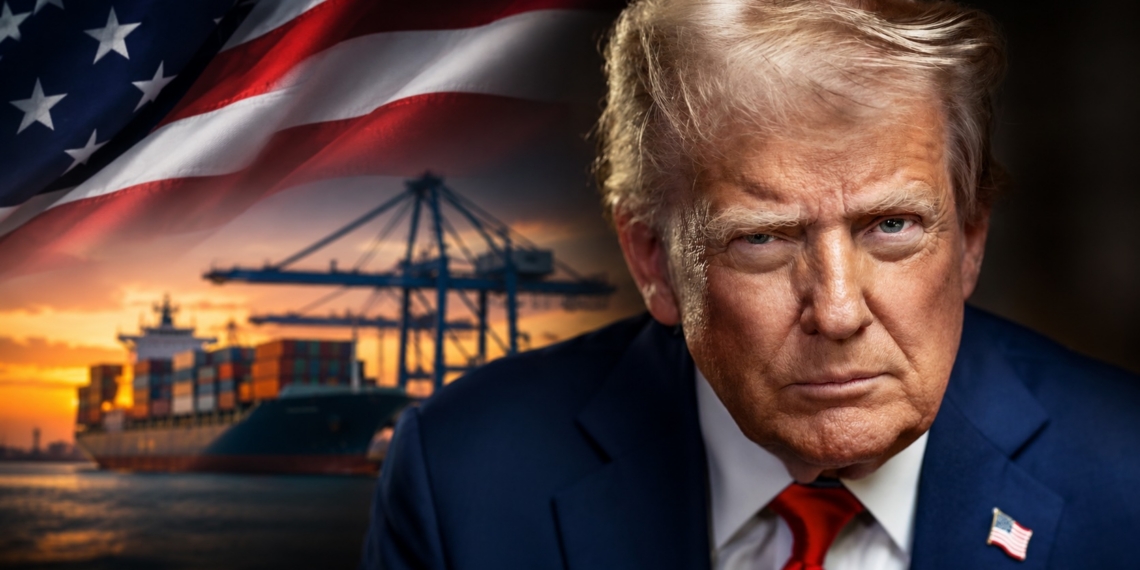
The announcement came this evening: South Africa is being dropped from the African Growth and Opportunity Act (Agoa) from 2027, dealing a fresh blow to the country’s already strained trade relationship with the United States.
But the decision does not mean South African products will be shut out of the American market, says renowned economist Wandile Sihlobo, the Presidential Envoy on Agriculture and Land.
“We will have access, but with slightly higher tariffs,” Sihlobo tells Food For Mzansi, warning against claims that the decision amounts to an outright trade ban.
The White House’s decision not to retain South Africa as an Agoa beneficiary for 2027 means exporters could face an additional Most Favoured Nation tariff of approximately 3.4%, on top of existing US tariffs.
For products currently entering the American market at the 12.5% “Liberation Day” rate, that would push tariffs to 15.9%, further eroding their competitiveness.
Sihlobo argues that the change, while challenging, need not be catastrophic. South African agriculture faced tariffs of around 30% in 2025 yet still exported an estimated US$504 million worth of goods to the US, down just 3% from the previous year.
Exports subsequently rose 56% between the first and second quarters of 2026, reaching US$123 million, helped largely by the reduction in tariffs from 30% to 12.5%.
The US accounts for approximately 4% of South Africa’s agricultural exports, including citrus, berries, grapes, wine, fruit juices, apples, pears and nuts.
Still, Sihlobo acknowledges that some industries will feel the impact more acutely than others.
“We must manage the sentiment and narrative around this issue well,” he says.
He urges continued diversification towards Asia and the Middle East, while stressing that these destinations are “not a replacement” for established markets in the US, European Union, United Kingdom and Africa.
Sihlobo also points out that South Africa was encouraged as far back as 2014 to graduate from Agoa to a full bilateral trade agreement because of its upper-middle-income status. However, complications involving the Southern African Customs Union (SACU), alongside efforts to retain Agoa benefits, prevented such an agreement.
AgriSA warns of pressure on farmers and rural jobs
In a statement issued shortly after the announcement, AgriSA expressed concern about the loss of preferential access, warning that even modest tariff increases could have serious consequences for agricultural businesses operating on narrow margins.
While the overall US market represents a relatively small share of South Africa’s agricultural exports, certain industries and regions are considerably more exposed.
The US accounted for 28.85% of South African litchi exports during the 2025/26 season, while citrus producers in particular regions have longstanding commercial relationships with American buyers.
AgriSA warns that higher duties could affect profitability, export orders and future investment, with consequences extending to packhouses, transport operators, farmworkers and rural suppliers.
The organisation stresses that the additional tariff burden will differ between products, making clear, commodity-specific guidance essential for exporters and their American customers.
AgriSA has welcomed diplomatic engagements led by trade, industry and competition minister Parks Tau, but says negotiations must be supported by practical domestic reforms, including more efficient ports, stronger biosecurity, faster export certification and accelerated access to alternative markets.
CEO Johann Kotzé says the immediate priority is to retain American customers, manage additional costs and protect agricultural investment and rural employment.
AgriSA also wants South Africa to explore a more predictable long-term trading arrangement with the US, rather than relying indefinitely on unilateral preferential access.
Solidarity blames Ramaphosa and Lamola
Meanwhile, trade union Solidarity has taken a considerably more confrontational position, blaming President Cyril Ramaphosa and international relations minister Ronald Lamola for South Africa’s exclusion.
Jaco Kleynhans, Solidarity’s head of public relations, who met with White House officials just days ago, claims the government ignored repeated warnings about deteriorating diplomatic relations with Washington.
He singles out remarks made by Lamola during a September visit to the US, describing them as undiplomatic and damaging to efforts to preserve South Africa’s trade preferences.
“The government, Lamola and Ramaphosa must take full responsibility for this exclusion,” Kleynhans says. “Ordinary workers and industries will now pay the price for political negligence.”
According to Kleynhans, Solidarity helped secure congressional support last year for a two-year Agoa extension to the end of 2028 and is now engaging American lawmakers about a possible further ten-year extension.
However, the annual review of beneficiary countries remains a White House decision.
“Ramaphosa and Lamola’s antagonism towards Trump and the White House made it impossible for the Trump administration to keep South Africa in Agoa,” Kleynhans claims.
Solidarity fears the economic consequences could extend well beyond agriculture, particularly affecting the automotive industry and other export-oriented sectors, potentially placing thousands of jobs at risk.
The organisation is urging the government to repair relations with Washington immediately and says it will continue engaging American officials to limit the fallout.
Despite their differing assessments of responsibility and the likely economic consequences, Sihlobo, AgriSA and Solidarity all recognise the importance of preserving South Africa’s commercial relationship with the United States.
For agricultural exporters, the immediate challenge is not whether they can continue selling into the American market, but whether they can remain competitive once the preferential tariffs disappear.
READ NEXT: Farmers speak out: What they need from municipal leadership now