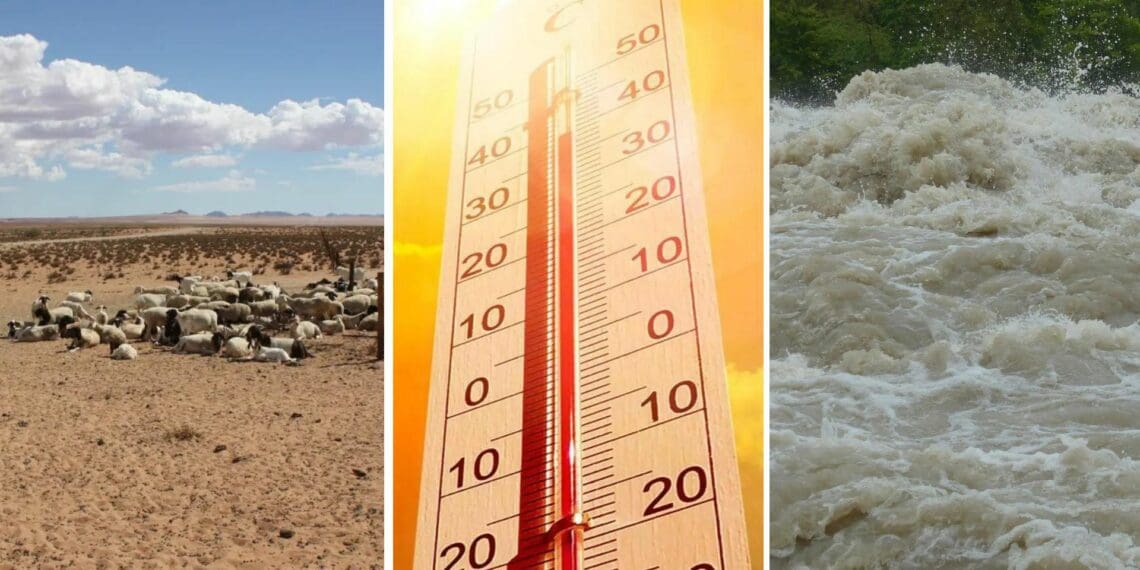
Expect weird weather conditions for South Africa in the months ahead, farmers. Weather experts tell Food For Mzansi that they predict mixed weather conditions throughout the year and farmers should prepare accordingly.
In the past few months, some parts of the country have experienced severe weather conditions, which led to flooding. Other parts of the country had to deal with heatwaves.
These weather patterns make farm planning extremely rigorous, ultimately making it difficult to grow crops and raise animals. So what should farmers know about the weather forecasts ahead?
Below-normal rainfall
According to Hannelee Doubell, spokesperson for the South African Weather Service, forecasts are indicating that the current La Niña period will subside towards winter, making way for El Niño.

“This could really mean less rain and higher temperatures in the inland provinces,” she said.
According to Doubell, above-normal rainfall is expected over most parts of the summer rainfall region of the country during mid-autumn through to the early-winter season. There is an increased risk for water logging in areas receiving excessive rainfall that can cause crop damage, she added.
“However, the South-Western parts [of the country] are mostly expected to receive below-normal rainfall.”
These areas normally receive significant rainfall during the early-winter season.
“Relevant decision-makers may advise farmers to establish good drainage systems, practice soil and water conservation, and other appropriate farming practices,” Doubell said.
Check your drainage systems
Meteorologist Joel Guy Chabata told Food For Mzansi that rains in the summer rainfall areas should start tapering off as the country would be heading into the winter season.

“A look at the months of March, April and May shows that much of South Africa will receive normal to above-normal rainfall. While coastal areas, mainly the Eastern Cape, will receive below-normal rains,” he said.
Cape provinces can expect below-normal rains from April to June. However, Chabata cautioned that the three-month outlook could change at any time.
“Farmers may need to closely follow weather forecasts so that they do not apply fertilisers and chemicals to their crops when long wet weather spells are anticipated.
“Farmers should ensure they have an efficient drainage system,” he advised.
Meanwhile, KwaZulu-Natal kiwi farmer Peter Nicholson said that a combination of load shedding and heatwaves has led to them planting less than expected.
“What a nightmare … it is very difficult to envisage a great production. On top of that, we in KwaZulu-Natal experienced with a three-week heatwave that led to us losing a lot of good quality produce. It is really frustrating,” he said.
READ NEXT: How to safeguard crops during hot weather
Sign up for Mzansi Today: Your daily take on the news and happenings from the agriculture value chain.