Louise Williamson wears many hats, and wears them well. Environmentalist, social entrepreneur, community developer, innovator, these labels barely scratch the surface of a career dedicated to creating meaningful impact.
With 25 years’ experience in renewable and sustainable energy markets, Williamson has committed herself to both the green revolution and empowering communities across Africa, particularly through innovations that improve food security and nutrition.
Her work has not gone unnoticed. In 2022, she was named a finalist in the Santam Woman of the Future Awards for social entrepreneurship. In 2016, she won both the Global Cleantech Innovation Social Impact Award and the Gibs Festival of Ideas Social Impact Award for her invention of the Mashesha stove.
The following year, she received the African Entrepreneurship Award in Morocco. She has also represented South Africa in the Women in Clean Cooking programme, joining 59 other global changemakers from Asia, Haiti, and Africa.
“I am deeply passionate about empowering individuals to lead sustainable, fulfilling lives, a philosophy that permeates my personal and professional endeavours,” Williamson says. “I have dedicated my career to positively impacting our planet and the communities we serve.”

Empowering communities through clean cooking
Currently, Williamson serves as Africa projects and implementation manager for Ener-G-Africa (EGA), a company tackling climate change through research, development, and clean energy solutions across the continent.
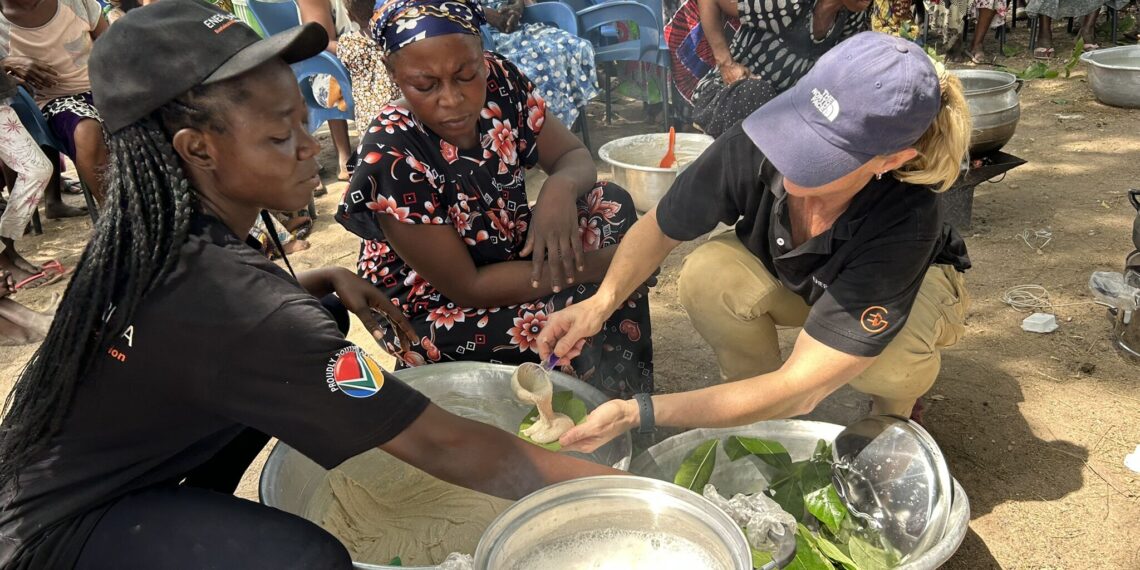
Her work spans project development, R&D, and implementation, but it is her community engagement that she finds most meaningful. In rural Ghana, she often cooks alongside local women to introduce improved stove technologies. “But above all,” she says, “the most important part is taking the time to listen.”
These improved stoves directly contribute to food security.
“Women face similar challenges regardless of geography or context,” she explains.
“Too often, environmental initiatives introduce technologies without adequate research to ensure they’re appropriate for the local context. At EGA, we believe in identifying the right stove for the right situation, taking the time to ask the right questions and listen carefully. Our approach not only supports communities effectively but also aligns with our broader goals of reducing emissions.”
“At the end of the day, people are people. It’s a privilege to collaborate with women in the community, to truly understand their needs, and to co-create sustainable solutions.
By reducing the time women spend collecting firewood and cooking, EGA stoves free them to focus on food production, household nutrition, and other income-generating activities, helping families eat better and more sustainably.
This philosophy has guided her throughout her career. Before EGA, she founded Sustainability Professionals, a social enterprise specialising in green technology and training, and ran Scallywags Treats, producing all-natural beef liver treats for dogs.
Related stories
- EC student farmer turns family farm into future opportunity
- A dietician’s food guide to clean, healthy eating
- A new breed of farmer: Mmadipilo blends Brahmans and tourism

Innovation, impact, and food security
Williamson’s innovative spirit extends beyond business. She developed the Rhinobiolighter, a firelighter made from rhino dung in partnership with Care for Wild, a rhino sanctuary in Mpumalanga.
She has facilitated collaborations and grant partnerships with organisations including USAID, SE4ALL, the Industrial Development Corporation, Unido, and many more. She has taught social entrepreneurship to university lecturers and strongly advocates for gender equality through her work.
“The impact is immediate when they start using an improved cookstove,” Williamson says. “It takes half the time or less to collect firewood and to cook, which frees women up to do other things, as well as improving their health.
In fact, providing cleaner cooking equipment contributes to six Sustainable Development Goals: access to affordable and clean energy, gender equality, mitigating climate change, responsible consumption and production, sustainable communities and life on land. It’s very satisfying work.”
Through her work, Williamson is proving that innovation, environmental stewardship, and social impact are inseparable from food security – helping communities across Africa cook safer, feed families better, and build sustainable futures.
READ NEXT: Kagiso Trust CEO: Put soul into agriculture for real change