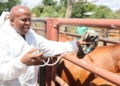
Fuelled by a desire to break free from the system and an unexpected gift of three piglets, Lulutho Gangathele found his calling in farming during his university days. Starting small, he faced challenges head-on, learning and growing with each step.
Today, in Dutywa, a small town in Mbashe Local Municipality, Eastern Cape, Gangathele is doing well for himself. He grows spinach, cabbage, and potatoes, determined to become a leader in fresh produce and prove that farming is a path of growth and resilience.
His produce reaches markets such as Boxer, Super Spar, street vendors, and local shops in Dutywa town, as well as rural area shops.
The rise of African Black Farming
Gangathele’s farming journey began in 2011 when his uncle gave him three piglets, with no strings attached – offering them without any expectations or conditions.
In 2020, after saving part of his university stipend, he saw an opportunity to grow his piggery. This marked the start of turning his business, African Black Farming, into a practical venture.
“I bought five pigs, adding them to the three from my uncle, so I started with eight.”
He farmed Large Whites for their size and market appeal, which also gave him an advantage in price negotiations with customers.
Although excited to dive into farming, Gangathele quickly faced the realities of the business. The cost of feed was high, and balancing his piggery with his school expenses, all on a tight NSFAS stipend proved to be a challenge.
“Managing the piggery and my living expenses from my stipend was a struggle.”
To cut costs, Gangathele turned to a local shop, asking for their leftover vegetables to feed his pigs. In return, he promised to supply pigs by the year’s end, with the only condition being that he took care of their vaccinations.

In addition to his pig farming, by the end of 2021, Gangathele began growing cabbages, using plant spacing techniques that yielded about 500 cabbages, he shares proudly.
In 2023, his piglets, however, were hit by a swine fever outbreak. While his adult pigs were unaffected, Gangathele made the hard decision to sell all his pigs and start over, although he lost some piglets in the process.
“When the swine flu hit, I had about 26 pigs. I lost some, but eventually sold the remaining ones to start afresh.”
Fighting the Eastern Cape dry spell
He explains that 2022 was his second farming cycle. Following a successful first one, however, this cycle was much harder, as drought affected the Eastern Cape. Despite the challenges, he bought two water tanks for his crops.
“I was using a can of pilchards to water my cabbage each day to save water. This cycle took five months. Despite four months of water scarcity, weekly rain [later] helped the cabbage grow.”
In his second cycle, he targeted an experimental market, selling produce locally and setting up a vegetable stand.
“I was testing the street vendor market, comparing it to supplying shops and selling to the community,” he explains.
“My cabbage started rotting, so I switched to selling trimmed, cut cabbage in bulk to informal restaurants in town.”
Although this worked better, transport from his village to town remained a challenge.
Related stories
- Three little pigs pull ex-prisoner from the depths of despair
- Get the best out of your pigs’ genetics
Then, he tried poultry farming but felt uncertain about the market. “My market research wasn’t well planned. I wasn’t happy with how I managed things – there was no profit, and people took chickens on credit.”
Feed costs also remained a challenge.
Two hectares, big dreams
While farming, Gangathele was also job hunting and eventually received a call from the Mbhashe Local Municipality’s Local Economic Development department, where he started as an intern in 2023.
“That call opened doors for me. I decided to use my stipend to keep growing my business.”

He adds, “I fenced the leased plot and set up a drip irrigation system.”
African Black Farming operates on two hectares, and there are plans to expand operations on this land with a ten-year lease agreement.
Gangathele is passionate about creating job opportunities, particularly for students who struggle to find places to practice their craft after college.
“I want to reintroduce poultry, and piggery, and add sorghum, maize, and soya to my business,” he says.
He plans to specialise in rare crops while continuing to grow more common ones familiar to his village. This approach will also provide feed for his future livestock.

Learning to lead
Since starting his internship at Mbhashe Municipality, Gangathele says he has learned valuable lessons in managing people with different behaviours.
“This helps me as a farmer, as it teaches me how to handle future employees. I’ve also learned how to manage public debates, which benefits both my personal growth and my business.”
Gangathele explains that the municipality holds information days which serve as awareness sessions, equipping farmers with different farming techniques.
“I also benefit from these workshops, particularly in managing resources,” he says.
He notes that this platform has been essential in expanding his knowledge and helping him navigate both the corporate world and his farming business.
READ NEXT: Hampers of hope: Winemaker feeds 26 000 school children daily
Get Stories of Change: Inspirational stories from the people that feed Mzansi