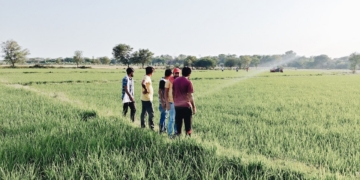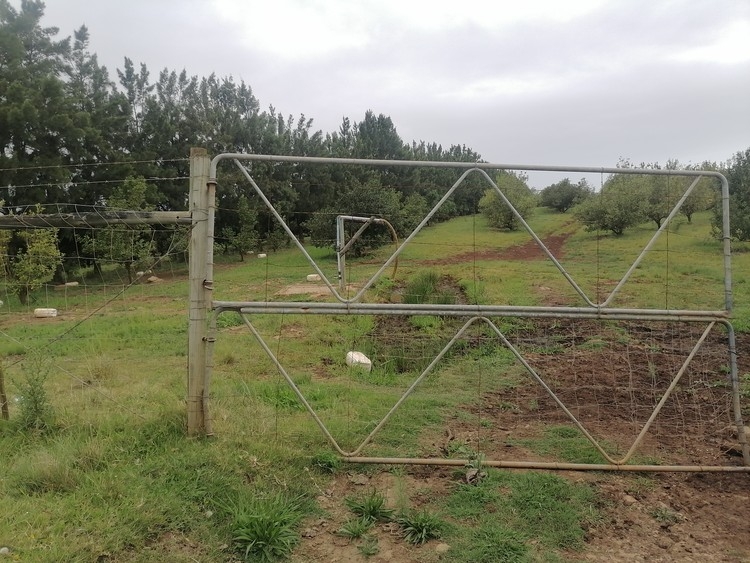
A government-funded macadamia nut farm in Ncera, Eastern Cape, has failed to get off the ground after two decades, despite hundreds of millions of rands in public funds invested in the project. Its owners, however, say the project can be turned around.
Employees of the Ncera Macadamia Farm, who live in the surrounding villages, have not been paid since June 2024.
“The project was supposed to bring development to the community of Ncera and to reduce crime and poverty,” one employee told GroundUp.
The farm was once seen as a success story, celebrated by politicians from both incumbent and opposition political parties in the Eastern Cape. Its business model has been replicated elsewhere.
But the farm has not broken even, let alone declared dividends. At one point the farm had more than 150 employees, but now it has only 73.
In recent years, late or non-payment of salaries has become increasingly frequent. The farm has been heavily vandalised. GroundUp visited the site in November and found much of the infrastructure in ruins. Trees have not been watered or sprayed.
The farm operates on communally-owned land leased from a community trust administered by the traditional council. The community trust owns 51% of the company and 49% is owned by several private shareholders.
Traditional leader Nomaxhosa Jongilanga told GroundUp that the farm’s collapse is “heartbreaking”, but fundraising is ongoing and there is hope the project can be revitalised.
What went wrong?
The project’s biggest funder has been the Eastern Cape department of rural development and agrarian reform (DRDAR), which has invested a total of R71.3 million into the project, according to spokesperson Atule Joko.
The project started in 2006. The private shareholders were responsible for raising additional operating capital. But according to a new business plan compiled in 2023, which GroundUp has seen, commercial lenders have been hesitant to fund the project for two reasons: the company did not own the land, and there was no water supply for irrigation, which raised questions about the reliability of yield estimates.
Relying mainly on government grants, the farm was unable to develop plantations in line with the business plan. This meant that some trees matured before others, which years later affected the farm’s harvests. 180 hectares were developed over seven years instead of the planned two years. An additional 120 hectares were supposed to be developed, but this has not happened.
The national department of agriculture, land reform and rural development then agreed to fund and install a bulk water supply at a cost of R64 million. This was a cornerstone of the farm’s business plan and its revenue projections, and was to make it more attractive to commercial lenders, says Ncera Macadamia Farm director Mkululi Pakade.
But the contractor appointed by the department did not deliver and a new contractor had to be found, says department spokesperson Linda Page. The water infrastructure was supposed to be completed in 2016 but was only finalised in 2022.
The delay meant that the macadamia trees planted in the first few years of the project did not have proper irrigation, which affected their growth, says Pakade. This put enormous cash flow pressure on the company, affecting the farm’s ability to pay wages or to spray for pests. This all contributed to yields below what was projected and the farm never broke even.
Then the area was hit by a drought between 2015 and 2021. The Covid pandemic in 2020 and the war in Ukraine contributed to macadamia prices crashing and input costs increasing.
Related stories
A R4-million grant was secured from Standard Bank for salaries but some of the funds were used for operational costs, contravening the conditions of the grant. The company director responsible for this has since resigned, says Pakade, but it has soured relations with the bank.
Pakade sent GroundUp the farm’s audited financial statements from 2019-2022, which show a year-on-year decline in revenue from sales of macadamia nuts and young trees from the farm’s nursery. In 2020, the farm had a sales revenue of R16 million. By 2022, it had dropped to R10.4 million and the farm ran at a loss of R10 million.
The statements show that between R6 million and R7-million, about half of the farm’s expenses, were spent annually on wages. Technical fees of about R1.9 million a year were paid to the farm’s private shareholders who take care of the management and administration of the farm, including providing technical expertise. The rent paid to the community trust was about R150,000 a year.
Since 2022, as the farm’s financial distress worsened, spending on salaries and technical fees has diminished.
In 2022, the national department of agriculture, land reform and rural development disbursed R7.8 million to help cover salaries, and in 2023, the DRDAR contributed R4.5 million, but this fell far short of what is required. The Eastern Cape Development Corporation has also provided R4.5 million (70% grant and 30% loan) to help the farm while it completed a technical assessment.

Turnaround plan
The Eastern Cape Development Corporation has compiled a technical assessment report on the reasons for the farm’s demise and outlining ways it can get back on track. The report says that an investment of R40 million is required over three years to get the farm back on track.
Macadamia nut prices peaked in 2018 and reached record lows in 2023. But prices are on the rise again and are expected to recover. However, the quality of the nuts is crucial to achieving competitive prices, Farmers Weekly has reported.
DRDAR spokesperson Joko said that the department is working with the Eastern Cape Development Corporation and the Eastern Cape Rural Development Agency “to develop a credible recovery plan and appropriate funding mechanism that would allow both the public and private sector investment.”
But Joko added that the over-reliance on government funding is not sustainable and cannot continue.
This article was first published by GroundUp.
ALSO READ: Tech-based ear tags target livestock theft in Eastern Cape
Sign up for Mzansi Today: Your daily take on the news and happenings from the agriculture value chain.