South Africa’s recent minimum wage increase proposal set by the National Minimum Wage Commission (NMW) has sparked conversation across the agricultural sector, with opinions reflecting the complex dynamics of balancing business sustainability and worker welfare.
Set against the backdrop of economic fluctuations and the need to ensure fair labour practices, the proposal highlights an increase based on the consumer price index (CPI) plus an additional 1.5%.
Among those navigating this challenge is Thulani Magida, founder of Juta Agritech, a vegetable farming business rooted in the Eastern Cape.
Workers deserve better pay
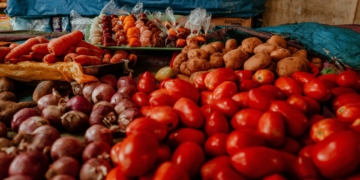
“We farm with crops that are labour intensive such as cabbages, potatoes, pumpkin, and butternuts. We are going to add even more labour-intensive crops such as onions and carrots. The aim is to create as many job opportunities as possible and in the future, integrate into agro-processing.
“This will add value for Juta, but in the process, create even more jobs. So our goal is to ensure that youth is employed and people find jobs in rural areas to curb urban migration,” Magida said.
Magida acknowledged that labour remains one of their primary cost drivers, compounded by start-up hurdles such as limited access to finance, cash flow constraints, and a lack of economies of scale. These challenges illustrate the tightrope many farmers walk between growth and compliance.
Despite these pressures, Magida recognises the importance of the minimum wage in safeguarding workers’ livelihoods.
“Nonetheless, a national minimum wage is fundamental in efforts to protect unskilled labour against business. This also extends to the overall living conditions of workers on farms such as their dwellings and ablution facilities.
“So I fully support an increase of 1.5% of the national minimum wage. Inflation affects everyone, but food inflation affects those on minimum wage even more because they spend a bigger proportion of their incomes on food,” he said.
Related stories
- 240 farmworkers honoured, empowered at Robertson Lenteskou
- Aunty Bettie’s lifelong mission to fight for women farmworkers
- Minimum wage boosts farmworkers, lowers poverty – study
For Magida, the increase represents a fair compromise that addresses both worker needs and the realities faced by small-scale farmers.
“It is a good balance between our challenges as new entry farmers and for workers to respond to the ever-increasing cost of living,” Magida said.
A give-and-take situation
Keith Middleton, a commercial farmer in Kimberley in the Northern Cape, offered a broader perspective on the socio-economic implications of wage increases.
“I’m always for an increase when it comes to black farmworkers. Remember, these people are working under harsh conditions, they’re doing menial work and it’s not easy.
“As much as it’s going to hurt on the pocket, it brings the profitability down slightly, but it’s for the better good of our country and our people as a whole. I’m always for an increase, we just have to make adjustments,” Middleton said.
Acknowledging the financial strain that minimum wage adjustments may place on farmers, Middleton advocates for making sacrifices to improve workers’ livelihoods.
“We need to come to a point as South Africans, where we understand that everyone’s living standards got to increase. Let us make the adjustments and bring down the profits slightly or whatever.
“Learn to cope with that because we need to raise the standard of the marginalised and the poorest people, who are mainly farmworkers.”
Keith Middleton
However, a concern for Middleton is the employment of foreign workers on farms, often under substandard conditions and for less than the legal minimum wage. Middleton calls for prioritising local South Africans for farm employment and ensuring fair treatment and opportunities.
“The foreigners that are illegal shouldn’t be employed on farms, but rather local South Africans who are deserving or who are available to work. Let’s support local South Africans, give them the opportunity to get jobs and also advance their interests, so that they can have a better life,” he said.
The president of the Congress of South African Trade Unions (Cosatu), Zingiswa Losi, said it is important to protect the minimum wage, especially for farmworkers who continue to be underpaid.
“Not long ago farmworkers in De Doorns and domestic workers in Constantia were paid as little as R6 an hour, today 6 million workers are protected by the national minimum wage of R27.58.
“We dare not rest when four out of 10 South Africans cannot find work and we remain the world’s most unequal society,” she said.
The minister of employment and labour is set to announce the national minimum wage increase, which is earmarked for implementation by 1 March 2025.
READ NEXT: Steenhuisen urges unity for Africa’s food security goals
Sign up for Mzansi Today: Your daily take on the news and happenings from the agriculture value chain.