Tuesday, July 21, 2026
SUBSCRIBE
22 GLOBAL MEDIA AWARDS
Food For Mzansi
  • News
  • Changemakers
  • Lifestyle
  • Farmer’s Inside Track
  • Food for Thought
No Result
View All Result
  • News
  • Changemakers
  • Lifestyle
  • Farmer’s Inside Track
  • Food for Thought
No Result
View All Result
Food For Mzansi
No Result
View All Result
in Lifestyle

Modified atmosphere packaging a game-changer for fresh produce

By altering the air inside food packaging, modified atmosphere packaging technology slows down spoilage, maintains product quality, and boosts food safety

by Perm Mthethwa and Dr Sipho Sibanda
7th May 2025
Whether you’re a farmer, foodie, or eco-warrior, some experts believe that Modified Atmosphere Packaging (MAP) helps keep food fresher, safer, and more market-ready than ever. Photo: Ruthie Prasil/Pixabay

Whether you’re a farmer, foodie, or eco-warrior, some experts believe that Modified Atmosphere Packaging (MAP) helps keep food fresher, safer, and more market-ready than ever. Photo: Ruthie Prasil/Pixabay

Share on FacebookShare on TwitterShare on WhatsApp

Packaging is one of the main driving forces in food marketing in developed countries. It plays an important role in the preservation and extension of the shelf life of both fruits and vegetables from the time of harvest up to consumption by consumers. 

Furthermore, packaging helps to reduce the incidence of pest infestation, disease progression and microbial infestation. With the correct packaging and labelling, food can be safely stored, protected and adequately marketed. 

One of the best ways to package food is called modified atmosphere packaging (Map), which helps keep food fresh for a longer time compared to other packaging methods.

Perm Mthethwa and Perm Mthethwa
Perm Mthethwa is a researcher at the agricultural mechanisation, agro-processing and renewable energy division of the ARC Natural Resources and Engineering, Agricultural Engineering campus. Photo: ARC

What is Map, and how does it work?

Modified atmosphere packaging is a packaging technique used to extend the shelf life of fresh produce by changing the air composition around the fresh produce through injecting gases such as nitrogen and carbon dioxide, as seen in Figure 1.  

During this process, nitrogen and carbon dioxide are injected into a package container, increasing their levels and reducing that of oxygen. 

Since oxygen plays a critical role in lipid oxidation reactions, reduced oxygen helps to slow down the product respiration rate, microbial activity, and ripening, while increased carbon dioxide levels act as an antimicrobial agent to inhibit fungal and bacterial growth. 

The goal is to keep food fresh by slowing down its natural decay process, so that it stays fresh and safe to eat for a longer time and maintains the product quality without preservatives. 

Maintaining low-temperature or dark storage conditions is crucial to inhibit microbial activities in Map. 
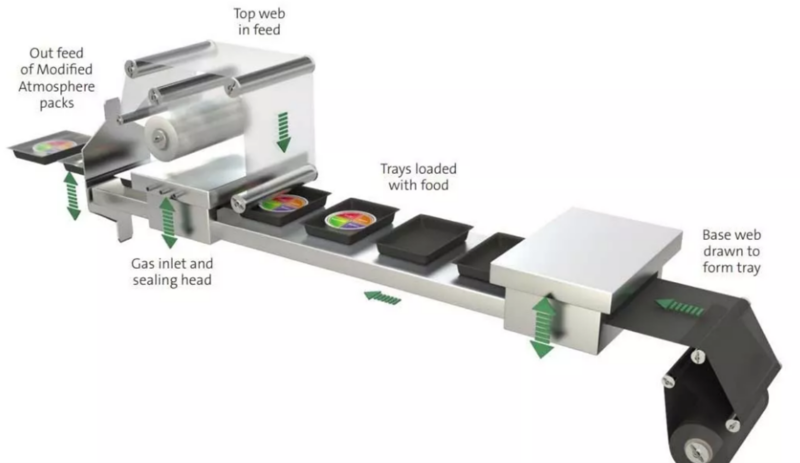
Figure 1: Modified atmosphere packaging process. Source: Wenzhou Mwellpack Machinery

Benefits and drawbacks of Map

Modified atmosphere packaging offers several benefits, including extended shelf life, reduced retail waste, minimal or no need for chemical preservation, and overall good food appearance. 

Modified atmosphere packaging also has some drawbacks, such as high initial costs for the equipment, environmental concerns related to plastic use, the potential growth of food-borne pathogens due to temperature non-compliance by retailers and consumers, and the loss of Map benefits once the packaging is opened or leaks.

Packaging material is one of the most important considerations in Map. The packaging material must have low gas permeability to prevent leakage. Polymeric films are used to wrap food products in Map to confine the modified gases. 

The key characteristics to consider when selecting packaging material for Map foods include resistance to puncture, sealing reliability, antifogging properties, carbon dioxide and oxygen permeability, and water transmission rate. 

The common polymeric/plastic films used are polyvinyl chloride (PVC), polyethylene terephthalate (PET), polypropylene (PP), polyethylene (PE), biaxially oriented polystyrene (BOPS), polystyrene (PS) shrink film, amongst others. 

Dr Sipho Sibanda
Dr Sipho Sibanda is a research team manager of the agricultural mechanisation, agro-processing and renewable energy division of the ARC Natural Resources and Engineering, Agricultural Engineering campus. Photo: ARC

Costs and shelf-life extension

Modified atmosphere packaging comes with high initial costs due to the expensive equipment and materials required. Additionally, operators need training, and the packaging film is costly due to its high-quality properties. 

Maintenance and gas costs also add to the overall expense. However, using Map can help expand one’s market reach, potentially leading to increased sales and profitability.

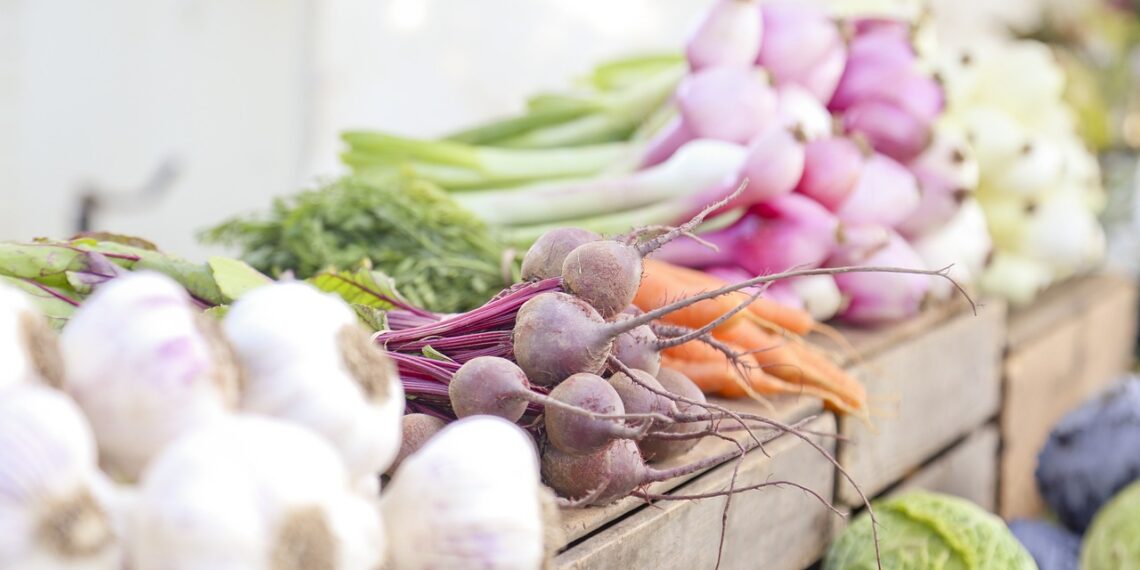
Modified atmosphere packaging has been successfully applied to various vegetables, including broccoli, cauliflower, carrots, garlic, and mushrooms, with other research also exploring its use for onions, sweet corn, and snow pea pods, using high water vapor permeable films as seen on Figure 2. 

Figure 2: Vegetables preserved through modified atmosphere packaging. Source: Internet

The maximum shelf-life extension occurs at the lowest oxygen concentration before anaerobic respiration begins, but this also poses the greatest risk of spoilage. 

The majority of products achieve a longer shelf life with Map than with vacuum packaging. On average, Map can extend the shelf life of vegetables from days to weeks. For leafy vegetables, not much significant shelf-life extension can be achieved through Map. 

The cabbage lifespan can be extended by 21 days at 4 ± 0.5℃ storage temperature and 90-95% relative humidity (RH), spinach shelf life extended by 7 days at 7℃  and 97% RH, and lettuce life expectance extended by 8 days at 5℃. 

The tomatoes’ life expectance can be extended by 21-35 days at 2-10℃, cucumber by 15 days at 4℃, cauliflower by 12-30 days at 1-5℃  and 90-96% RH, broccoli by 21-25 days at 1-10℃  and 90-95% RH, and 27 days for mushrooms at 4 ± 1℃. 

As a guideline for atmosphere storage, fruit and vegetables with high moisture content may be stored at 90–99% RH, 0–5℃, whereas fruit and vegetables with lower moisture content may be stored at lower RH of 60–70% and a temperature of 4–9℃. 

READ NEXT: Unlock your vineyard’s potential with expert wine guide

Sign up for Mzansi Today: Your daily take on the news and happenings from the agriculture value chain

Perm Mthethwa and Dr Sipho Sibanda

Tags: Agricultural Research CouncilCommercialising farmerFuture-focused farmerPackaging
The Forest of Renewal at Rustlers Valley celebrates the intertwined legacies of Frik Grobbelaar, Anton Chaka and Riky Rick, inviting South Africans to restore the land while cultivating hope, belonging and community. Illustration: ChatGPT
Food for Thought

Rustlers Valley offers a blueprint for South Africa’s renewal

by Ivor Price
18th July 2026

As the Rustlers Valley Memorial Forest is launched in the eastern Free State this weekend, Ivor Price reflects on why...

Read moreDetails
Grain SA appoints Mabuza to lead farmer development

Rising stars: 2026 PGP finalists redefining SA grain farming

18th July 2026
Rooibos heads to space in groundbreaking Mzansi experiment

Rooibos heads to space in groundbreaking Mzansi experiment

18th July 2026

Seriti Institute CEO wins prestigious Best Woman 2026 CSI award

17th July 2026
Farmers and brewers call for budget that builds, not breaks

Minister details Land Bank’s success in boosting black farmers

17th July 2026

Wits students step up to fight campus hunger

Weekly stock theft reports pile pressure on farmers

Seriti Institute CEO wins prestigious Best Woman 2026 CSI award

Early harvest and larger crops mark unusual 2026 lemon season

SA poultry industry calls for urgent bird flu vaccine rollout

Join Food For Mzansi's WhatsApp channel for the latest updates!

JOIN NOW!
Next Post
Ports paralysed: R98m daily loss sparks urgent calls for overhaul

Trade minister backs stronger SA-Nigeria economic ties

THE NEW FACE OF SOUTH AFRICAN AGRICULTURE

With 21 global awards in the first six years of its existence, Food For Mzansi is much more than an agriculture publication. It is a movement, unashamedly saluting the unsung heroes of South African agriculture. We believe in the power of agriculture to promote nation building and social cohesion by telling stories that are often overlooked by broader society.

Smart vineyard irrigation starts below the ground

Treat food processing as essential national infrastructure – Khoury

Farmers urged to embrace uncertainty and build resilience

SA poultry industry calls for urgent bird flu vaccine rollout

Mother’s legacy, neighbour’s grace: Venessa Simelane’s farm story

Deadline looms: Register water use by 23 July or risk penalties

  • Awards & Global Impact
  • Our Story
  • Contact Us
  • Cookie Policy
  • Privacy Policy
  • Copyright

Contact us
Office: +27 21 879 1824
News: info@foodformzansi.co.za
Advertising: sales@foodformzansi.co.za

Contact us
Office: +27 21 879 1824
News: info@foodformzansi.co.za
Advertising: sales@foodformzansi.co.za

  • Awards & Global Impact
  • Our Story
  • Contact Us
  • Cookie Policy
  • Privacy Policy
  • Copyright

Chat Options

I'm Lerato, your AI assistant!
No Result
View All Result
  • News
  • Changemakers
  • Lifestyle
  • Farmer’s Inside Track
  • Food for Thought

Copyright © 2024 Food for Mzansi

This website uses cookies. By continuing to use this website you are giving consent to cookies being used. Visit our Privacy and Cookie Policy.