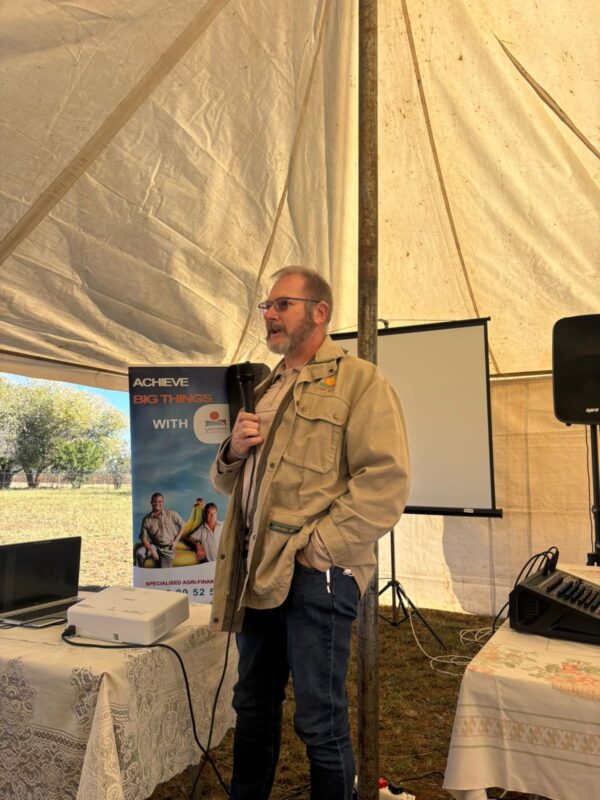
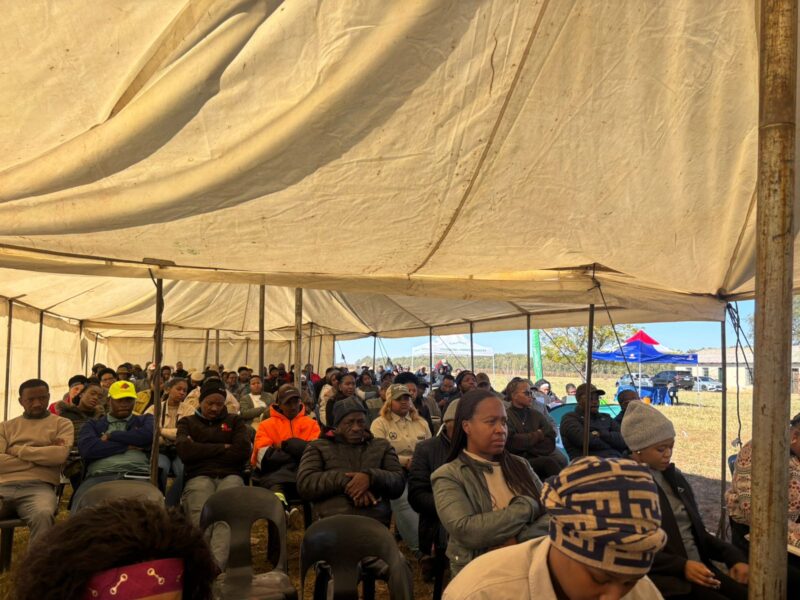
The spirit of youth-led transformation in agriculture took centre stage during the Free State leg of the Farmers’ Day series, powered by Food For Mzansi. Dozens of young farmers from across the province gathered at the event aimed at empowering the next generation of agricultural leaders.
The event tackled critical topics such as access to funding, product traceability, and sustainable farming practices. With South Africa’s agricultural sector evolving rapidly, the initiative provided a platform for knowledge-sharing, inspiration, and forging connections to help new-era farmers thrive in an increasingly competitive industry.
Kgomotso Ranchu, farm manager and host of the day, warmly welcomed attendees alongside the farm owner, Mponeng Lentoro.
“Use this opportunity to engage with stakeholders, especially Land Bank, there’s Sacta, the AgriBEE fund from the department of agriculture, there’s FarmSol, etc. Such stakeholders are very key in the agricultural industry in South Africa for funding for emerging or commercial farmers,” Lentoro said.
The event, which comes just before Youth Month, served as a launchpad for critical discussions around youth empowerment, funding, traceability, compliance, and sustainable growth in the agriculture sector.
At the heart of transformation
Tshepo Mabilo, acting head of the Free State department of agriculture, said youth development in agriculture is crucial for a sustainable future, revitalising economies and ensuring food security.
Mabilo highlighted the importance of inclusive funding programmes, including the Comprehensive Agricultural Support Programme (Casp) and LandCare. “We’re giving 50% to women, and we’re giving 40% to youth. We also give 10% to people living with disability,” he said.
When the Free State event drew to a close, the sense of urgency around supporting young farmers and preparing them for a rapidly evolving industry was evident.
“Let this session serve as a catalyst to increase young participation in agriculture. Let us seize the opportunity to forge the partnership, leverage innovative approaches and advance a shared vision that will propel the country towards the future of prosperity,” he said.
Related stories
- Agri-transformation: Nurturing new-era farmers for food security
- FS farm attack survivor finally finds justice, reclaims life
Traceability and disease control
Khomotso Mashiloane, a livestock technical advisor at RMIS, outlined the importance of traceability systems for boosting competitiveness and preventing market losses due to disease outbreaks.
“One of the main issues that we are confronted with day by day is the issue of disease outbreak. And that is affecting our productivity, that is affecting our export market. One of the things that we are doing is traceability, which is about market access. Secondly, it’s inclusive growth,” he said.
Mashiloane introduced the RMIS traceability platform, a free-to-use system integrating with existing record-keeping tools. Farmers can register and identify their farms with a unique global location number, ensuring better control during outbreaks and improved access to formal markets.
Empowerment, compliance, and innovation
The event also featured expert contributions from several sectors. Sandile Mahlangu, transformation manager at the South African Cultivar and Technology Agency (Sacta), shared strategies for meaningful transformation in agriculture.
John Lobeko from the department of agriculture highlighted the importance of ensuring compliance with food import and export standards. Siziphiwe Jojo, head of business development at Agricast Advisory Services, explained practical strategies for young farmers to grow their operations by unpacking the key components of a winning business plan.
Sosie Matla from Khula! unpacked financial digital tools to unlock growth for new-era farmers, and Jabulani Nzimande from Engen Lubricants brought attention to the critical role of optimising machinery performance in enhancing productivity.
“Our message to you guys as the farmers; it’s very simple from Engen. Prevention is better than cure. This is to help you guys understand the importance of lubrication. It’s important to know about the lubricants, because what does lubrication do? It ensures a longer lifespan for your machinery,” he said.


READ NEXT: Post-claim support: Why land reform isn’t just about land ownership
Sign up for Mzansi Today: Your daily take on the news and happenings from the agriculture value chain.