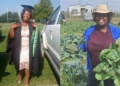
Years after a harrowing attack in 2020, award-winning Free State farmer Mimie Jacobs is finally reclaiming her peace. With her attacker finally sentenced, she’s ready to rebuild her life and farm.
On 22 February 2020, Moeketsi Mphatlatsa and two other accomplices broke into Jacobs’ home, tied her hands and feet with wire, and stabbed her multiple times, leaving her with serious neurological injuries.
The regional court sitting in Winnie Mandela, formerly Brandfort, sentenced Mphatlatsa to 20 years of direct imprisonment.
“You would not even begin to realise how relieved I am. I literally feel like a new person,” exclaims Jacobs in an interview with Food For Mzansi.
“There’s much more energy and surety in my step in what I’m doing. It really is a win for me. It says that the justice system works when everything is in place, when it comes to the one guy,” she adds.

Facing death
Jacobs recalls how, during the night of the attack, the assailants informed her that they knew she lived alone. Despite her severe injuries, Jacobs managed to walk 7 kilometres to the nearest farmhouse to seek help.
Rebuilding her life has been far from easy, she says. “I was diagnosed with PTSD and mild depression. I also suffered various setbacks in terms of my health.”
About a month and a half after the attack, Jacobs found herself back in the ICU. “At the time of the attack, my brain fluid went into the sinuses, causing ulcers in my head. Instead of doing a brain operation to remove it, one neurosurgeon opted for a new kind of intravenous medication, and that has resolved it.”
However, the attack’s impact has been lasting.
Related stories
- Cry for rural safety as farm attacks persist amid lack of resources
- EC villages under siege as livestock theft cripples farmers
“My left eye has deteriorated because of the swelling on the brain. I had three fractures. My eye socket was broken, as well as a fracture on my head. Because of the swelling, the optic nerve narrowed. I’m stable now, but I have to use chronic eye drops every day to avoid going blind in one eye,” she explains.
In 2023, when the perpetrators were re-arrested and Jacobs saw them in court for the first time since the attack, it brought back waves of fear and anxiety. She sought help from the Free State Psychiatric Complex, where a psychiatrist diagnosed her with PTSD and mild depression.
Errors by police
The court convicted Mphatlatsa on multiple charges and imposed 15 years for housebreaking with intent to rob and robbery, five years for kidnapping and 10 years for assault with intent to do grievous bodily harm.
Mojalefa Senokoatsane, regional spokesperson for the National Prosecuting Authority (NPA), said justice had been served not only for the victim but also for the broader rural community.
“These types of violent, organised attacks undermine safety, dignity, and social cohesion, particularly in isolated rural settings.
“This sentence sends a clear message: The law will not be lenient with perpetrators who violate the peace and security of our communities.”
However, as far Jacobs is concerned, her case could have been handled better.
“The police made different errors, but the one detective, Jacques Wilson, really outdid himself. He was very thorough as far as the investigations are concerned.”
Jacobs says she’s concerned about how the system sometimes fails victims. “As far as the other two are concerned, they got off on a technical point. It’s actually so scary that sometimes when the police make mistakes, a case goes right up in the air.”
Jacobs’ vision for a brighter future
After surviving a brutal farm attack and finally seeing justice served, Jacobs is embracing the future with hope and determination.
For a long time, her dreams felt out of reach, she says.
“My dream was a little bit buried because it literally felt like I was floating until the case was done. But I’ve got a lot of dreams on paper, and I’m pursuing them,” she shares.
Jacobs is passionate about her role in ensuring food security, not only as a female farmer but also as a contributor to the broader agricultural sector. “There are so many markets opening now with both the South African government and the South African Chamber of Commerce (SACI), where I’m a board member.”
Starting small, she began exporting teff and lucerne to Lesotho and Botswana. “Now there are so many opportunities to trade up in Africa, and I’m excited about that,” she says. “I’m excited about where the country is going with the GNU and the opportunities that exist now for us.”
Jacobs is also expanding and diversifying her farm’s operations. “My pecan trees started bearing fruit this year. It’s just a small yield, but next year’s harvest will be much better, and I can’t wait to re-enter the pecan market.”
She’s setting her sights on saffron farming next, and has also diversified her income by opening a bed-and-breakfast and hosting school and church groups on her farm.
Ultimately, Jacobs sees her farm as more than a personal venture. “I need to mean something. This farm needs to mean something for the community, and not just for myself,” she says with a smile.
READ NEXT: Post-claim support: Why land reform isn’t just about land ownership
Sign up for Mzansi Today: Your daily take on the news and happenings from the agriculture value chain.