Monday, September 7, 2026
SUBSCRIBE
22 GLOBAL MEDIA AWARDS
Food For Mzansi
  • News
  • Changemakers
  • Lifestyle
  • Farmer’s Inside Track
  • Food for Thought
No Result
View All Result
  • News
  • Changemakers
  • Lifestyle
  • Farmer’s Inside Track
  • Food for Thought
No Result
View All Result
Food For Mzansi
No Result
View All Result
in News

Northern Cape races to prevent locust disaster

“These locusts are at their third hopper stage, and they will fly in a period of 20-25 days, so we are really having a very tough time to combat them," says the Northern Cape department responsible for agriculture. Locusts have now been found in 37 towns and once they fly, they could do devastating damage to crops

by Sinesipho Tom
27th November 2021
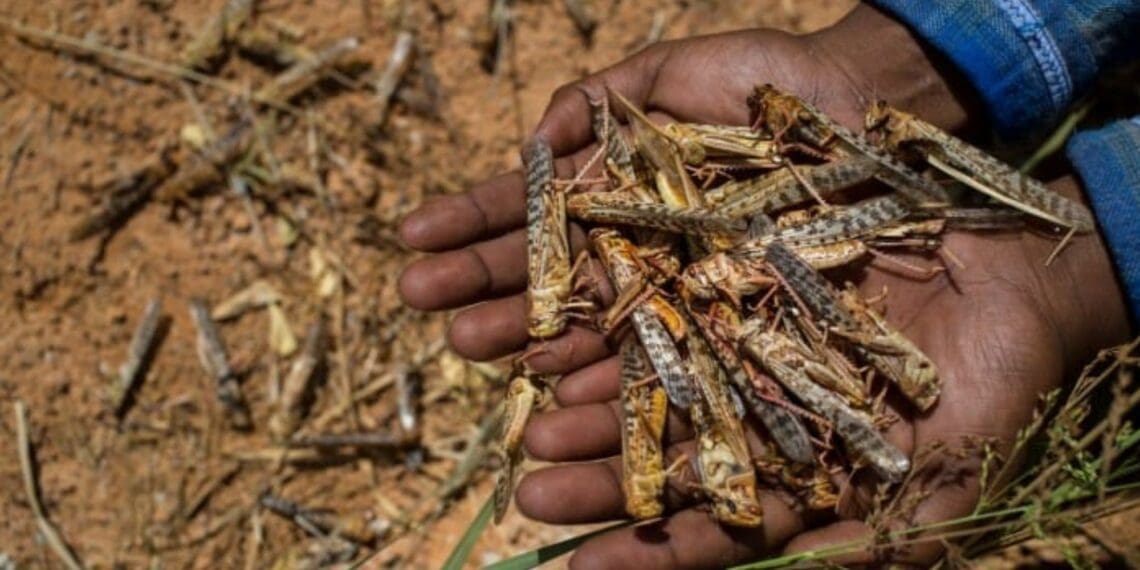
Aerial spraying to stop locust invasion have been suspended. Photo: Supplied/ Food For Mzansi

Aerial spraying to stop locust invasion have been suspended in the Eastern Cape. Photo: Supplied/ Food For Mzansi

Share on FacebookShare on TwitterShare on WhatsApp

The Northern Cape has just over 20 days to combat a brown locust outbreak in parts of the province. Agricultural leaders warn that once the locusts start to fly, they could destroy crops in irrigation areas and invade people’s homes.  

Zandisile Luphahla, spokesperson for the Northern Cape department of agriculture, environmental affairs, rural development and land reform, tells Food For Mzansi that the outbreak was first reported in October this year in some parts of the ZF Mgcawu and Pixley ka Seme districts.

Zandisile Luphahla, spokesperson for the Northern Cape department of agriculture, environmental affairs, rural development and land reform. Photo: Supplied/ Food For Mzansi

Now the insects have spread to 37 towns, with Pofadder in the Namakwa region and Hanover and De Aar in the Pixley ka Seme district highlighted as hotspot areas for locust outbreaks.

“We can safely say that these locusts are at their third hopper stage, and they will fly in a period of 20-25 days, so we are really having a very tough time to combat them. We really need our people on the ground to assist us,” says Luphahla.

The brown locust goes through five growth stages before being fully grown and ready to fly, says Prof. Frances Duncan, environmentalist at the school of animal, plant and environmental sciences at the University of Witwatersrand.

Duncan explains that once the brown locust starts flying, it becomes particularly harmful to crops. Once a swarm ends up in a maize field, it can consume the entire field.

To prevent this from happening, Luphahla says the department has been equipping its contractors and communities with skills to combat the locust outbreak.

“We are really trying by all means. We don’t sleep and we have been working really hard to make sure that we get everything under control.”

ALSO READ: ICYMI: Brown locust outbreak in Northern Cape

Authorities not getting access to farms

Agri Northern Cape president Nicol Jansen. Photo: Supplied/Food For Mzansi

Agri Northern Cape president Nicol Jansen concurs with Luphahla. He says organised agriculture is working hard and in cohesion with the department to combat the locusts before they grow wings and spread.  

“The department of agriculture gave training to teams to make use of a natural pesticide that breaks down in nature. It will not be harmful to the birds and the small animals that will feed on the locusts,” he says.

Luphahla adds that the department is currently getting cases reported to it daily. Authorities are battling, however, to get to all of them because they cannot get access to farms.

“Most of these locust eggs germinate and get laid in areas where the land is unoccupied, where the farmers have closed their gates and moved, or where some of them are not in town.”

Luphahla says they are trying all means to gain access to these areas and control the locusts. “If there is no one who can access this land… the moment [the locusts] start flying, we won’t be able to do anything. They will fly to other areas.”

Northern Cape landowners who are currently in other provinces are urged to return to their farms and inspect if they have locusts on their land. Alternative, they can give the department permission to access their land.

Locust outbreak spreads to other provinces

Jansen tells Food For Mzansi that the locusts have already spread to the Eastern Cape, Free State and the Western Cape. He expects the outbreak to last until May or June 2022.

“It is on a huge front and it is all over South Africa, you can say. In the Northern Cape up to 400 swarms a day has been combated and it’s an ongoing process. We expect that the first batch of locusts will reach their flying stage in the middle of December. That will hold a huge risk for the irrigation areas of the Orange River and the Vaal River as well as the Free State.”

ALSO READ: Brown locust plague threatens Eastern Cape farmers

ALSO READ: How brown locusts survived the long drought in SA

Sign up for Mzansi Today: Your daily take on the news and happenings from the agriculture value chain.

Sinesipho Tom

Sinesipho Tom is an audience engagement journalist at Food for Mzansi. Before joining the team, she worked in financial and business news at Media24. She has an appetite for news reporting and has written articles for Business Insider, Fin24 and Parent 24. If you could describe Sinesipho in a sentence you would say that she is a small-town girl with big, big dreams.

Tags: Agri Northern Capelocust outbreakNicol JansenNorthern CapeNorthern Cape Department of Agriculture
ONCE-OFF USE; DO NOT REPUBLISH
News

Foot-and-mouth crisis hits SA dairy industry with R1-billion loss

by Nathan Geffen
4th September 2026

South Africa’s worst foot-and-mouth disease (FMD) outbreak has devastated dairy farms. Beyond staggering financial losses and plummeting milk yields, the...

Read moreDetails
Tough times, hardy cattle: Why Mzansi farmers are choosing Nguni

Tough times, hardy cattle: Why Mzansi farmers are choosing Nguni

3rd September 2026
Dragon fruit thrives in KZN valley despite tough national season

Dragon fruit thrives in KZN valley despite tough national season

3rd September 2026
The future of Mzansi's sugar industry hangs in the balance

Government hikes sugar import price, but industry warns of gap

3rd September 2026

Chicken is booming, but the real money is in the supply chain

2nd September 2026

Government hikes sugar import price, but industry warns of gap

Tiger Brands CEO calls for stronger food value chain

How to align your farming cycles with long-term financial success

Rising costs, climate risk push Swartland wheat farmers to the brink

KZN farmer loses 90% of crop amid severe water shortages

Join Food For Mzansi's WhatsApp channel for the latest updates!

JOIN NOW!
Next Post
This week’s podcast features (from left) Audrey September, Dawn Nomdoe and Zoleka Lisa. Photos: Supplied/Food For Mzansi

Podcast: SAB drives transformation in agriculture

THE NEW FACE OF SOUTH AFRICAN AGRICULTURE

With 21 global awards in the first six years of its existence, Food For Mzansi is much more than an agriculture publication. It is a movement, unashamedly saluting the unsung heroes of South African agriculture. We believe in the power of agriculture to promote nation building and social cohesion by telling stories that are often overlooked by broader society.

This week’s agri events: 07–11 September

Tiger Brands CEO calls for stronger food value chain

Plant, pick, protect: The rising potential of urban foraging in SA

RSVP now: Emerging farmers’ programme at Nampo Cape

Community-led farms boost food security and incomes in Limpopo

Farmers rethink water use as shortages threaten food production

  • Awards & Global Impact
  • Our Story
  • Contact Us
  • Cookie Policy
  • Privacy Policy
  • Copyright

Contact us
Office: +27 21 879 1824
News: info@foodformzansi.co.za
Advertising: sales@foodformzansi.co.za

Contact us
Office: +27 21 879 1824
News: info@foodformzansi.co.za
Advertising: sales@foodformzansi.co.za

  • Awards & Global Impact
  • Our Story
  • Contact Us
  • Cookie Policy
  • Privacy Policy
  • Copyright

Chat Options

I'm Lerato, your AI assistant!
No Result
View All Result
  • News
  • Changemakers
  • Lifestyle
  • Farmer’s Inside Track
  • Food for Thought

Copyright © 2024 Food for Mzansi

This website uses cookies. By continuing to use this website you are giving consent to cookies being used. Visit our Privacy and Cookie Policy.