Amid water challenges, farmers in Mzansi are experiencing difficulty with their day-to-day operations, losing production and finances, which has a huge impact on job sustainability and food security.
Lindokuhle Mabaso, a farmer and owner of Mabaso Agri-Solutions from Emtuba in KwaZulu-Natal, has pleaded for financial assistance after losing 90% of spinach production due to a lack of water supply, drought and diseases.
Mabaso said the fungal disease that specifically affects green leafy plants, called Cercospora leaf spot, became a challenge for Agri-Solutions.
“I lost almost 90% of production because we just restarted and removed all spinach that was damaged by Cercospora leaf spot disease. And there is also drought. So, our crops are not growing well, and we have to remove everything and start again,” Mabaso said.
Higher operational costs impact workers
He said they have to rely on rainfall for water or purchase water. “So, what is happening with us is that we don’t have enough water; we rely on rainwater, and also, we buy water and also, we take water from taps,” Mabaso said.
Related stories
- Practical water-saving strategies every SA farmer can use now
- SA’s deepening water crisis threatens national food security
- SA’s water crisis: A permanent threat to farming and economy
- New-era farmers get dedicated programme at Nampo Cape
His financial losses have amounted to R30 000, as he had to prepare the land and provide remuneration for the workers.
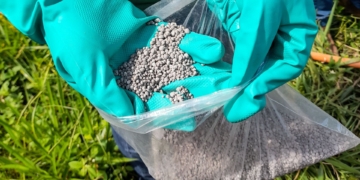
“We had to dig a little bit deeper in our pockets because we had operational costs, including having to purchase the fertiliser and manure.
“All I need right now is a borehole and proper irrigation system, so the borehole is costing me around R80 000 to R100 000. So that’s huge money we do not have, and a proper irrigation system will cost us R20 000 and above.”
Furthermore, he highlighted the impact that this issue had on his farmworkers.
“Workers are still on the farm; they understand that we faced this much damage, and then they are on my side. They support me, and they are still working. And when we are done and maybe start selling again, we will look again at how we repay them,” Mabaso said.
He said they had to restart with planting and ensure that the operations continue despite having major losses.

Mabaso’s farmers have endured difficulties during water scarcity on the farm, which led to them not receiving their salaries. Photo: Supplied/Food For Mzansi
Sustainable solutions needed for water challenges
Dr Lester Goldman, the CEO of the Water Institute of South Africa (WISA), highlighted the importance of preparing and managing many pressures, and the role of organisations that can help in addressing and providing solutions to the issue.
“South Africa’s water resilience depends on our ability to prepare for and manage multiple pressures, including ageing infrastructure, climate variability, pollution, increasing demand and water losses. We need to move beyond responding to individual crises and focus on building water systems that are resilient and sustainable over the long term.
“Collaboration is equally important. The challenges facing the water sector cannot be addressed by any one organisation alone. Government, municipalities, industry, researchers, water professionals and communities all have a role to play in developing and implementing practical solutions,” he said.
Environmental advisor, speaker and author, Dr Anthony Turton, called on government to clear the air on land ownership as that also has an impact on how farmers can be assisted navigate adverse weather conditions.
“Farmers understand drought, but no financial institution will be willing to fund an operation that is fundamentally insecure. Until this has been done, the risk of national food insecurity will continue to grow. South Africa will face famine, not because of drought, but because of politics,” he said.
READ NEXT: Onion prices surge 21% as banana supply falls sharply