Tuesday, September 8, 2026
SUBSCRIBE
22 GLOBAL MEDIA AWARDS
Food For Mzansi
  • News
  • Changemakers
  • Lifestyle
  • Farmer’s Inside Track
  • Food for Thought
No Result
View All Result
  • News
  • Changemakers
  • Lifestyle
  • Farmer’s Inside Track
  • Food for Thought
No Result
View All Result
Food For Mzansi
No Result
View All Result
in It Takes a Village

Nutritious plant-based meals serve rural learners in Genadendal Valley

Two rural schools in the Western Cape are now offering nutritious plant-based meals, thanks to a new pilot programme that focuses on using fresh, homegrown produce. This initiative aims to improve health and support local food security

by Ivor Price
26th November 2024
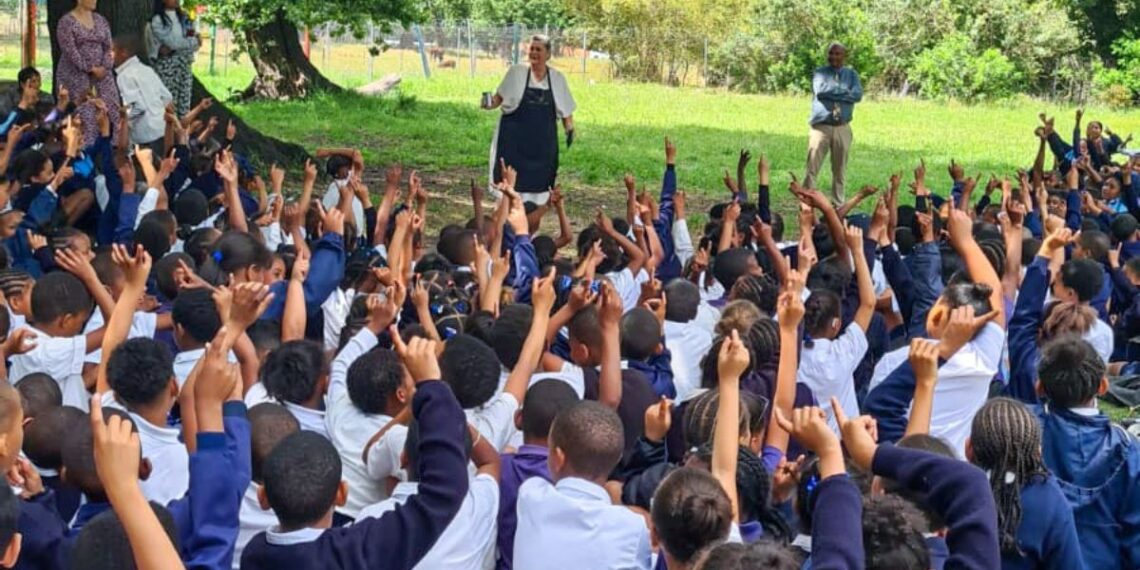
Learners at LR Schmidt Primary enjoy nutritious, plant-based meals made from fresh produce grown in their own gardens, enhancing both nutrition and food security in the Genadendal Valley, Western Cape. Photo: Supplied/Food For Mzansi

Learners at LR Schmidt Primary enjoy nutritious, plant-based meals made from fresh produce grown in their own gardens, enhancing both nutrition and food security in the Genadendal Valley, Western Cape. Photo: Supplied/Food For Mzansi

Share on FacebookShare on TwitterShare on WhatsApp

Nutritious plant-based meals made with fresh produce from their own school gardens are now being served to students at two rural schools in Genadendal Valley in the Western Cape.

This is thanks to the launch of Humane Society International/Africa’s (HSI/Africa) Green Monday SA programme. LR Schmidt Primary School, South Africa’s oldest primary school, and Emil Weder Secondary School, the only secondary school in the Valley of Grace, are the first to pilot this initiative, which aims to enhance the nutritional quality of meals with a variety of plant-based options.

The pilot programme, funded by the Western Cape education department, aims to enhance the nutritional quality of school meals by incorporating a wide variety of plant-based options sourced directly from the schools’ gardens.

LR Schmidt Primary, with an enrollment of 500 learners, currently feeds around 360 children daily, while Emil Weder Secondary, serving 550 learners, provides meals to 200 of them.

Some of the mouthwatering plant-based meals served include a protein-rich soy curry with cauliflower, spinach, spring onion, turnips, and fresh herbs, as well as a cabbage, carrot, raisin, and beetroot salad with homemade mayo dressing, and healthy sweet potato chocolate brownies.

LR Schmidt Primary’s thriving garden is a key part of the programme. The school grows a range of vegetables, including spinach, spring onions, herbs, cauliflower, turnips, carrots, sweet potatoes, and leeks.

Sixty percent of this harvest is used to enrich the learners’ meals, while the remaining produce is sold to the local community. Sales of vegetables help fund essential pantry items like vinegar and spices, which are used to preserve the produce and create additional side dishes for the meals.
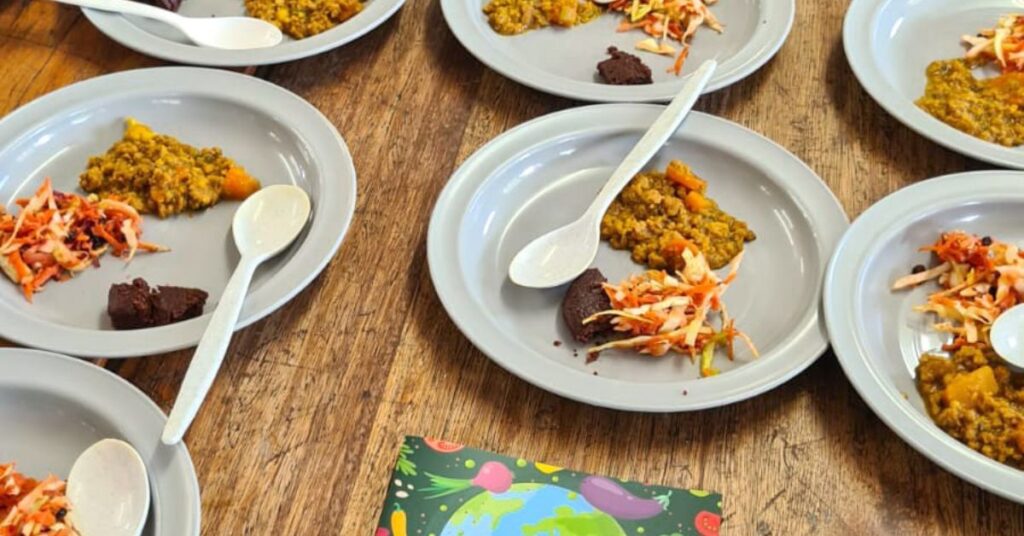
A delicious and colourful plant-based meal made from fresh, homegrown produce served to learners in the Genadendal Valley of the Western Cape. Photo: Supplied/Food For Mzansi

Enhancing nutrition and food security

HSI/Africa, in collaboration with Valley Food Gardens, worked closely with the schools’ cooks to evaluate their existing menus and incorporate more nutrient-dense, plant-based ingredients. The programme reduces the use of animal-based products by 20%, introducing more sustainable and healthier alternatives.

Learners also receive Eating Green at School is Cool booklets, which educate them on the benefits of plant-based eating and the nutritional value of the vegetables grown in their own gardens.
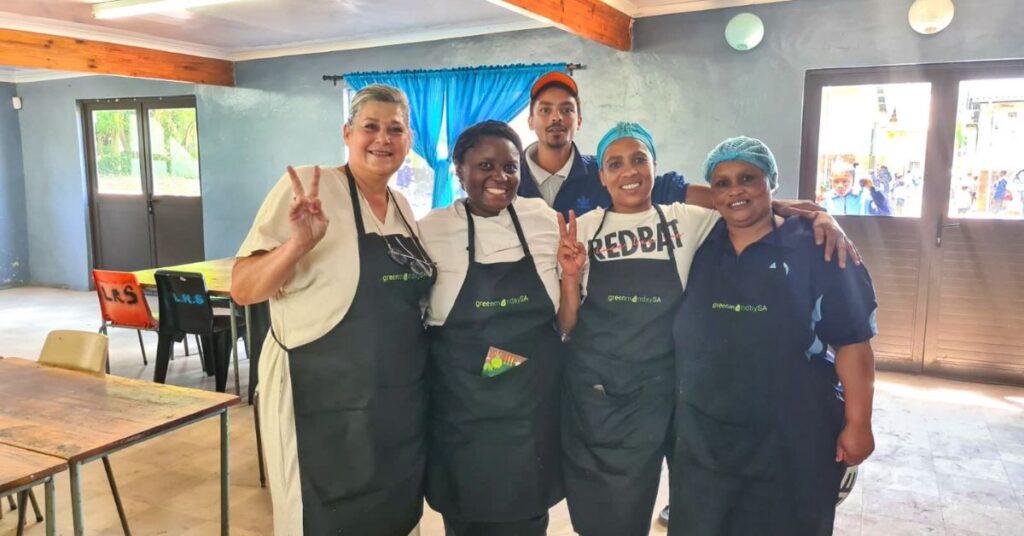
Norah Hudson from HSI/Africa, chef Jane Nshuti, and school cooks Danell Sauls, Elisma Mageman, and Daylin Loffand (at the back) collaborate to create nutritious, plant-based meals for students in the Genadendal Valley. Photo: Supplied/Food For Mzansi

Norah Hudson, Green Monday SA campaign consultant for HSI/Africa, expressed her excitement about the initiative.

“We are thrilled to launch this pilot programme at LR Schmidt and Emil Weder schools, with plans to expand across the Western Cape and eventually the whole of South Africa,” she said.

“Eating more plant-based meals not only improves our health, but also helps reduce the environmental impact of animal agriculture. It can also boost food security in under-resourced communities. It’s incredibly rewarding to see students benefiting from their own efforts and enjoying the homegrown produce.”

In 2025, the programme will introduce an exciting new initiative where learners can participate in a feeding scheme. Those who collect meals for at least a month will receive a seedling tin to nurture with the help of the school gardener.

Once their fruits and vegetables are ready to harvest, the students can sell them back to the school kitchen for a small stipend – an opportunity that many children in rural communities rarely have.

Green Monday is a global initiative supported by Humane Society International, one of the world’s largest animal protection organisations. The programme encourages people to improve their health, the environment, and animal welfare by swapping animal products for plant-based meals at least once a week.

READ NEXT: Spekboom’s health and climate perks are unstoppable

Sign up for Mzansi Today: Your daily take on the news and happenings from the agriculture value chain.

Ivor Price

Ivor Price is a multi-award-winning journalist and co-founder of Food For Mzansi.

Tags: Consumer interestFood gardensInform meWestern Cape
Farmers rethink water use as shortages threaten food production
News

Farmers rethink water use as shortages threaten food production

by Vateka Halile
5th September 2026

What happens when the taps run dry? Farmers know the answer all too well. Experts and farmers at the Water...

Read moreDetails
Honoured roots: A father’s legacy, a daughter’s farming dream

Honoured roots: A father’s legacy, a daughter’s farming dream

4th September 2026
Gauteng farmers urged to harness massive urban market

Gauteng farmers urged to harness massive urban market

4th September 2026
ONCE-OFF USE; DO NOT REPUBLISH

Foot-and-mouth crisis hits SA dairy industry with R1-billion loss

4th September 2026
Tough times, hardy cattle: Why Mzansi farmers are choosing Nguni

Tough times, hardy cattle: Why Mzansi farmers are choosing Nguni

3rd September 2026

Government hikes sugar import price, but industry warns of gap

Plant, pick, protect: The rising potential of urban foraging in SA

Farmers rethink water use as shortages threaten food production

This week’s agri events: 07–11 September

Chicken is booming, but the real money is in the supply chain

Join Food For Mzansi's WhatsApp channel for the latest updates!

JOIN NOW!
Next Post
Animal health expert Kenneth Malatji explains that the calving period should be carefully observed to determine if veterinary assistance is required.

Tips for cattle farmers: Pregnancy detection & calving management

THE NEW FACE OF SOUTH AFRICAN AGRICULTURE

With 21 global awards in the first six years of its existence, Food For Mzansi is much more than an agriculture publication. It is a movement, unashamedly saluting the unsung heroes of South African agriculture. We believe in the power of agriculture to promote nation building and social cohesion by telling stories that are often overlooked by broader society.

Young farmers need structured opportunities, not just open doors

BenicaTheFarmer: The nurse who built an agricultural empire

Rural safety under fire as stock theft and farm violence persist

This week’s agri events: 07–11 September

Tiger Brands CEO calls for stronger food value chain

Plant, pick, protect: The rising potential of urban foraging in SA

  • Awards & Global Impact
  • Our Story
  • Contact Us
  • Cookie Policy
  • Privacy Policy
  • Copyright

Contact us
Office: +27 21 879 1824
News: info@foodformzansi.co.za
Advertising: sales@foodformzansi.co.za

Contact us
Office: +27 21 879 1824
News: info@foodformzansi.co.za
Advertising: sales@foodformzansi.co.za

  • Awards & Global Impact
  • Our Story
  • Contact Us
  • Cookie Policy
  • Privacy Policy
  • Copyright

Chat Options

I'm Lerato, your AI assistant!
No Result
View All Result
  • News
  • Changemakers
  • Lifestyle
  • Farmer’s Inside Track
  • Food for Thought

Copyright © 2024 Food for Mzansi

This website uses cookies. By continuing to use this website you are giving consent to cookies being used. Visit our Privacy and Cookie Policy.