 The restitution of land remains a very emotive issue in South Africa. The general consensus is that the land question needs to be addressed expeditiously to redress the wrongs of the past and remedy the skewed racial patterns in land ownership, but with caution, to ensure that South Africa does not become “another failed” land reform case study, as we have seen happening across the region.
However, anecdotal testimonies of transferred land being left to degradation on the one hand, and the prohibitive cost of buying land on behalf of the claimants on the other, has shone a spotlight on the importance of finding a sustainable post settlement approach that can empower land reform beneficiaries by creating an enabling environment for private investors to become active players in efforts to make transferred land productive.
Don’t repeat past mistakes

Government has announced plans to redistribute 700 000 hectares of state-owned agricultural land for agricultural expansion and inclusive growth. Communities across the country have mixed sentiments about this, but the majority agree it is a necessary step to ensure that under-utilised land is brought to productive use.
Major concerns remain around ways in which productive land use can be sustained when the country continues to struggle to allocate funds for key projects, with land reform among them.
According to the Vumelana Advisory Fund, a non-profit organisation that supports land reform beneficiaries in making their land productive, the steps being taken by government to fast track the pace of land reform through pegging underutilised land and availing it to interested parties is a formidable move.
However, much care must be taken to ensure that the mistakes made in the past are not repeated. Furthermore, government, individuals, cooperatives and private investors alike should draw lessons from some of the successful work that has been done in land reform over the last 26 years.
“While government tries to empower dispossessed communities by reallocating their ancestral land, it is actually disempowering them if nothing is done to capacitate and empower communities to make land profitable.”
“We’ve seen communities such as the Mamahlola CPA and Giba CPA, Mswati CPA and Moletele CPA among others, rise against the challenges to make their land productive through facilitated partnerships with private investors,” says Peter Setou, chief executive of the Vumelana Advisory Fund.
The Mamahlola Communal Property Association (CPA), for instance, was among the first to be settled in 2000, but due to underinvestment, their land soon turned into a symbol of government’s land restoration failure. At the time, government provided support of R4.5 million in funding so that the community could develop the land.
The funds were exhausted in a very short period, because the farm had 137 workers who were owed wages amounting to R4.2 million, as the CPA had been compelled to take over the existing workforce as a condition of the restoration of the land.
“Our view is that just as private investment triggers economic growth, private investment in land reform triggers economic benefits for the project.”
According to spokesperson for the Mamahlola CPA, Letsoalo Maredi, “South Africa’s history of land dispossession is very painful. While government tries to empower dispossessed communities by reallocating their ancestral land, it is actually disempowering them if nothing is done to capacitate and empower communities to make land profitable.”
With the Mamahlola CPA having gone through a tumultuous period in 2003, including a judicial order stripping away the community’s powers over the land in 2016, they were introduced to Vumelana, and the organisation supported the CPA in facilitating a partnership with private investor Serala Estate (Pty) Ltd previously called Lesa Force.
In 2017, the parties signed a 25-year land lease agreement for 370 hectares of their land. Serala Estate works the land and pays an agreed rental amount per quarter in advance (with annual increases). In addition, they employ community members and support initiatives to upskill them.
Enhancing community performance

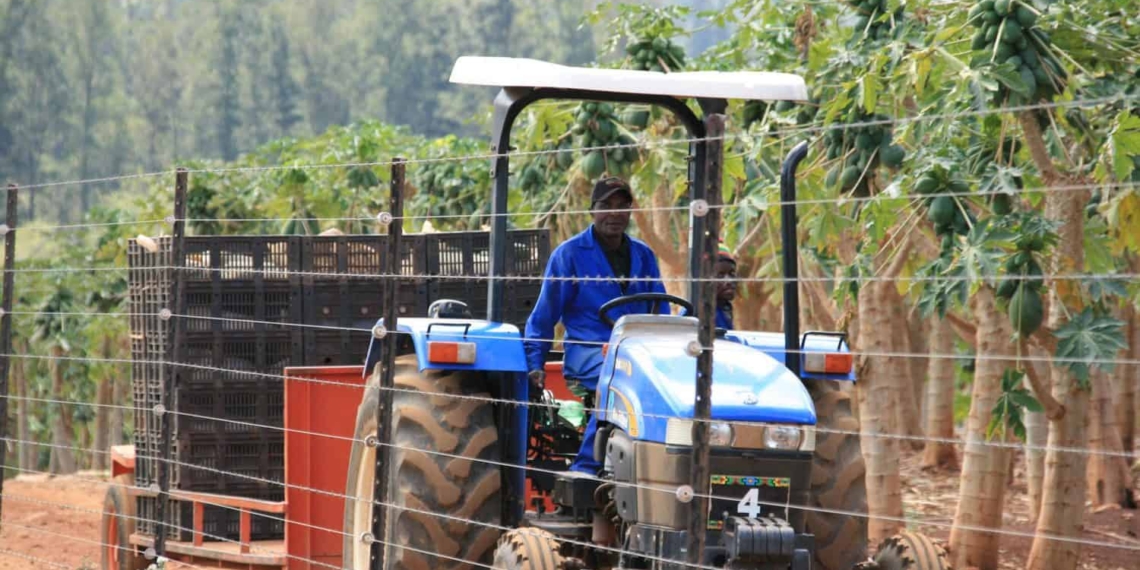
On the farm, Serala Estate grows oranges, macadamia nuts, avocado and mangoes, and provides employment to 100 community members. This has supported the community in boosting its performance in the last three years.
The Moletele CPA in Hoedspruit is another case in point. In 2013, Vumelana facilitated a lease-agreement partnership between the community and Matuma Farms. Part of the agreement is that the investor pays the community a monthly lease fee for a portion of the land that it has leased from the community and for water use.
On the land, Matuma Farms produces citrus and mangoes, some of which are exported. Profit share on the proceedings of the produce from the farm is split equally between the two parties.
In August this year, the Moletele CPA received R1.2 million in profit share. Part of the investor’s commitment has been to create jobs for the community. Matuma Farms employs 90 permanent staff and 300 seasonal workers.
Albert Thabane, chairman of the Moletele CPA, says, “The partnership has played an important role in sustaining the land and ensuring continued productivity since the land was reinstated to the community.”
He explains that the community co-manages the land together with the investor, which has provided opportunity for skills development in an area in which the community had no knowledge.
“We have been able to learn the ropes as Matuma Farms management has been mentoring us. I don’t think we would have succeeded in keeping our farms running if we did not have this kind of support.”
Powerful Hoedspruit project

He highlighted that now six women from the community are involved in a project initiated through Hoedspruit’s Hub, which is an agriculture training centre facilitated by Dr Anri Landman from Matuma Farm.
Through the programme Landman works with women in the community to groom them on growing flowers for the Hub to produce oils in order to make lotions and perfume. A distillery has been constructed on the farm, and the oil will be processed in the distillery and exported. Landman is currently lobbying support from the export market.
“Our view is that just as private investment triggers economic growth, private investment in land reform triggers economic benefits for the project. For communities to realise the economic benefits of their land, they need more than just funding, they need skills, access to markets, training in good governance practices, financial management among other activities,” highlights Emile de Kock, an independent transaction advisor working with Vumelana Advisory Fund.
“And this is what will be required in any land programme, especially in instances where people have no experience in the administering of large plots of land,” he continues.
De Kock says, “While it may be difficult to track and measure, without a doubt there is always a multiplier impact on communities and livelihoods where land is productive. Therefore, there is value in sustaining farms, ensuring that they remain active, and that communities have a vested interest in their land. It’s a critical aspect of mitigating risk.
“Our focus on land reform should not be on failure, but should be towards driving the land reform process and sustaining efforts to keep land productive, through diverse mechanisms that support communities to better administer their land without compromising their interests, and among others, private investments in land reform is one such focus.”