It might seem as if papaya is an easy crop to grow as it starts producing in the first year, but there is quite an extensive amount of intricate labour to create a successful annual turnover.
Gerrit Nieuwoudt, head of research and development at Neofresh, gives insight into the tips and tricks to get the most out of growing papayas.
Papaya or pawpaw?
The papaya fruit originally gained its popularity in Mexico in the subtropical region. The markets today continue to flourish on the other side of the world, but there is no doubt that South Africans love this summer fruit as well.

“Both papaya and pawpaw are the same species, the Caricaceae, which originates from Mexico in the tropical region. Pawpaws are originally the yellow flesh, strong flavoured, while the papaya is pink and sweeter,” says Nieuwoudt.
Usually, the papaya seeds are supplied through international markets, however, there are some nurseries in South Africa that can grow the seedlings into a tree.
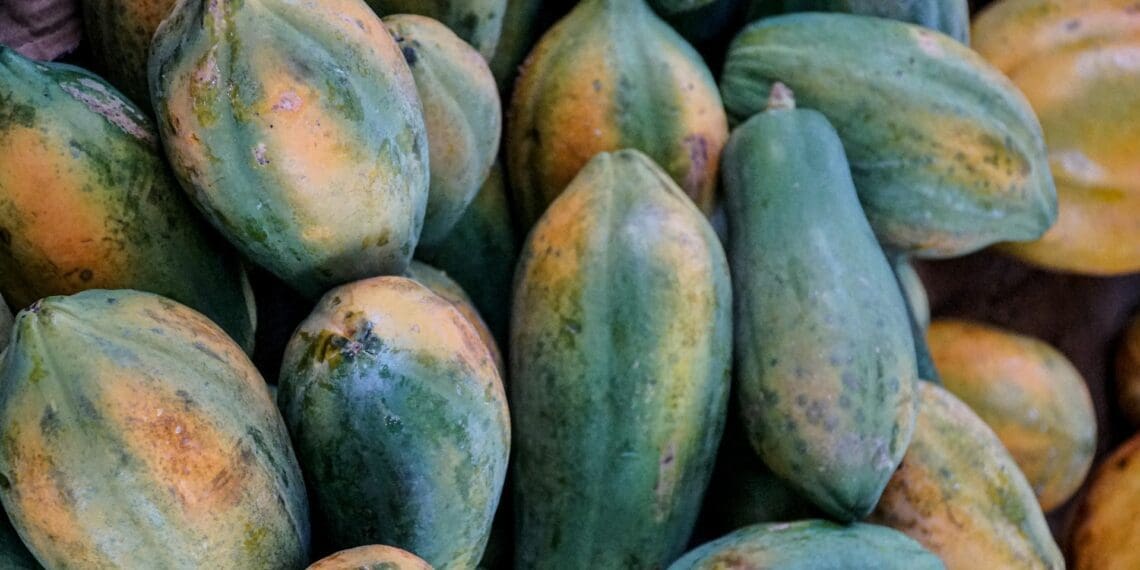
It is important to make sure that the quality of seeds is of a great standard. The preferred fruit is a hermaphrodite, pear-shaped fruit in Mzansi markets. The round fruit pawpaw/papaya, even though it tastes the same, do not survive in our local markets.
Soil and fertiliser
Papayas prefer a well-range loamy soil about 50cm deep, with a pH level of 6-7, Nieuwoudt says. One can build ridges and grow papayas on top of the ridges for the stability of the tree.
Papayas are quite heavy feeders and organic material is preferred to grow the delicious fruit.
“It is important the soil has the right amount of potassium and magnesium, but also baron; the trick is you can’t have too much baron. Be aware of too little baron as well because this can result in deformations of fruit where no flowering will take place,” Nieuwoudt explains.
The soil is an important component to have a successful harvest. If the soil does not carry the right amount of nutrients, farmers are heading for disappointment. It is the one thing that should be avoided when it can be done correctly.
Ideal climate and water requirements
The best climates in Mzansi to grow papayas are the Lowveld areas. The tropical regions have the best humid climates to grow fruit.
Frost also plays a damaging role for the fruit and anything below 13 degrees can kill papayas.
“Papaya is a tropical crop. It prefers warm humid areas which you will find in the Lowveld. During the winter period, the papaya trees are more prone to be attacked by some diseases such as black spots,” Nieuwoudt says.
The trees produce fruit 12 months a year. It requires a great amount of water to be able to produce a successful harvest. Depending on your type of irrigation and your soil type, you would irrigate papaya twice a week, which can all be through micro or driplines to water the area.
“Papayas need a good quality of water; not brackish water with high pH and a high acidity base balance. It needs a great volume of water and a consistent water flow because it is growing right through the year and produces fruit for 12 months of the year. It constantly needs water,” he adds.
Papayas grow quite fast so make sure that the tree doesn’t dry out. If it comes under water stress, the flowers will abort, meaning the tree won’t bear fruit. This is something that should be avoided.
Pests and disease
As most fruits experience some pests and disease hindrances, there is no exception for the papaya. According to Nieuwoudt, there are quite a few to look out for, mainly:
- Anthracnose
- Charcoal spot
- Colletotrichum
- Gleosporoides
- Black rot
- Mycosphaerella caricae
- Black spot
- Asperisporium caricae
- Cercospora black spot
- Cercospora papaya
- Powdery mildew
- Oidium caricae-papayae
Profitability
There is no doubt that the papaya market can be profitable. What should be taken into consideration, are the input costs and how it affects the output as well.
On a good year, a farmer can walk away with 40-80 tons of fruit for the market, it all has to do with the type of equipment the farmer has as well as available land to produce.
“You need heavy equipment as well as a sizable hectarage to cover the capital costs of the equipment. The availability of land might be a problem as well. It is difficult to plant papayas rotation after rotation on the same soil due to pests and disease. You would continue to grow in new areas.
“If you have a local market that can absorb small amounts of fruit, you can plant half a hectare and replace the planting after three or four years. You might need 30-40 hectares to cover capital outlay yearly – this is when you are competing on large scales,” Nieuwoudt advises.
He also says you should do desktop research, see what works in your area, and how many can be sold.
ALSO READ: How to make the most of growing mangoes
Sign up for Farmer’s Inside Track: Join our exclusive platform for new entrants into farming and agri-business, with newsletters and and podcasts.