Fishers from Western Cape coastal communities like Hawston, Hermanus, and Gansbaai depend on abalone (also known as “perlemoen”) for their livelihoods.
But those with commercial abalone permits believe their trade could be threatened if a greater share of the limited quota is given to the small-scale fishing sector.
Public comment on the department of forestry, fisheries and the environment (DFFE)’s intention to allocate abalone to the small-scale fishing sector opened in the Eastern Cape in February. It is not clear when this process will start in the Western Cape.
There’s been no date set yet for consultations over the future of abalone fishing in the Western Cape and Eastern Cape, according to DFFE spokesperson Peter Mbelengwa. He added that “no decision has been made on whether abalone fishing rights will be allocated to the small-scale fishing sector” or what the potential quota would be.
Since the early 2000s, about 300 commercial abalone fishers have been allocated abalone fishing rights. When the rights period ended in 2014, these fishers were granted yearly exemption permits, which allowed them to continue diving for abalone according to their quota.
Related stories
- Inland fisheries policy ‘can only work if implemented’
- Small-scale fishers struggle amid policy delays
Currently, there are about 100 commercial exemption permit holders. This is far less than the previous fishing season, when there were about 300 permit holders, most of whom are from poor communities. The DFFE recently announced the suspension of many of the 300 permits, pending criminal investigations into alleged “serious offences in terms of the Marine Living Resources Act”.
Some fishers who still dive for their quota are worried about the dwindling number of abalone.
The small-scale fishing sector rights took years and were only finalised at the end of 2023, establishing about 62 small-scale fishing cooperatives in the Western Cape, with thousands of small-scale fishers.
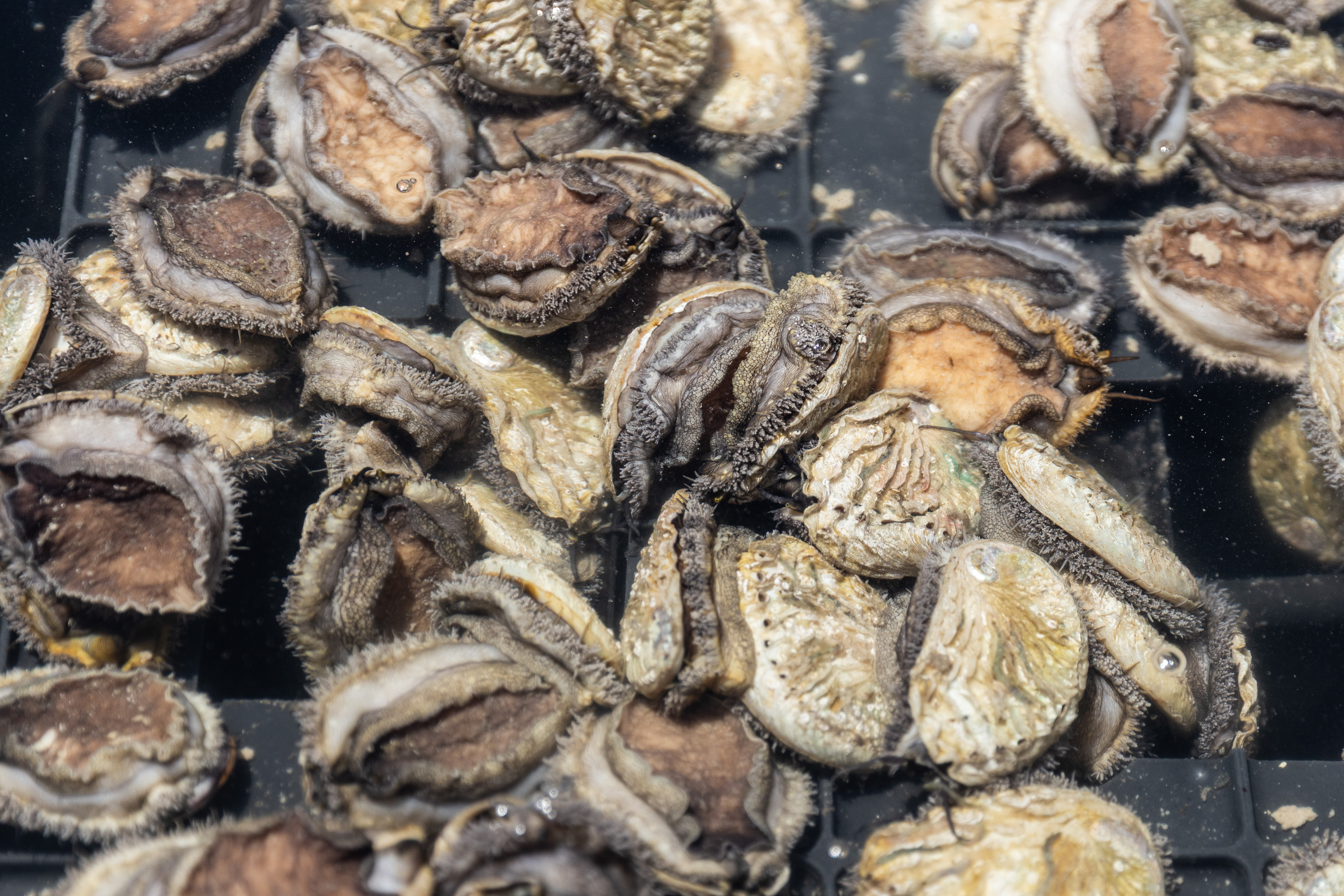
About 2 400 tons of abalone were poached in 2022, according to data recorded by TRAFFIC, an organisation which tracks wildlife trafficking. Photo: Ashraf Hendricks/GroundUp
Losing a lifeline
Abalone diver and exemption permit holder from Hermanus, Anton Kruger, said the allowable catch had decreased so much over the years that there would barely be enough if the small-scale sector is given allocations.
Kruger said he had seen the resource dwindle over the years. Two years ago, in the Hangklip area, after diving for six hours, he only caught seven abalone. After spending four hours diving in Kommetjie, he only left with one abalone, he said.
Soon after, he went diving at St Helena Bay and couldn’t find any abalone, hours later, after three dives. He said he found a patch of abalone and “filled the quota” there. But when he returned the following year, “there was nothing”. “It was gone,” he said.
In 2001, the total allowable catch (TAC) was set at 475 tons. Fishers like Kruger were allocated a yearly TAC of 300kg. Those without an additional lobster quota had higher TAC amounts of up to 500kg. This TAC decreased over the years as the abalone numbers plummeted.
Kruger’s current annual quota is 94kg.
At the time, the then-department of environmental affairs and tourism said that the allocation of abalone rights to the commercial sector aimed to introduce “a new system of co-management, and to effectively address the threat of the illegal harvesting and over-catching of abalone”.
However, the estimated number of poached abalone is much higher than the yearly TAC. TRAFFIC, an organisation which monitors wildlife trafficking, estimates that between 2000 and 2016, just over 2 100 tons of abalone were poached per year. More recent figures by TRAFFIC estimated that poached abalone peaked in 2018 with just over 5 000 tons and then saw a drop to about 2 400 tons poached in 2022.
Commercial exemption permit holder from Hawston, Frederick Fisher, said he is worried about his livelihood if the abalone quota is slashed even further or given to the small-scale sector.
After paying costs like boats and transport, he takes home about R80 000 per year. Perlemoen is the only thing he catches and the only way he makes a living, he said.
Poverty fuels poaching
Fisher, who was born and raised in Hawston, said that poaching was rife in his community. “You can’t blame the people. They don’t have work,” he said.
“Abalone is in any case on the edge of collapse … If they make the mistake of giving small-scale the abalone,” he said.
Another commercial rights holder from Gansbaai, Sammy Brett, blamed socio-economic circumstances in coastal communities as the root cause for poaching. He said making arrests was not enough to curb poaching and “shows no humanity towards these people”.
Decreasing the abalone TAC could mean even less quota for those with permits, he said.
Brett said that he was sceptical that bringing in the small-scale sector would help to bring fishing communities out of poverty.
Small-scale fishing representative organisation, Masifundise, said there is a demand from small-scale fishers to access abalone rights, but they also have “important concerns” that should be addressed. “Particularly given that these communities are often excluded from decisions that affect their livelihoods.”
The department’s Mbelengwa added that the concerns raised by commercial exemption permit holders regarding potential conflict in the fishing community “are premature and pre-emptive” as the formal consultation process about the future of the abalone sector has “not yet commenced”. He said that the department has consistently talked to various fishing sectors, including the abalone permit holders, and that further engagements would take place.
This article was first published on GroundUp.
READ NEXT: SA avocados land in China amid red meat export setback
Sign up for Mzansi Today: Your daily take on the news and happenings from the agriculture value chain.