While Easter is a period of celebrations and fish becomes a favourite on many tables, farmers and experts say the fishing industry is currently going through a phase that needs bold decisions to ensure its sustainability and growth.
Aquaponics farmer Michael James Nunes said that while there are markets for fish, the country faces over-fishing in the oceans, and he believes the problem has been escalating for quite some time.
“To be able to stabilise our fish production, we need to look at different ways of looking after our species in our oceans. [We] need to look at ways of making sure our species is safe, and looking at fishing freshwater fish in farming systems on land is one way to eliminate the over-fishing,” he said.
Many fishers and workers out of work
Meanwhile, Moenieba Isaacs, a professor with the Institute for Poverty, Land and Agrarian Studies (Plaas) at the University of the Western Cape (UWC), said sustainability is key and over the years, the industry had not seen growth, which is worrying for those who rely on the commodity for a living.
She said areas like Saldanha, where workers were laid off, have negatively impacted the industry, tourism, and the livelihoods of many people.
“There has not been growth in the industry. The closure of factories in Saldanha led to many workers applying to be small-scale fishers, which ended up populating the commodity because of unemployment. The industry itself does not create jobs; even hake fishing has taken a knock. Those who are working full time with benefits, the numbers have gone down drastically,” she explained.
Related stories
- Illegal fishing threatens Pondoland’s future
- ‘Poacher’ tag, regulations sink Aboriginal fishing practices
Isaacs said even during the long weekend of Easter in the coastal areas, there is not much happening besides a few seasonal workers cleaning the fish for restaurants.
“Small-scale fisheries are seasonal, jobs are stagnant, and going into the winter months, it is going to be very difficult, especially in towns where they rely on fishing. This leads to many people surviving on social grants as a means of survival. It does get dire when the fishing season goes down.”
Isaacs said the government and fishing industry need to build resilient local industries that are attached to tourism, that will continue sustaining jobs post-season.
“We are in the Easter season, the industry should be blossoming, but that is not the case now. I think it is important to start thinking of protecting local markets and encouraging them to operate because they are able to feed many people. It is right there in front of us, it is about investment for our people and communities,” she said.
Struggle with policy implementation
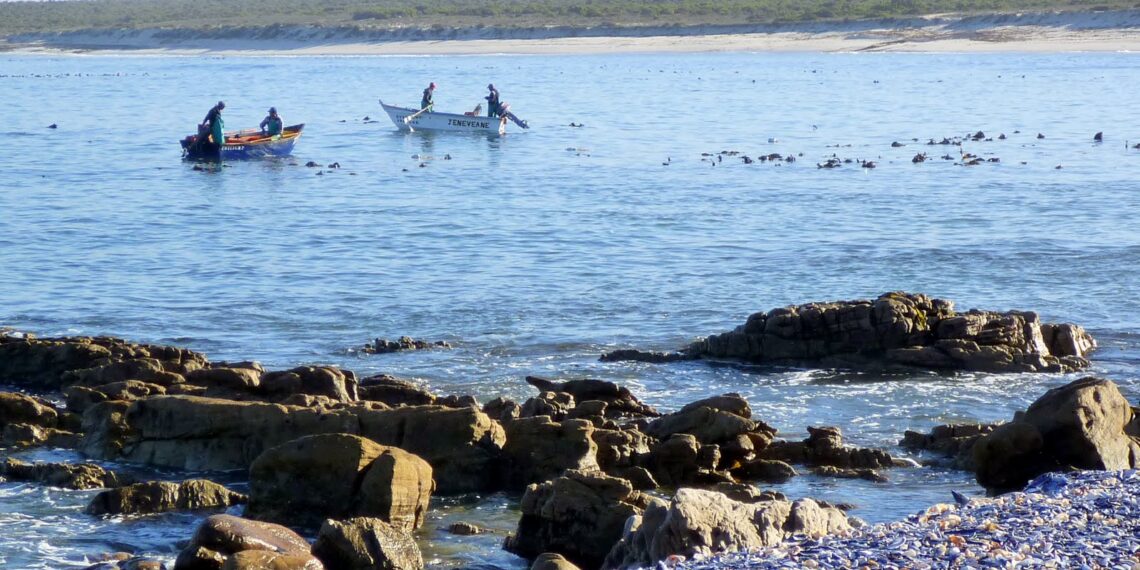
Carmen Mannarino, a programme manager at the fishing community organisation Masifundise, said the implementation of small-scale fisheries policy by the government has been finalised, which led to cooperatives being formed in the coastal provinces. However, she added, it is not possible to say if there is growth in the sector.
“We have been conducting workshops in the past few months, and what came out of this was that small-scale fisheries are facing a crisis in South Africa due to a lack of proper implementation of policies and legislation that are supposed to uphold the rights of small-scale fisheries.
“We are still seeing a delay in issuing of permits, even for the cooperatives that are formed. There is no proper support that they get, especially a push to commercialisation from government,” she said.
Mannarino said the state of small-scale fisheries is dire, as some small-scale fisheries are facing challenges impacting their day-to-day operations. She noted that fishers continue fighting and working on the ground.
READ NEXT: Agri leaders demand stronger policing in rural communities
Sign up for Mzansi Today: Your daily take on the news and happenings from the agriculture value chain