As South Africa’s poultry sector fights the twin demons of relentless power cuts and a crippling avian influenza outbreak, Professor Robert Bragg shines a light on a crucial battle for survival. With an urgent vaccination drive underway, the industry faces a race against time to protect its flocks and ensure food security.

The poultry sector in South Africa is currently undergoing serious challenges.
The ongoing load shedding and power disruptions have put tremendous pressure and additional costs on the industry, which makes producing poultry products extremely expensive. One company (Astral Foods) has spent an additional R919 million as a result of load shedding alone. This has obviously had a significant impact on the profitability and sustainability of the company.
Now to make matters worse – the local poultry industry has been hit with a major avian influenza epidemic.
Avian influenza (AI) is a viral disease of birds, including poultry. The term “AI” is frequently in the news these days and often refers to artificial intelligence. In this article, the term AI refers to avian influenza. This is a devastating disease of poultry and can wipe out a flock in just a few days. AI is the most widely-studied disease of poultry as it has been causing major problems in poultry industries around the world for many years.
Reluctance to vaccinate
In the past (five to 10 years ago) avian influenza (AI), was pretty much the only serious poultry disease which South Africa did not have. There have been cases of what is called low pathogenic Avian Influenza in ostriches for some time. However, the commercial poultry industry was, for a long time, free of the highly pathogenic strain of the virus. This is now, unfortunately, no longer the case.
In the past, Veterinary Services was reluctant to allow vaccination of poultry in South Africa against AI. Most of the major international vaccine manufacturers have highly effective vaccines against AI, which are widely used in many countries where AI has become well-established. There were two reasons for this reluctance to allow vaccination against AI.
Firstly, there is a well-organised and -run surveillance system in place for AI in South Africa. The basis of this monitoring programme is routinely looking for antibodies against AI in commercial poultry. This surveillance system is only possible if the birds are not vaccinated. The control policy in the past was a “stamping-out” policy. In other words, when AI is detected in a flock, the flock is destroyed.
Secondly, AI has not been a major problem in South Africa in the past and the previous outbreaks were successfully controlled with the stamping-out policy which was in place. Previous AI outbreaks were successfully controlled.
No hiding from AI consequences
All this has now changed and AI is running rampant. The consequences of this will be severe.
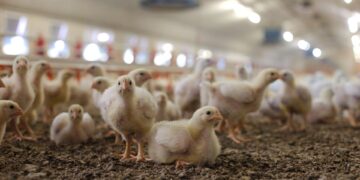
The commercial poultry industry is based on two different types of birds – the layers and the broilers. The layers, as the name suggests, are the birds which lay eggs for human consumption. The broiler birds are the meat birds. In order to maintain the supply of both meat and eggs, there is a complex system of breeder birds, grandparents and great-grandparents.
These breeder birds are genetic line birds and play a critical role in keeping the market supplied with poultry products. If (and when) these breeder birds contract AI, they will die (either from the virus infection or from the control efforts). When this happens, the constant supply of hatching eggs needed to keep the layer and broiler farmers supplied with chickens to meet the constant demand for poultry products will be gone.
In other words, there will be a major shortage of poultry. As poultry is the most affordable source of protein, this will cause major food shortages and additional hunger problems.
Antibodies vs viruses
There are efforts to now import vaccines against AI. This will assist with the control of the disease in the long term, but will, unfortunately, not do much to control the current problem in the short term. The reason for this is that it takes time for vaccinated birds to develop antibodies against the virus.
As soon as the birds are vaccinated, their immune system will start to make antibodies. Only when there are enough antibodies, will the birds be protected. It can take up to two weeks to get sufficient antibodies. Even then, if there is too much virus in the field, the immune response of the birds can still be overwhelmed.
In simple terms, if the bird has a number of antibodies (let’s use an understandable number to explain) of 10 antibodies and there are nine viruses, the antibodies win and the birds are safe.
If there are 10 antibodies, but 11 viruses – the viruses win and the birds die. Obviously, these numbers are not the real numbers and are just used as an explanation.
In the major Newcastle disease (NCD) outbreak in the late 1990s, the birds had very high levels of antibodies against NCD and should have been protected. However, there was so much circulating virus that the immune system of the birds was overwhelmed and this outbreak was very difficult to control.
Practise good biosecurity
The only short-term option for control of AI in the current situation is good biosecurity. It is essential that good biosecurity is in place on the poultry farms. Only high-quality, registered disinfectants must be used for the biosecurity efforts. The ideal product would be one which is non-toxic to the birds and can be used to continually reduce the levels of viruses in the flocks.
Until the vaccination programme can take effect, the only control option is a full continual disinfection programme which would include using the disinfectant in the drinking water, provided that the product is registered for this application and also regularly spraying the birds – again only if the product is registered for this application.
The registration of a product ensures that the label claims can be substantiated and there is valid scientific evidence to support the claims made by the producers of the product.
The long-term consequences of this AI infection coupled with the constant problems with load shedding will be the death blow to many small- and medium-sized poultry farmers.
It may even become very difficult for large poultry companies to survive the current crisis. In order to meet the demand for poultry products, South Africa will most likely become even more reliant on imported poultry products, which is another bone of contention.
- Professor Robert Bragg is a world-renowned researcher and veterinary biotechnologist at the department of microbiology and biochemistry at the University of the Free State. The views and opinions expressed in this article are those of the author and do not necessarily reflect the views or positions of Food For Mzansi.
READ NEXT: Adding flesh to the bone: Beef exports remain vital for growth
Sign up for Mzansi Today: Your daily take on the news and happenings from the agriculture value chain.