Wednesday, July 22, 2026
SUBSCRIBE
22 GLOBAL MEDIA AWARDS
Food For Mzansi
  • News
  • Changemakers
  • Lifestyle
  • Farmer’s Inside Track
  • Food for Thought
No Result
View All Result
  • News
  • Changemakers
  • Lifestyle
  • Farmer’s Inside Track
  • Food for Thought
No Result
View All Result
Food For Mzansi
No Result
View All Result
in Food for Thought, News

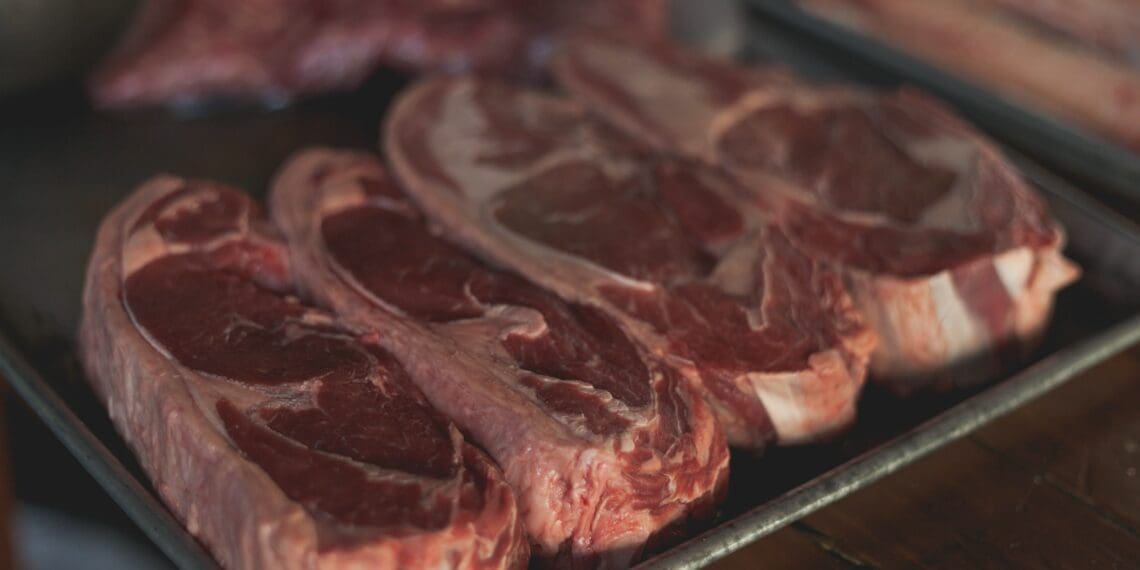
Adding flesh to the bone: Beef exports remain vital for growth

by Louw van Reenen
2nd October 2023
Louw van Reenen, former CEO of the Beefmaster Group, says South Africa needs to up its beef exports. He says it will be to the detriment of upcoming farmers if significant volumes are not exported. Photo: Supplied/Food For Mzansi

Louw van Reenen, former CEO of the Beefmaster Group, says South Africa needs to up its beef exports. He says it will be to the detriment of upcoming farmers if significant volumes are not exported. Photo: Supplied/Food For Mzansi

Share on FacebookShare on TwitterShare on WhatsApp

The beef industry is a cornerstone of agriculture in South Africa. Louw van Reenen, former CEO of the Beefmaster Group, believes that to ensure its continued growth and competitiveness, beef producers must look beyond domestic consumption and tap into the immense potential of beef exports. In this article, he shares why beef exports are crucial for the industry’s sustained growth and how achieving export goals can bring numerous benefits.


The GDP growth in South Africa is too low for the feedlot industry to expand. Beef exports are the only way in which the industry will really grow and be competitive, and the aim is to export 20% of local production.

Adding flesh to the bone: Beef exports remain vital for growth
Louw van Reenen, former CEO of Beefmaster Group. Photo: Supplied/Beefmaster Group

The beef industry is currently faced with the reality that growth will not be achieved with the normal demand. The only other possible growth which can be achieved is in terms of numbers, but that is not sustainable. The feedlot industry doubled in size during the past 20 years, but it is not possible to carry on like that.

The beef industry is exposed to cyclical weather patterns and droughts. That means that farmers have to be more productive to survive. South African farmers are among the best in the world in terms of productivity.

Looking at the numbers

A main problem for the feedlot industry is the fact that it is very difficult to get hold of real data in order to determine what the situation really is, and where we are going.

Data from SARS indicates a huge decline in exports because the industry lost some of its biggest markets, like China, due to foot-and-mouth disease (FMD) outbreaks. Where beef was exported to 42 countries, it is currently being exported to only 28 countries.

Slaughter numbers reflect a decline of 2.2% in beef slaughtering for the past eight years, while an increase of 6.2% was seen in prices. This is attributed to the fact that the feedlot industry has been under financial pressure for a number of years.

Data shows that export numbers declined on average by 4% during every outbreak of FMD. Although this may not seem like a huge decline, it is the critical 4% which is lost.

Low prices, exports

South Africa is currently sitting with the cheapest weaner calves in the world. During 2016 and 2017, South Africa was close to having the most expensive weaner calves in the world.

One of the major problems is the fact that our prices are about 50% below the world price. It was during the past ten years the cheapest meat in the world. It is definitely more expensive during times of higher exports.

The current low prices can in no way be attributed to Namibia and Botswana but are only due to the fact that our exports are too low.

If more beef is exported, higher weaner prices will be the result. If the South African beef industry reaches a point where 20% of local production is exported, the current weaner price of R35,00 will increase by 50%.

Opening meat markets

The department of agriculture, land reform and rural development plays an important role in opening meat markets, and exports to China are once again possible. However, this market is only relevant to a few, illustrated by the fact that Beefmaster was the only exporter to China for almost two years.

If significant volumes are not exported, it will be to the detriment of emerging farmers because they are struggling to get access to markets if there is less demand, which was the case in the past year.

  • Louw van Reenen is the former chief executive officer. He is also one of the youngest leaders to have taken the role of executive chairman of the industry body in the red meat industry. The views and opinions expressed in this article are those of the author and do not necessarily reflect the views or positions of Food For Mzansi.

ALSO READ: Beef and Lamb SA: Empowering SA, one informed bite at a time!

Sign up for Mzansi Today: Your daily take on the news and happenings from the agriculture value chain.

Louw van Reenen

Tags: BeefBeefmaster GroupCommercialising farmerFuture-focused farmerInform meLivestock
Harnessing the power of passive rainwater harvesting
News

Deadline looms: Register water use by 23 July or risk penalties

by Lisakanya Venna
20th July 2026

South African water users have until 23 July 2026 to declare their usage to the DWS. Whether you’ve bought new...

Read moreDetails
This week’s agri events: 20 – 24 July

This week’s agri events: 20 – 24 July

20th July 2026

Climate change: SA’s food processors are feeling the heat

19th July 2026
The Forest of Renewal at Rustlers Valley celebrates the intertwined legacies of Frik Grobbelaar, Anton Chaka and Riky Rick, inviting South Africans to restore the land while cultivating hope, belonging and community. Illustration: ChatGPT

Rustlers Valley offers a blueprint for South Africa’s renewal

18th July 2026
Grain SA appoints Mabuza to lead farmer development

Rising stars: 2026 PGP finalists redefining SA grain farming

18th July 2026

Early harvest and larger crops mark unusual 2026 lemon season

Rooibos heads to space in groundbreaking Mzansi experiment

SA poultry industry calls for urgent bird flu vaccine rollout

How this KZN agricultural advisor is bringing tech to rural fields

Minister details Land Bank’s success in boosting black farmers

Join Food For Mzansi's WhatsApp channel for the latest updates!

JOIN NOW!
Next Post
Ukuthengisela amasi ekuhlaleni usuka apho uyokuthengisela uWoolies

Ukuthengisela amasi ekuhlaleni usuka apho uyokuthengisela uWoolies

THE NEW FACE OF SOUTH AFRICAN AGRICULTURE

With 21 global awards in the first six years of its existence, Food For Mzansi is much more than an agriculture publication. It is a movement, unashamedly saluting the unsung heroes of South African agriculture. We believe in the power of agriculture to promote nation building and social cohesion by telling stories that are often overlooked by broader society.

No one-size-fits-all: Liane’s lessons on leaving the land better

Shoprite hits 300th food garden milestone in Bredasdorp

Tech and solar upgrades drive growth at Ceres Fruit Growers

Smart vineyard irrigation starts below the ground

Treat food processing as essential national infrastructure – Khoury

Farmers urged to embrace uncertainty and build resilience

  • Awards & Global Impact
  • Our Story
  • Contact Us
  • Cookie Policy
  • Privacy Policy
  • Copyright

Contact us
Office: +27 21 879 1824
News: info@foodformzansi.co.za
Advertising: sales@foodformzansi.co.za

Contact us
Office: +27 21 879 1824
News: info@foodformzansi.co.za
Advertising: sales@foodformzansi.co.za

  • Awards & Global Impact
  • Our Story
  • Contact Us
  • Cookie Policy
  • Privacy Policy
  • Copyright

Chat Options

I'm Lerato, your AI assistant!
No Result
View All Result
  • News
  • Changemakers
  • Lifestyle
  • Farmer’s Inside Track
  • Food for Thought

Copyright © 2024 Food for Mzansi

This website uses cookies. By continuing to use this website you are giving consent to cookies being used. Visit our Privacy and Cookie Policy.