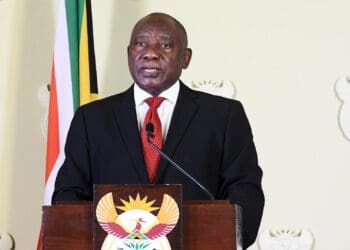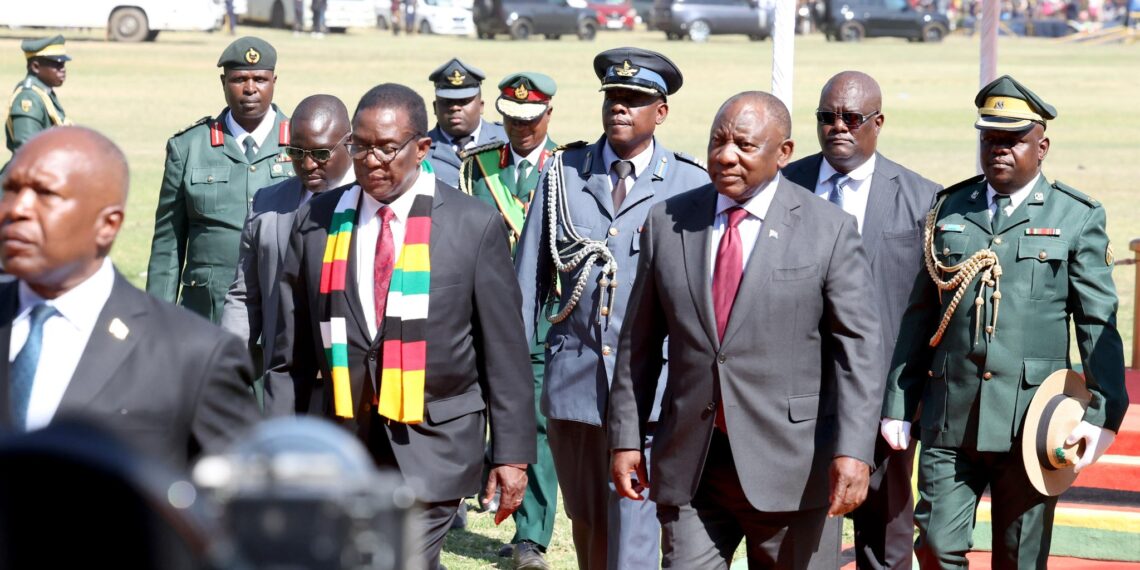
President Cyril Ramaphosa extended his congratulations on the opening of this year’s Zimbabwe Agricultural Show, praising its long-standing importance. He reflected that, over more than 130 years, the event has continued to expand in prominence despite political, economic, and environmental challenges.
He emphasised that one of its defining strengths lies in showcasing agriculture as a catalyst for economic growth, sustainable development, and historical transformation.
Ramaphosa pointed out that on independence in 1980, the Zimbabwe government faced the immense challenge of dismantling colonial-era land ownership patterns.
“Most of the country’s commercially productive land and large-scale commercial farms were owned by whites. The black majority was confined to communal lands and all but completely excluded from commercial farming. This mirrored our own experience in South Africa,” he said.
He commended Zimbabwe for pursuing reforms to empower black farmers, including small-scale producers, saying this was essential for food security, development, and inclusive growth.
Reviving agriculture through reforms
Ramaphosa congratulated the Zimbabwean government for measures to revitalise the sector through policy reforms, irrigation investment, mechanisation, and support for both large- and small-scale farmers.
“Severe drought has impacted crop yields in recent years. Adapting to and mitigating the effects of climate change are an imperative for all nations,” he said.
Related stories
- ‘Tell the truth’: Ramaphosa heads to US for critical Trump meeting
- Ramaphosa: Inclusive farming key to South Africa’s growth
- Tractor handover empowers EC women in food security drive
- Zimbabwe bans maize imports despite production shortfall risks
Ramaphosa stressed the need for greater cooperation in tackling biosecurity threats, such as outbreaks of foot-and-mouth disease, avian flu, and crop infections. He urged countries to pool resources and strengthen research collaboration.
“Technological trends in agriculture must be fully embraced to increase output and conserve resources,” he said.
Driving regional trade and job creation
Ramaphosa also emphasised the opportunities presented by the African Continental Free Trade Area (AfCFTA) and the importance of agricultural transformation across the SADC region.
“The hosting of this agriculture show resonates with the Comprehensive Africa Agriculture Development Programme, which seeks to improve domestic production and marketing as well as the facilitation of regional trade in food staples.
“According to the Food and Agriculture Organisation, agriculture accounts for between 60 and 80% of employment in the region. We must therefore work towards a more enabling regulatory environment to further boost this sector.”
The president called for greater private sector involvement, particularly in empowering women and youth-led farming enterprises. “We need investment in the provision of seeds, training, irrigation schemes, storage facilities and in agro-processing.”
He also stressed the importance of infrastructure development, noting that road, rail, and aviation networks were key catalysts for agricultural growth.
READ NEXT: The farmer’s guide to supplying fresh produce to markets