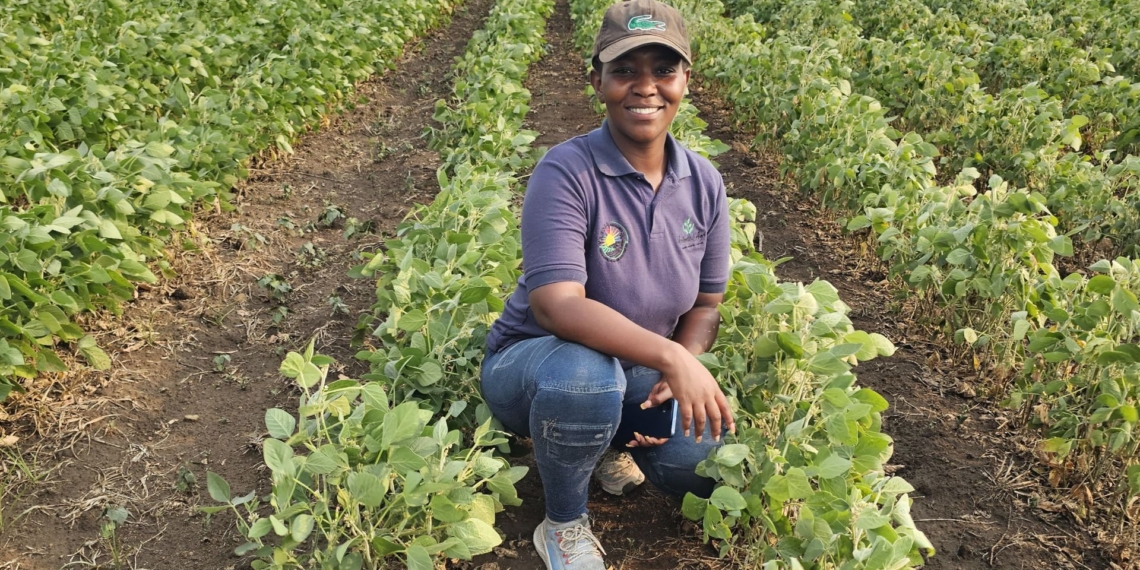
After navigating a career path that took her from retail floors to fast-food counters, Motshidisi Modise is now cultivating a new future in Mpumalanga. She brought family farming land back to life, proving that resilience is the most vital nutrient for growth.
Her story began in Standerton, raised by her mother, Fikile Mofokeng, and her father, Sello Modise, a teacher and political activist. While her childhood was marked by the shadows of financial struggle and family hurdles, it was also coloured by the time spent in her father’s backyard garden.
Helping him water plants and tend to the soil planted a subtle seed of connection to nature – one that would lie dormant for years while she navigated the pressures of early adulthood.
Navigating the first hurdles
Modise attended Azalea Combined School from her primary years through to her matric in 2015. After matric, the desire to further her studies was strong, but the reality of her family’s financial struggles meant there was no one to foot the bill.
Tekkie Town offered her a position as a casual and later promoted her to a permanent casual sales position, a role she held until 2017, when she resigned to take up a new offer as a cashier at KFC.
During her tenure at KFC, Modise’s ambition truly took flight. She enrolled at the Academy of York College in Randburg to study financial management and bookkeeping online, multitasking to pay her own tuition fees.
However, soon she gave birth to her daughter, Tsholofelo, and found it impossible to manage full-time parenting, work, and studies. Faced with the reality that her finances needed to prioritise her child and household, she was forced to drop out.
The struggle intensified in November 2019 when she was fired from KFC due to a cash shortage at her till. Suddenly unemployed with a baby to care for, her mother became her lifeline, supporting her through this difficult phase of her life.
Related stories
- Oakhill Farm: A land reform success story in Sunday’s River Valley
- Shelembe family turns neglected land into thriving KZN farm
- Expropriation Act: Land reform faces its toughest test yet
- Brothers in Vines: Sherwin blends wine, family, and purpose
Reconnecting with the land
A new chapter began in 2021 when Modise was selected as part of the first group of newly appointed assistant teachers in the country, stationed at Holmdene Secondary School.
When her contract ended a year later, she reached a moment of clarity: someone from the younger generation would need to carry the torch of the family farming legacy.
While her siblings, Thabo, a farm manager at North-West University, and Prince Tsotetsi, a citrus farmworker in Nelspruit, already had a foot in the agricultural sector, Motshidisi knew it was time for her to find her own place in it. She enrolled at Gert Sibande TVET College Skills Academy for a one-year and three-month course in mixed farming.
Her practicals at a local mixed farm shifted her perspective entirely. “It taught me a lot about agriculture, how to strategise within the sector and the farm,” she says.
During these practicals, she met her partner, Thuso Motaung, a fellow farmer. Following her course, she joined his operation, Non Stop Agri.
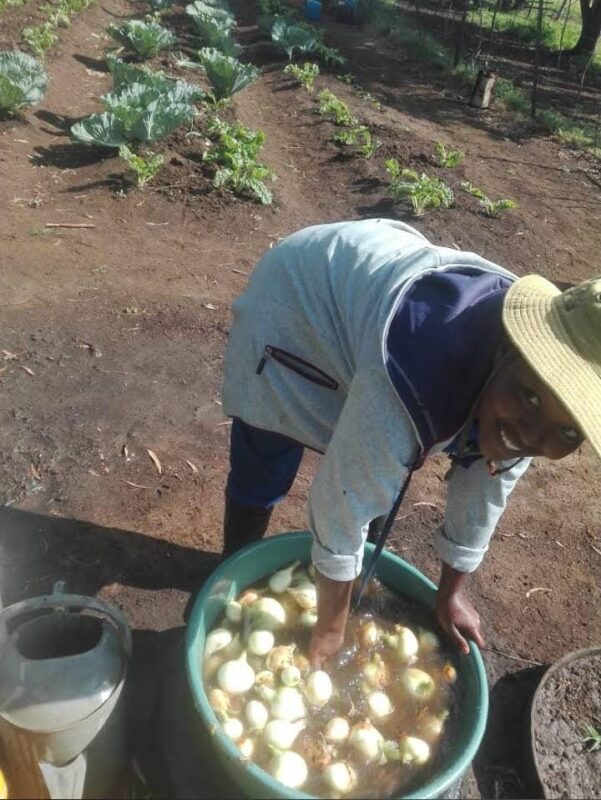
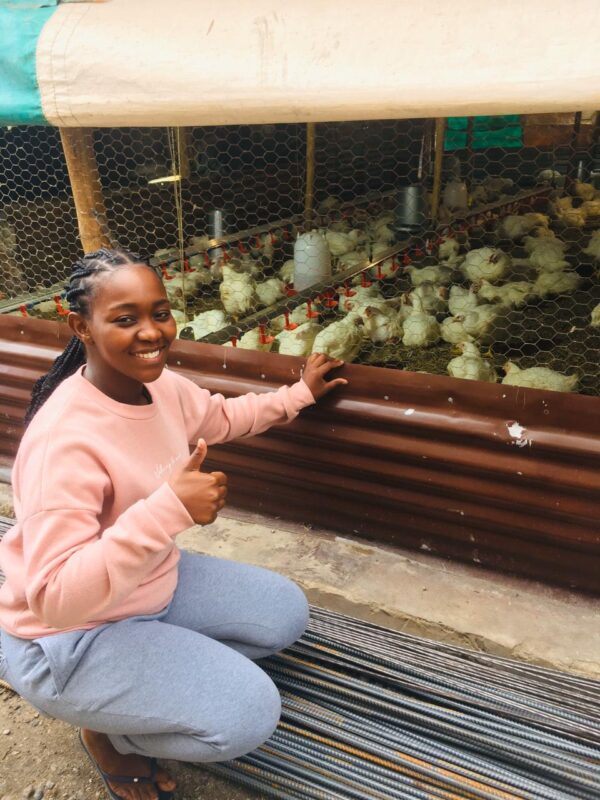
They began small, planting vegetables on just a quarter-hectare of land. With the help of the National Youth Development Agency (NYDA) funding, the production grew to include broilers. Eventually, they sought funding from Land Bank to expand into the soybean production they grow today.
Currently, the farm spans 156 hectares, with arable land growing from 56 to 74 hectares, dedicated to soybeans, vegetables, and grazing.
Cultivating independence
While working alongside her partner, Modise felt a deep-seated need for her own independence. She looked back at her grandfather’s former farm in Secunda. Her grandfather, Isaac, had previously run a piggery there that was shut down by environmental officials, a setback that had forced him back into school administration as a principal in eMbalenhle.
She approached her grandfather and requested to use the unutilised land to start her own venture. In 2023, she officially registered Unlimited Agri as the sole shareholder.
Starting with one cow and one bull, it grew from there. Today, her livestock includes 15 cattle and 22 sheep. On the cropping side, Unlimited Agri operates on 108 hectares, planting maize on 48 hectares, which she supplies to her local community.
“My strength is in crop production, so navigating and having to adapt and understand livestock was very interesting.”
Reviving a dormant legacy
Building on this momentum, Modise went on to lease the Daggakraal land. This five-hectare plot was originally a Fortune 40 project under the department of agriculture, but as it was not operating, she stepped in to bring it back to life by planting tomatoes and chillies.
However, reviving these projects has not come without significant hurdles. Modise has faced a landscape scarred by vandalism and neglect. Due to the theft of electricity cables, she had to personally fund the electrical repairs before operations could even begin.
Water access also remains a daily battle. To irrigate part of her farm, Modise pumps water from a nearby stream. Nature has been equally demanding; a winter veld fire destroyed the greenhouse tunnels she had hoped to utilise.
Despite these setbacks, her love for the land outweighs the struggle. To those planning to join the sector, she warns it is not for the faint-hearted.
“You have to fix your mindset and focus on what you have to do, because once you start, you won’t have time for disruptions. Be locked in. It is a challenging journey that will require you to cry, but ultimately you won’t give up because if you do not use the land, no one else will.”
READ NEXT: Farm clinics bring healthcare closer to Cape Winelands workers