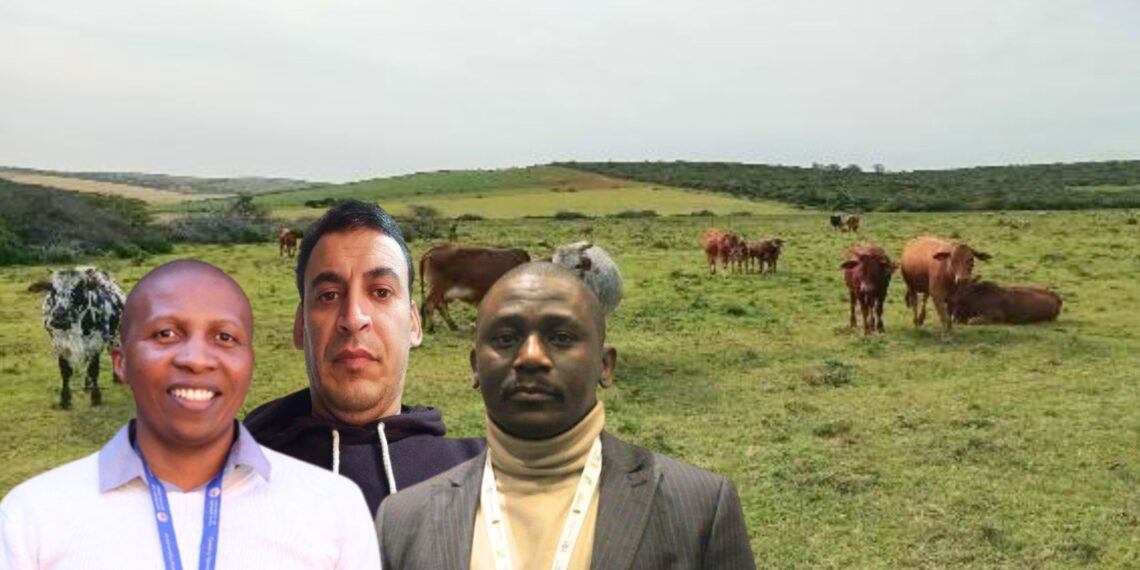
Land reform farms are often criticised as failures. However, agricultural economists Dr Siphe Zantsi and Walter Shiba, together with a senior researcher at the Agricultural Research Council (ARC), Abutaleb Khaled, point to OakHill Farm, where livestock expertise, market alignment, and government backing create genuine rural success.
South Africa’s land redistribution is one of the important priorities of the democratic government, and a lot is envisaged to be achieved through it. These include rectifying injustices of the past, improving food security, and creating vibrant rural communities. However, since its implementation in the late 1990s, land reform has been covered with a dark cloud of ‘failure’.
At one point, the then minister of rural development and land reform, Mr Gugile Kwinti, admitted that in 90% of land reform farms, there is no production at all. Such utterances tend to create a bad impression and a blanket approach to the performance of land reform farms.
We seldom hear good stories. In this piece, we report on that silver lining on one family farm that is thriving against all odds.
Nestled in the fertile plains of the Sunday’s River Valley Local Municipality in the Eastern Cape, South Africa, OakHill Farm stands as a beacon of hope and resilience. With deep roots in livestock farming, the Rensburg family have transformed the land into a thriving agricultural enterprise, defying the odds and challenging the prevailing narrative around land reform in the country
A livestock success story on 471 hectares
Between 23 and 28 August 2025, we embarked on a journey to visit land reform beneficiaries in the Eastern Cape. Too often, the narrative surrounding land reform is dominated by negative stories. However, this time, we took a “short-right” to uncover and share a success story.
During our visit, we met Mr Mfundo Ngcelwane, an extension officer who introduced us to Mr Craig Rensburg, one of the co-owners of a 471-hectare farm acquired through the land redistribution component of the land reform policy. The Rensburg family applied for a farm through the department of agriculture and submitted their application in 2007, and officially occupied it in 2012.
Known as OakHill Farm, this land is now home to five dedicated beneficiaries – family members with deep roots and extensive experience in livestock farming.
“Their collective knowledge and commitment have laid the foundation for a successful farming operation that continues to grow year after year,” Mr Rensburg said.
Related stories
- Land reform farm blossoms under Lipali’s leadership
- Land reform’s hidden force: How women farmers drive change
- Minister Nyhontsho: ‘Govt needs to cut red tape on land reform’
The owners, seasoned in livestock management, have built a thriving operation centred around Boran cattle. With a current herd of 138 animals and two bulls, their focus is on producing high-quality weaners for the auction market.
These weaners, typically weighing between 200–250 kg, are sold at competitive prices ranging from R28 to R42 per kilogram. In a recent auction, 42 calves were successfully sold, demonstrating the farm’s growing market presence. This pricing reflects both the quality of the livestock and the farm’s strategic approach to market readiness, which includes careful weighing and age determination to ensure optimal classification and pricing.
Challenges on the ground
Despite their success, the farmers face persistent challenges – stock theft being the most pressing. This threat not only affects income but also undermines the security and sustainability of rural farming operations.
Recognising the potential of this enterprise, the department of rural development and agrarian reform (DRDAR) has stepped in with critical support. The assistance includes:
- Bush-clearing equipment to expand usable grazing areas
- Animal handling facilities to improve safety and efficiency
- Fencing to secure the perimeter and deter theft
- A breeding bull to enhance herd genetics
These interventions have significantly improved the farm’s infrastructure and operational capacity.
Economic impact and market readiness
The farm’s business model is rooted in market readiness, ensuring that animals meet the weight and age requirements for optimal pricing. By selling weaners at the right time, farmers balance opportunity cost (feeding longer vs selling early) with market demand. Their success illustrates the importance of aligning production with consumer preferences, value chain dynamics, and price formation factors, such as weight, age, and quality.
By investing in proper weighing tools and maintaining detailed farm records, the beneficiaries ensure that their livestock meets market standards. These decisions are informed by market trends, feed availability, and projected pricing, demonstrating the farm’s commitment to data-driven management.
OakHill Farm is more than just a business; it is a symbol of community empowerment and agricultural innovation. The success of the farm has inspired other land reform beneficiaries in the region, showcasing what is possible with dedication, support, and strategic planning. Looking ahead, the beneficiaries aim to expand their operations, explore value-added products, and strengthen their market presence.
With continued support from government agencies and a clear vision for growth, OakHill Farm is poised to become a model for sustainable land reform and rural development in South Africa.
READ NEXT: Jobless graduate turns EC homestead into opportunity hub
- Dr Siphe Zantsi and Walter Shiba are agricultural economists, and Abutaleb Khaled is a senior researcher at the Agricultural Research Council (ARC). The views and opinions expressed in this article are those of the author and do not necessarily reflect the views or positions of Food For Mzansi.