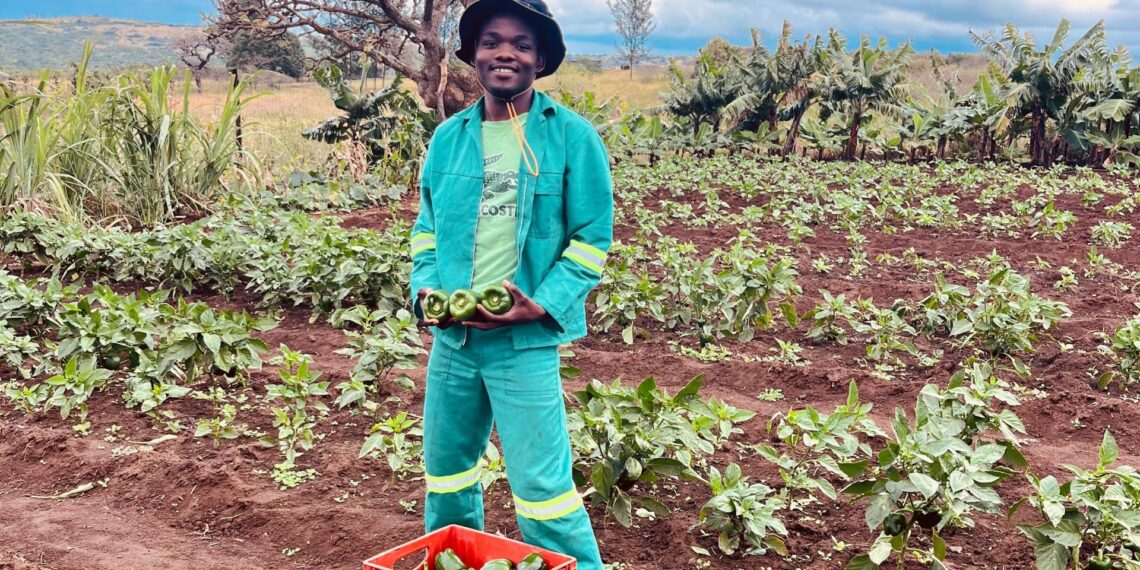
In 2023, Lindokuhle Mabaso turned frustration into a farming hustle, starting Mabaso Agri Solutions. He now cultivates bananas, peppers, peri-peri, cabbage, spinach, spring onions and curry leaves on half a hectare of his family’s land in Mtubatuba, KwaZulu-Natal.
His journey into agriculture began after he enrolled in a bachelor of housing programme at the University of KwaZulu-Natal in 2022.
That year proved to be challenging. He found himself stuck in a course that didn’t resonate with him and offered little clarity about his future.
“I always loved education, and even now I do. However, I have realised that I am more of a practical person than theory.”
With that realisation came a shift in direction. “I am planning to go back to school now that I know what I want and see how it would make me grow in business,” he says.
Rather than forcing a path that didn’t fit, Mabaso decided to return home. With support from his family, he redirected his energy into farming. And he has no plans to stop at crops – he’s already laying the groundwork to expand into livestock and agro-processing.

‘I make noise about my work’
Although Mabaso Agri Solutions was officially registered in 2023, Mabaso notes that his journey truly began the moment he left university. His first steps into farming started with poultry at his aunt’s home in Mandeni.
“It didn’t work out. Family politics got in the way, and that’s when I realised how important it is to invest in your own space,” he says.
This setback led him back to Mtubatuba, where he now farms full-time. Much of what he knows today was self-taught — gained from online research into farming techniques, funding opportunities and how to grow a business from the ground up.
“I use the same platforms to market my work, not just to learn. I make noise about my business. There’s no day that passes without me posting what I do.”
Silindokuhle Mabaso
Related stories
- Hijacked and left for dead: KZN farmer finds healing in the soil
- Mixed farming: Double the hustle, double the rewards
- Tech-savvy Mdletshe turns tiny plot into harvest haven
That online presence has certainly borne fruit. In a short time, Mabaso has gained growing recognition — from being named a top 30 finalist in the MTN Youth Hustle Hub, to placing in the top three for both All4YouthSA and RFO Hustlers Corner. He’s also been featured on Debrief Network News, interviewed on local radio, and his story has been picked up by major social media pages.

“These are big milestones for me. I went from being unknown to having people notice my work. I believe if I keep pushing, I’ll reach even more.”
Social media has not only helped him attract customers but has also built trust and visibility for his business. Behind the scenes, he keeps things structured by following a seasonal planting calendar, essential for both cash flow and crop quality.
Mixing traditional farming with innovation
His typical planting schedule starts in September with soil testing, land preparation, and purchasing essentials like seeds, fertiliser, fencing, and supplies, along with rotating planting areas to prevent disease build-up.
From September to November, he plants green peppers for a December to January harvest, transplants cabbage for cooler-season yields, and prefers planting bananas in spring when moisture levels are more favourable.
While his approach is largely traditional, he’s enthusiastic about innovation and the potential of agritech and climate-smart methods.

“We make our own manure using natural resources, but we ended up buying chemicals for pests and crop diseases,” he explains.
Encouraged by the visible improvements in his fields, Mabaso says consistent weeding, mulching and organic pest control have made a noticeable difference to crop health.
“We avoid using manure from animals treated with antibiotics or compost mixed with plastic or anything non-organic.”
Instead, he and his team rely on well-rotted goat and chicken manure, rich in essential nutrients like nitrogen and phosphorus.
“We apply it before planting and lightly work it into the soil,” he explains.
Growing despite challenges
Transport remains a challenge. Although the family owns a car, most local deliveries are done by wheelbarrow. Only longer-distance orders require a vehicle.
One of his biggest hurdles is fencing. At present, he uses just half a hectare of the seven hectares available.
“If I can get at least two hectares fenced, I’d be able to employ people and supply more fresh produce to my community, nearby areas, and even neighbouring towns,” he says.
In 2023, he received R25 000 in funding from the MTN South Africa competition. The prize included mentorship in business management and a trip to Johannesburg. He used the money to install a water system, laying 600 metres of piping to connect the farm to a reliable source.
While there is growing interest from local retail stores, Mabaso says he currently can’t meet large-scale demand due to limited production space.
Looking to the future, he tells Food For Mzansi that he intends to expand his business by adding livestock and poultry.
Mabaso hopes to grow his operations, create jobs, and improve access to fresh, affordable food in his community. He says he remains committed to keeping his produce within reach for everyone, no matter their budget.
READ NEXT: Two neighbours grow fresh farming future in Gauteng