South Africa’s water crisis is an old one, reports Professor Anthony Turton, a water expert from the Centre for Environmental Management at the University of the Free State. According to him, the recent deaths caused by the cholera outbreak in Hammanskraal could have been prevented.
A media storm has erupted over the cholera outbreak in Hammanskraal, while some families are now grieving for their dead relatives. It is important that we start this story by remembering the dead, because they were breadwinners in families, all doing their best to survive the tribulations of our times. They died unnecessarily, the victims of the slow onset disaster I spoke of in 2008 at a conference titled “Science Real and Relevant”.
At that conference, reference was made to three water quality challenges that we, in the dwindling aquatic sciences community, were all too aware of, but unable to speak about.
Worrying observations

We noted trends that data sets were showing us, and we felt a growing sense of alarm about the consequences of the trajectories on the graphs. We noted that our systems were failing rapidly, with much of our hard infrastructure in the water sector approaching the end of its useful design life. Furthermore, we noted with alarm the loss of skills, as the ravages of purging took its toll on our science, engineering, and technology core.
We noted the loss of dilution capacity in all our rivers after the first National Water Resource Strategy (NWRS), mandated by the National Water Act (NWA), indicated that we had allocated 98% of all the water in all our rivers and dams, as far back as 2002.
And finally, we noted the migration of plumes of uranium moving into the headwaters of both the Vaal and Crocodile Rivers, both tributaries of the Orange and Limpopo respectively, driven by uncontrolled decant of acid mine water, as the gold mining industry started to collapse.
From these sets of data, a simple conclusion was drawn – SA was heading for a slow-onset disaster unless we could convince our political leadership that we need to do things differently.
ALSO READ: Water regulations garner mixed agri response
Here are some facts in the wake of the cholera crisis:
Fact # 1 – The South African economy ran out of water in 2002 when the NWRS revealed that we had already allocated 98% of all the water we have legally available in terms of the NWA. This means that we cannot convince investors to have confidence in our future. We face an investment drought as a direct result of this startling but irrefutable fact.
Fact # 2 – We produce more than 5 billion litres of sewage daily, all of which is discharged into our rivers and dams, only about 10% of which is treated to a standard that makes it safe for direct human contact.
Fact # 3 – The Green and Blue Drop Reporting System was suspended by Nomvula Mokonyane when the data was showing trends in the failure of our sewage treatment works. This is like a pilot in a commercial airliner switching off the radar screen because the information being revealed was becoming uncomfortable to the poorly trained, but rapidly promoted cockpit crew. This is the undeniable genesis of the deaths we are seeing today.
Sewage has nowhere to go
Fact # 4 – Because of Facts # 1 and 2 combined, our tsunami of sewage can no longer be diluted in our rivers. In fact, more than 60% of all our large dams are now eutrophic, with highly enriched water breeding toxic cyanobacteria, all thriving off the warming water and growing flow of nutrients from sewage.
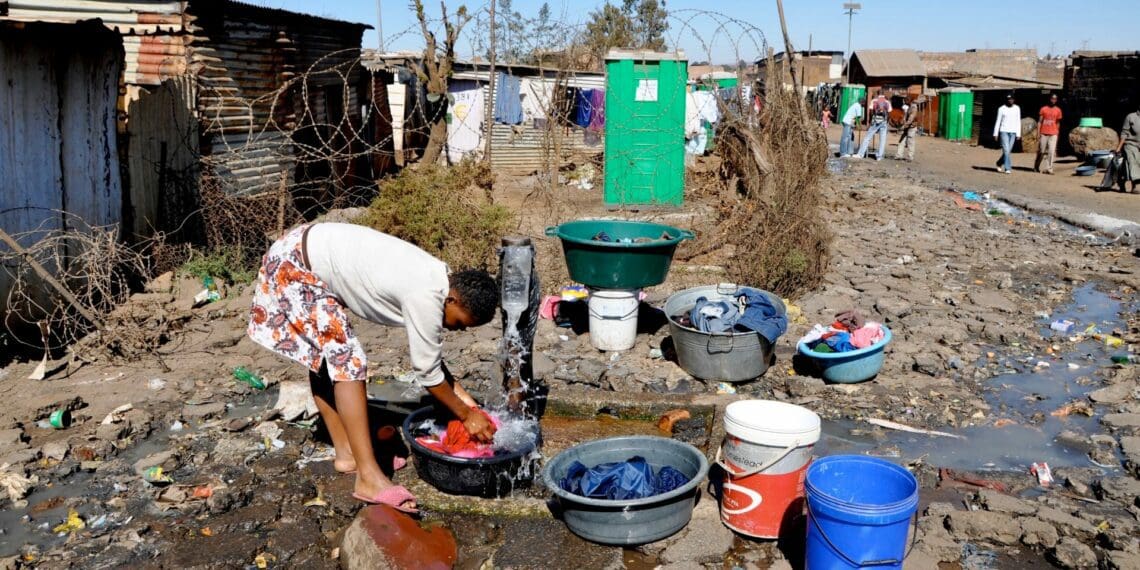
In simple truth, we have lost our dilution capacity, and our rivers have been turned into hazardous sewers breeding harmful pathogens, including the flesh-eating bacteria that cost RW Johnson his leg. This means that cholera is only one of the risks we are facing from raw sewage in our rivers. For example, hepatitis A is a waterborne pathogen directly related to sewage-contaminated rivers, but this is being reported separately in our slow-onset disaster, so the penny has yet to drop.
Fact # 5 – The current minister of water and sanitation, Senzo Mchunu, was brave enough to reinstate the Green and Blue Drop Reporting System, which has now shown that more than 90% of our wastewater treatment works are dysfunctional. He is a brave man in so doing, and I want to publicly support him as he tries to rebuild the trust that was destroyed by a previous minister.
ALSO READ: Water pollution: Contamination taking its toll
Bring sewage flows under control
So, this is where we are today. People are dying as a direct consequence of decisions made by a former minister, who clearly failed in her custodial role. She must ultimately be held to account for her dereliction of duty and blatant betrayal of public trust.
[Recently] a spokesperson for the Presidency noted that his office was unable to intervene in another crisis because the cooperative governance clause in our Constitution prevented one sphere of government from intervening in the activities of another sphere.
We must challenge this constitutional weakness and seek clarification from the appropriate court.
How can a constitutional clause be so irrational as to prevent one part of government from intervening in another to avert a catastrophe? How many more lives must be lost to the absurdity of legal protection for those in power, while their activities are clearly not in the best interest of society as a whole?
Surely a constitutional democracy is about empowering the citizens by protecting them against the consequences of failed service delivery.
From the depths of despair in the families of those whose lives have been lost to an entirely preventable illness, let us find the strength to rally as one and shout out, “Enough is enough”.
An environment safe from harm
Our noble constitution grants all citizens rights to a better life in an environment that is safe from harm. Let us restore that dream by demanding that our sewage flows be brought under control. Surely this is the basis of modern civilization, irrespective of political persuasion or ideological preference.
READ NEXT: Cholera outbreak: Threat looms for crops, livestock
Sign up for Mzansi Today: Your daily take on the news and happenings from the agriculture value chain.