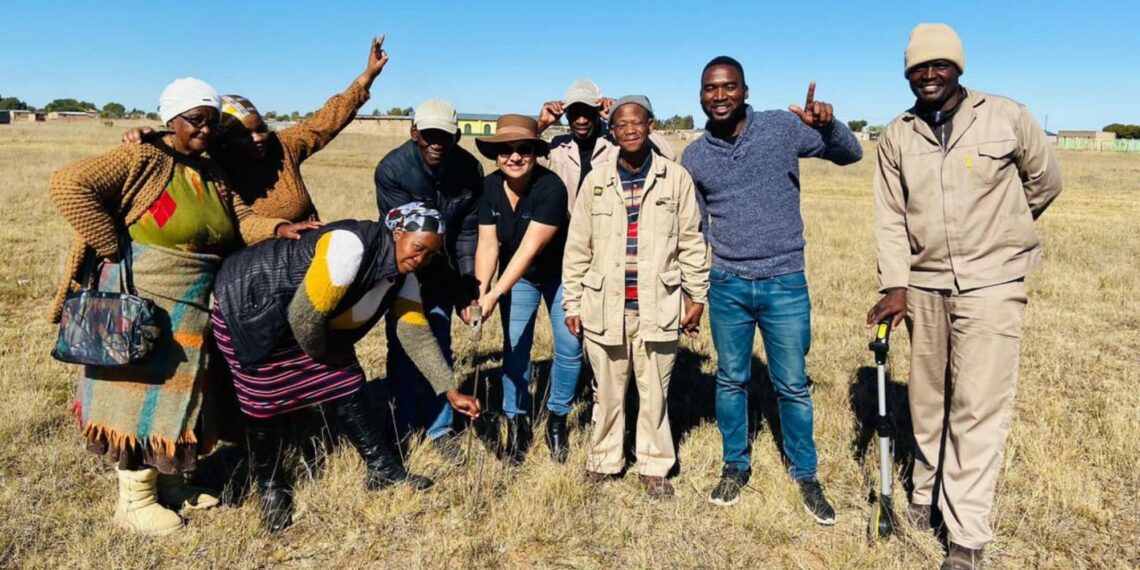
A community-led agricultural model in Deelpan, North West, is improving food security, creating jobs, and strengthening rural governance. This showcases how the Seriti Institute is transforming the lives of rural communities in South Africa.
Established in 2009, Seriti Institute has grown into one of South Africa’s leading non-profit organisations working to reduce poverty, strengthen food systems, and create meaningful pathways to work. Rooted in people-centred approaches, Seriti works hand-in-hand with communities to build resilience, restore dignity, and drive change from within.
With the launch of two landmark reports on the Deelpan Multi-Functional Agri-Node (MFAN), the organisation marks a powerful chapter in this journey, showcasing how Seriti’s community-led development model is reshaping the future of rural communities in South Africa.
The reports, “Deelpan MFAN: Outcomes and Impact Evaluation Report (2023–2025)” and “Feasibility Assessment Report: Unlocking Rural Potential”, reveal how climate-smart agriculture, value-added processing, and community-led governance have transformed Deelpan into a living blueprint for inclusive and sustainable rural development.
Driving change in rural communities
Over 2023-2025, MFAN has advanced critical national priorities by significantly improving household food security, driving essential income diversification, cultivating cooperative enterprise development, and strengthening local governance through strategic partnerships. MFAN has created change that extends far beyond food production, building dignity, economic agency, climate resilience, and stronger governance structures in the community.
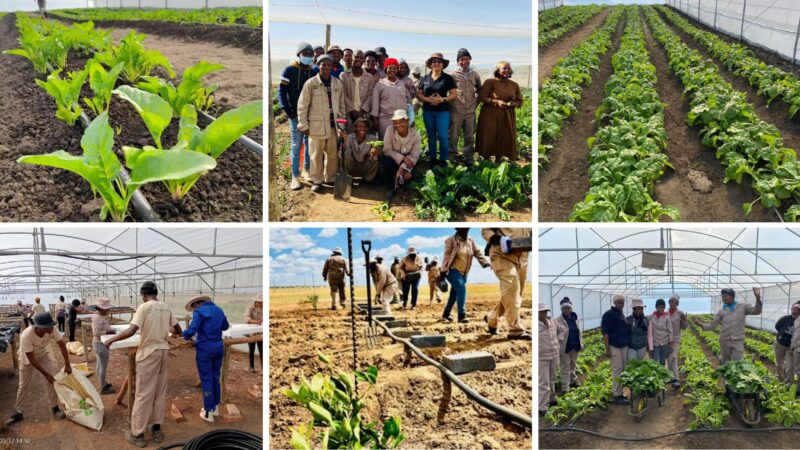
The evaluation presents clear evidence of positive transformation in Deelpan, reflected in both quantitative and qualitative outcomes. A total of 81 households were interviewed as part of the assessment. Findings indicate a significant improvement in household food production and consumption patterns, with 83% of respondents reporting enhanced dietary diversity and increased access to fresh, nutritious produce.
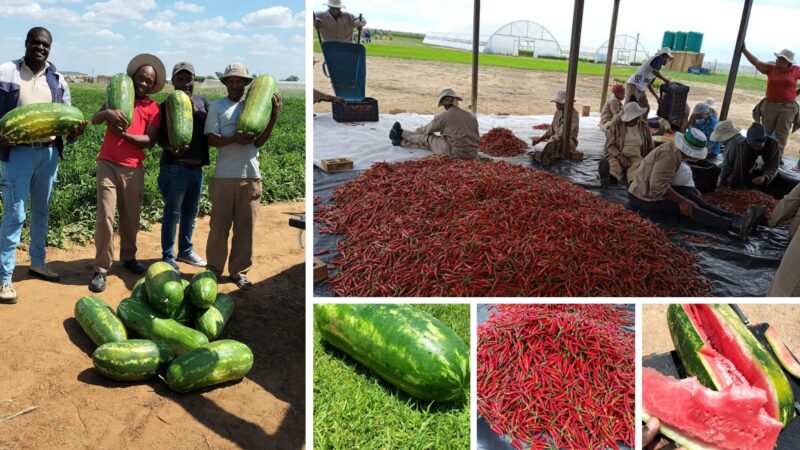
Furthermore, 74% of participating households are now generating income through the sale of surplus produce, demonstrating strengthened livelihoods and growing market participation.
Employment outcomes have also been notable, with the creation of over 250 sustainable work opportunities, primarily benefiting women and youth through the Social Employment Fund programme. The Social Return on Investment (SROI) analysis reflects a ratio of 3.08:1, meaning that every rand invested in the Multifunctional Agri-Node (MFAN) yields over R3 in measurable social and economic value.
Collectively, these results indicate a transition from dependency to self-reliance, underpinned by improved food security, income diversification, and local economic resilience.
Related stories
- Seriti transforms smallholder farmers through tech and training
- Agriculture meets innovation at Seriti’s 3rd Annual Farmers’ Day
- North West farmers explore blended finance opportunities
Changing lives through farming
Speaking at the launch, Juanita Pardesi, CEO of Seriti Institute, emphasised: “MFAN is not just a project; it is proof of concept. It shows that food security, economic inclusion, social cohesion, and climate resilience are interconnected. The numbers are impressive, but behind each statistic is a household, a young person, or a woman who now sees their future differently. MFAN reflects what is possible when development is anchored in dignity, trust, and shared purpose.
“A key success factor of MFAN has been the change in local governance. The Bakolobeng Traditional Council has played an important role by offering land to support the project. This partnership has built trust, strengthened accountability, and created shared ownership. It is now being recognised as a model that can be used in other rural communities.”
Tiro Ramadie, who is the site supervisor and an emerging small-scale farmer, said, “The Agri-Node has changed the lives of many people in our community. Now, households are growing their own produce and using that money to support their children and daily needs. The Agri-Node has opened opportunities for jobs, skills development, and business growth.”
The reports also highlight MFAN as an approach rooted in agroecological principles that have transformed farming in Deelpan from a vulnerable subsistence activity into a resilient, community-led system. Through hands-on training in crop rotation, composting, and water efficiency, farmers have improved productivity, strengthened soil health, and reduced dependence on costly inputs.
This locally rooted adaptation strategy has created what the report calls an “invisible infrastructure of solidarity”, reinforcing community resilience to drought and climate shocks. Aligned with South Africa’s national climate transition priorities, MFAN stands out as a high-impact model for climate finance investment, showing how rural communities can be both drivers and beneficiaries of a just transition.
A champion of rural transformation
Looking ahead, the Feasibility Assessment Report outlines a strategy to scale the model through value-added processing, including drying, milling, packaging, and poultry production. This expansion will reduce post-harvest losses, generate stable year-round income, and give rural communities a foothold in higher-value formal markets, further strengthening MFAN’s long-term sustainability.
MFAN stands out as a tested, community-owned development model that integrates agriculture, cooperative enterprise, governance, and climate resilience. Lessons from successful social enterprise models like Citrus Academy, HelloChoice and INMED Aquaponics, MFAN demonstrate how an integrated approach can deliver sustainable results.
The reports highlight six core principles for scaling the MFAN model, which include integrated development that goes beyond farming, value-added processing to increase revenue, continuous training and mentorship, robust governance led by communities, blended financing to reduce grant dependency, and climate-smart agriculture as the foundation of resilience. These principles make MFAN more than a local project; they make it a national model with a scalable impact.
As Seriti Institute continues to work with communities and partners, MFAN’s success in Deelpan shows how community-driven innovation can accelerate inclusive rural transformation.
“MFAN has shown that rural transformation is possible when development starts with people, not projects,” Pardesi added. “We look forward to partnering with government, donors and the private sector to take this impact to more communities nationwide.”
READ NEXT: Foot-and-mouth disease: What farmers need to know