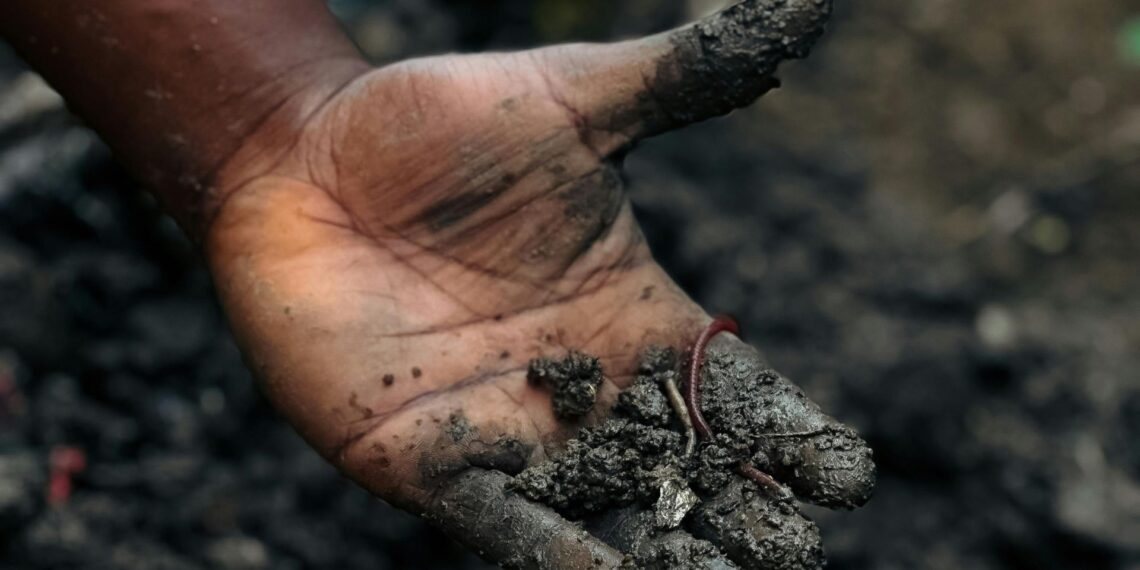
Healthy soil is the foundation of productive, resilient farming. Yet one of its most critical components – soil organic matter (SOM) – is frequently overlooked. SOM is made up of plant and animal residues, microorganisms, and stable organic compounds that work together to support soil fertility, structure, and biological activity.
According to Dikgang Molebatsi, crop scientist and lead agronomist at Mojadi Farmholding, understanding how to maintain and improve soil organic matter can help farmers build soils that are more resilient, productive, and sustainable.
Why organic matter matters
Soil organic matter plays a central role in plant growth. Molebatsi explains that SOM improves water retention, enhances nutrient supply, supports microbial activity, and strengthens soil structure. “It brings life back into the soil,” he says.
The Food and Agriculture Organisation (FAO) notes that most SOM originates from plant material. Plant residues typically contain 60–90% water, with the remaining dry matter composed mainly of carbon (C), oxygen (O), and hydrogen (H), along with smaller amounts of sulphur (S), nitrogen (N), phosphorus (P), potassium (K), calcium (Ca), and magnesium (Mg). Despite their small quantities, these nutrients are essential for maintaining soil fertility.

“When your soil is alive, your crops perform better, your inputs work more efficiently, and your farm becomes more resilient to erosion and other challenges,” Molebatsi says. “Don’t just be happy with your plants being clean on the surface, yet your soil is not alive.”
Research from HortGro shows that increasing organic matter can improve water retention by 30%–40%, highlighting its role in improving the soil’s moisture-holding capacity.
Related stories
- Regenerative farming: Healthy soil, healthy food, healthy profits
- Science meets soil: Agronomist turns manure into climate solution
- Healthy soil: The power of soil aggregates and microbes
- Managing soil acidity to improve crop quality
Understanding carbon and its role
Carbon is the backbone of soil organic matter. It acts as a reservoir of energy and nutrients, feeding soil microbes, supporting plant growth, and helping form stable soil aggregates.
Plants capture carbon through photosynthesis and transport it into the roots. When roots and plant residues die, carbon returns to the soil and gradually forms humus – the stable, long-term form of organic carbon. “Humus is what gives fertile soils their dark colour and resilience,” Molebatsi explains.
Common challenges to maintaining organic matter
Excessive tillage
Too much soil disturbance is one of the biggest threats to SOM. It reduces organic content and disrupts the soil’s biological life. Molebatsi encourages farmers, especially those practising organic production, to adopt minimum or no-till approaches.
Residue removal
“When residues are burned or used for feed, we lose the carbon that should go back into the soil,” says Molebatsi. “Carbon influences the entire soil health system.”
Other threats include erosion, compaction, and focusing solely on short-term yields. “Organic matter is a long-term investment; it takes years to build and minutes to destroy.”
Climate and its influence on organic matter
Climate determines the rate at which organic matter decomposes. Warm, humid conditions speed up decomposition, while cooler or drier climates slow it.
“In semi-arid regions like much of South Africa, low rainfall limits biomass production. Meanwhile, in wetter regions, organic matter can disappear quickly if residues are removed or soils are tilled too much,” Molebatsi notes.
He advises farmers to align soil management with local climate patterns, adjusting nutrient applications and soil protection strategies to rainfall and temperature.
How to determine soil organic matter levels
- Use visual indicators
- Darker soils typically contain more organic matter.
- Soils that crumble easily tend to have better structure and SOM content.
- Conduct laboratory testing
Tests such as loss-on-ignition or dry combustion provide accurate measurements of organic carbon. - Be consistent with sampling
Always sample at the same depth, in the same season, and from the same zones. - Interpret results with expert support
Soil test reports often include cation exchange capacity (CEC), which reflects organic matter levels. An agronomist can help interpret results and recommend management steps.
Four practical steps to build organic matter
Molebatsi recommends following nature’s example: keep something growing. “In untouched areas with constant vegetation cover, organic matter is naturally high. Living roots feed soil microbes all year round.”
Key practices include:
- Reduce tillage: Limit soil disturbance to prevent carbon loss.
- Add organic inputs: Use compost, residues, green manures, and well-managed animal manure.
- Rotate crops: Include legumes, deep-rooted species, and perennials to support nutrient cycling.
- Keep soil covered: Plant cover crops to protect the soil surface and prevent erosion.
“Organic production is not about skipping management; it still requires planning and consistency,” he says.
The power of manure and cover crops
Molebatsi uses clean, composted manure to safely increase soil organic content. Cover crops add biomass, protect the soil, and improve productivity.
“In wetter provinces like KwaZulu-Natal, they grow quickly and provide fast returns. In drier areas, farmers should opt for drought-tolerant species such as sun hemp or forage sorghum. Even short-term cover crops make a big difference.”
Integrating livestock for soil health
Livestock can significantly improve soil fertility when managed properly. “When animals graze rotationally, their manure and urine add nutrients and organic matter. But overgrazing can strip the soil bare,” Molebatsi warns.
Integrated crop–livestock systems create a self-sustaining cycle by using animals to fertilise soils and using crops to feed livestock.

Sustaining organic matter over the long term
The key to maintaining soil organic matter is consistency:
- Keep residues in the field – don’t burn them.
- Maintain cover crops.
- Protect soil from erosion.
- Avoid heavy tillage.
Healthy crops contribute residues that feed the soil and supply valuable carbon.
Innovations and emerging technologies
New tools are emerging to support soil health, including:
- Biochar blended with compost in cold composting systems to stabilise soil carbon and enhance humus formation.
- Biostimulants and microbial inoculants that improve nutrient use efficiency.
“In legumes, inoculation helps them fix nitrogen more effectively, directly improving soil fertility,” Molebatsi adds.
READ NEXT: Mastering poultry feed: Tips to maximise efficiency