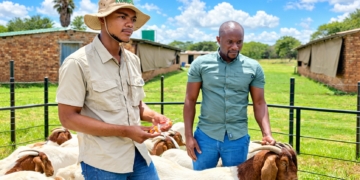
Fresh efforts are being made to increase the share of black ownership in South Africa’s agricultural sector. This follows decades of missteps and badly designed interventions that have failed to significantly change the ownership patterns in the sector.
The latest plan – known as the Agriculture and Agro-processing Master Plan – aims to provide, among others, comprehensive farmer assistance, development finance, agricultural research and development and extension services.
It also aims to increase the share of black ownership and the contribution of small-scale producers in the country by 2030.
The master plan has been signed by government and representatives from various businesses and civil society organisations within the agricultural sector. It is the first multi-stakeholder strategic plan in the country. Its aim is to promote transformation in agriculture and agro-processing sectors affected by apartheid.
Need for a different approach
However, farming is a capital and resource intensive business, which requires access to sufficient finance. In a recent study we looked at the funding challenges facing smallholder farmers in the vegetables value chain. A smallholder farmer is someone engaged in agricultural activities on a small scale, generally farming less than 10 hectares of land, selling part of their crop and farming for subsistence.
The study provides valuable insights that could help inform the implementation of the master plan. For example, one of the main findings is that there is an urgent need for government to provide “patient” finance – such as longer repayment periods – to allow farmers to build capabilities, accumulate returns and be profitable. The current problem with government funding is that it’s limited in both scale and scope and provided on a piecemeal basis.
This is not to suggest that there is no financing available for farmers. What’s in contention is whether what’s available helps farmers enter, expand and grow.
READ NEXT: Funding got you in your feelings? Here are the dos and don’ts
How financing is offered affects who gets to farm
Farming needs substantial investment in on-farm infrastructure and equipment. This includes fencing, farming tools, tractors, boreholes and pumps, irrigation systems, shade nets and greenhouse tunnels.
Research by the Centre for Competition, Regulation and Economic Development found that it can cost a farmer between R2.5 million and R3 million (around US$159,000) to install an irrigation system and greenhouse tunnels on a 5-hectare farm. These are substantial investments for smallholder farmers.
Short repayment periods mean that farmers are required to pay back their loans sometimes before they have even become profitable.
The issue of financing is particularly concerning given that smallholder farmers are self-financed or have limited access to debt finance.
As one farmer put it:
“The problem why farmers are collapsing and exiting the vegetable farming business is because farmers get a loan to start farming and they make losses in the first years which means that they can’t re-pay the loan, so they start selling farm assets to repay the loan.”
This is counterproductive. If a farm goes under, all the funding and non-financial support previously provided to get the enterprise started is lost.
Funding and support go hand in hand
Patient funding is the answer. Patient financing in agriculture is financing and support that’s made on a longer-term basis and that recognises the extended time frames and risks associated with agricultural cycles and the time it takes for the farmer to become profitable.
The lack of patient financing also stands in the way of farmers being able to access reliable and consistent markets, such as supermarkets. Supermarkets have stringent requirements which often entail farmers needing to invest further in their farms. The investment required can be in the form of infrastructure such as packhouses, pack sheds, cold rooms, proper financial statements, and refrigerated trucks to deliver to the stores.
Government support does not cover weather and climate change related risks. These are increasingly affecting smallholder farmers who still practise open field farming.
Many farmers also complained of complicated application forms and bureaucratic application processes to obtain finance. Often small farmers don’t have all the requirements stipulated on the forms, such as bookkeeping. This limits their chances of getting access to finance. There is also a lack of assistance from the department on how applicants can fill out the forms when they encounter difficulties.
As one farmer suggested:
“The challenge with government support is that it comes and helps in piecemeal and they don’t go all the way. Also, government does not come to visit the farm to check and evaluate or monitor progress.”
What needs to done
Government needs to provide patient finance to allow farmers to build capabilities, accumulate returns and be profitable.
This will safeguard the participation of smallholder farmers by allowing them to access more reliable and consistent markets. It will also benefit consumers through better quality produce and avoid potential food shortages in the wake of high inflation and the energy crisis in South Africa.
Having the agriculture and agro-processing master plan in place is helpful. But it needs to be put into practice properly. If smallholder farmers are its focus, then more emphasis needs to be placed on providing them with access to finance, to equip them with the tools to achieve better production.
The article was written by Karissa Moothoo Padayachie and first published on The Conversation.
ALSO READ: Cry for help: Extension officers face alarming burnout
Sign up for Mzansi Today: Your daily take on the news and happenings from the agriculture value chain.