As climate change, biodiversity loss, and resource scarcity threaten global agriculture, Spier Wine Farm in Stellenbosch, Western Cape, is embracing conservation and organic farming to future-proof its vineyards and inspire broader change in the wine industry.
Speaking to stakeholders, Spier’s sustainability specialist Shelly Smith and WWF’s chief strategy officer Justin Smith shared insights into the farm’s bold sustainability journey, highlighting everything from waste management to biodiversity conservation and organic grape production.
Waste is a key focus in Spier’s environmental plan, and Smith explained the scale of ambition guiding their work. Currently, the farm recycles approximately 84 – 85% of its waste. However, Smith acknowledged there is still work to be done. “Until we’ve solved that balance of 18%, we don’t want to say that we’ve achieved it,” she said.
Spier’s commitment to regenerative land use is part of a larger programme involving over 60 farms across the Western Cape, covering 44 000 hectares. “We work with landowners who want to commit their portions of their land to conservation. They sign up, and they’ve been with us for over the past 10 years,” Smith said.
Related stories
- Koue Bokkeveld farmworkers get equipped to lead and protect
- Empowering farmers to tackle climate threats with agritech
Among the highly threatened ecosystems currently under protection is the rare “Swartland granite renosterveld” vegetation type, which is found exclusively on Spier’s property. The farm is conserving over 100 hectares of this unique habitat, which plays a vital role in safeguarding both biodiversity and local wildlife species.
Spier’s conservation footprint stretches beyond its Stellenbosch base. According to Smith, farm sizes involved in conservation efforts vary widely, from 60 hectares to over 2 000 hectares. Participation depends on a farm’s natural assets and alignment with the IPW system.
A global biodiversity crisis
Justin Smith, the chief strategy officer at WWF, provided a broader global perspective by referencing the findings of the Living Planet Report. He said the report draws on approximately 30 000 indicators to assess the state of biodiversity worldwide.
“It’s about our key systems like fresh water, food and agriculture being under massive pressure because of the lack of natural systems. Whether it be forestry, food, fuel or medicine, we think we can just use it up, but that’s not the reality,” he said.
According to him, a key step toward addressing biodiversity loss is recognising and assigning proper value to the benefits nature provides. This involves translating the services and resources ecosystems offer into tangible economic terms.
One example of this growing global commitment is the 30×30 biodiversity target, which aims to protect 30% of the world’s land and marine environments by the year 2030.
Organic and regenerative grapes
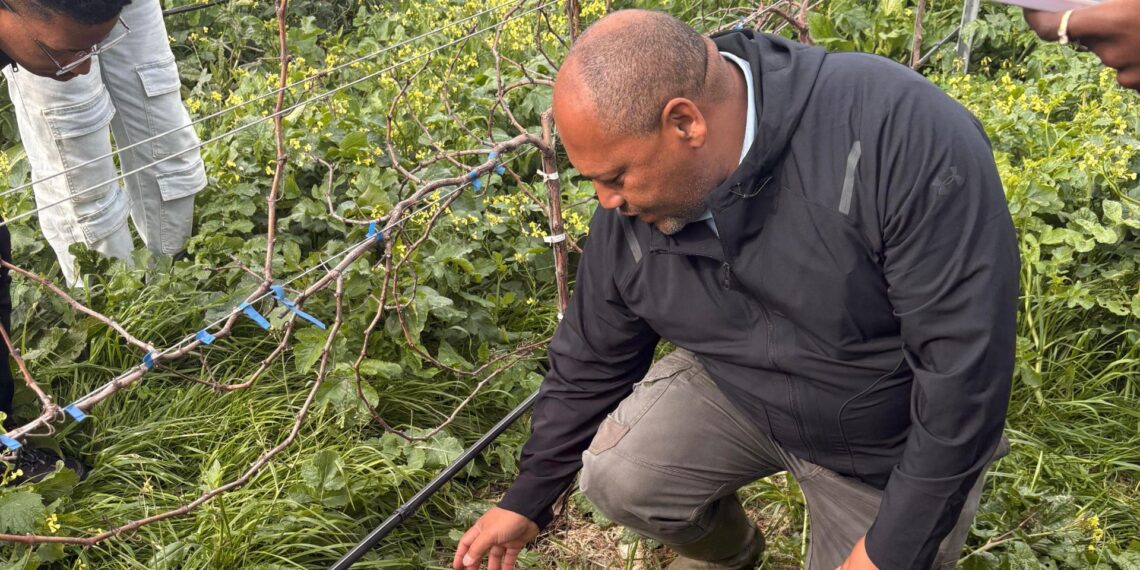
At the heart of Spier’s agricultural evolution is the bold transition to regenerative and organic viticulture. Leading this transformation is farm manager Orlando Filander, who is pioneering a more resilient approach to grape farming.
“With the organic production, we are not allowed to use synthetic pesticides or fungicides. Downy and powdery mildew, two fungal diseases, are quite a risk for wine grape production, especially in an organic system.
“My challenge was to convert the farm to organic practices successfully and get certified. The second one was to produce wines that we can benchmark with our other brands in the Spier group, and that we’ve done successfully,” he said.
READ NEXT: Landmark deal empowers young farmers through smart education