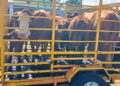
Agriculture minister John Steenhuisen presented a phased 10-year strategy today to protect South Africa’s national livestock herd and restore the country’s international agricultural standing, lost since the 2019 foot-and-mouth disease (FMD) outbreak.
Steenhuisen spoke to the media in Parliament, Cape Town, today about the ongoing challenges of FMD outbreaks. He recognised the difficulties facing both commercial and communal farmers amid these outbreaks and outlined the government’s long-term plan to tackle the crisis.
The strategy focuses on initial stabilisation through targeted vaccinations in high-risk areas mapped scientifically, progressing to a vaccination-free FMD status recognised by the World Organisation for Animal Health (WOAH). A ministerial advisory task team chaired by Dr Emily Mogajane has united government officials and private sector specialists to shape this detailed approach.
Targeted vaccination and movement control
“The strategy we are employing is not a temporary patch; it is a comprehensive control and eradication programme designed to interrupt virus transmission and protect our national herd. It is important to emphasise that the success of this strategy will strongly rely on urgent review of the legislative framework, that has to be adapted to the current emergency situation.
“Our plan is built on world-class technical principles. Targeted vaccination: We are prioritising high-risk zones, with the goal of reaching at least 80% coverage in targeted cattle populations, especially the communal areas and up to 100% in feedlots and dairy cows.
“The objective is to reduce outbreak incidence within 12 months by more than 70% in the high-risk provinces through systematic vaccination and preserve FMD-free provinces through buffer vaccination and strict movement controls,” Steenhuisen said.
Related stories
- Vaccine delays frustrate farmers as FMD crisis deepens
- Govt steps up FMD fight with mass cattle vaccination plans
- Christmas crisis: FMD outbreak forces EC livestock lockdown
Local and imported vaccines
“High-quality vaccines with high-potency will be used during the campaign, especially trivalent vaccines of SAT 1, 2, and 3 currently circulating in South Africa. Partnerships with global leaders like Biogénesis Bagó in Argentina will ensure that we have a reliable supply, with one million doses ready to be sent as soon as the necessary permits are issued. The company indicated that as soon as the permits are issued, they are able to supply the vaccine in the coming two weeks.”
The minister further stated that they are currently preparing the application for authorisation by the South African Health Products Regulatory Authority (SAHPRA) to use an unregistered medicine. The application will be filed by Monday. Biogenesis will also be able to supply an additional five million doses by March 2026.
He explained that since the outbreak, they have been procuring vaccines from the Botswana Vaccine Institute (BVI) and would continue doing so. Steenhuisen noted that the BVI and ARCI would review the existing memorandum and collaborate for maximum vaccine coverage.
“Last year, we received confirmation from the BVI that they can supply us with one million doses per month. Unfortunately, due to the closure of their factory for cleaning purposes, they could not deliver on time. The delegation from Botswana was in South Africa yesterday, and they have confirmed that they have the bulk antigen of SAT 2. This bulk antigen will be formulated to produce SAT 2 vaccine to be used in areas where SAT 2 is prevalent.
“We have also secured the one necessary permit to import Dollvet vaccine from Turkey. As indicated earlier, it will take us some time to contain the disease. Locally, we are activating a local production line through the ARC and OBP, which will initially produce 20 000 doses per week, scaling up to a capacity of 960 000 doses. The ARC indicated on Monday that they can bring forward their production, which will add 12 000 doses to our vaccine pool by mid-February,” he said.
Strengthening traceability measures
Despite many calls and assumptions that the latest strains had not been sent to the Pirbright Institute, the minister confirmed they had instructed the Agricultural Research Council (ARC) to send the field strains there as a matter of urgency. The ARC had confirmed they were currently preparing the strains for dispatch.
“All FMD vaccines to be used in South Africa will have full antigenic matching at Pirbright against South Africa’s current field strains to allow comparison of the various vaccines; this will allow South Africa to select the best vaccines to contribute to the control of this devastating disease.
“We are strengthening our laboratory network, led by the Agriculture Research Council – Onderstepoort Veterinary Research (ARC-OVR), which will work with existing state laboratories to ensure that results are received timeously. We have started with increasing capacity at the OVR. We will implement a digital livestock and traceability system to ensure that animal movements are safe and tracked.
“Other simplified mechanisms will also be looked into. We are currently working with the Council for Scientific and Industrial Research (CSIR) and RMIS traceability platform to implement the livestock identification and traceability system (LITS), which will enhance our traceability,” he said.
READ NEXT: Seeds of love: Limpopo couple’s farming journey takes root