Saturday, May 2, 2026
SUBSCRIBE
21 GLOBAL MEDIA AWARDS
Food For Mzansi
  • News
  • Changemakers
  • Lifestyle
  • Farmer’s Inside Track
  • Food for Thought
No Result
View All Result
  • News
  • Changemakers
  • Lifestyle
  • Farmer’s Inside Track
  • Food for Thought
No Result
View All Result
Food For Mzansi
No Result
View All Result
in Advertorial

Netafim’s precision irrigation helps farmers grow more with less

by Patricia Tembo
14th January 2026
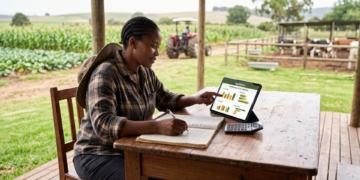
Francois Fourie, a farmer and irrigation designer, shares how Netafim’s precision irrigation and fertigation technologies have transformed his journey from traditional irrigation into a high-efficiency production system that improves yields, water-use efficiency and profitability in South African cash crop farming. Photo: Gareth Davies/Food For Mzansi

Francois Fourie, a farmer and irrigation designer, shares how Netafim’s precision irrigation and fertigation technologies have transformed his journey from traditional irrigation into a high-efficiency production system that improves yields, water-use efficiency and profitability in South African cash crop farming. Photo: Gareth Davies/Food For Mzansi

Share on FacebookShare on TwitterShare on WhatsApp

Netafim is driving change in South African agriculture through precision irrigation. Using advanced drip and fertigation technologies, irrigation designer Francois Fourie explains how they achieve higher yields and improved crop quality while optimising water and nutrient use.


Francois Fourie, a farmer and irrigation designer, has been at the forefront of precision irrigation in South Africa. He shared how precision irrigation and Netafim technologies have impacted his farming operations, particularly for cash crops like sugar beans.

Fourie began his career in irrigation around 2006–2007, initially focusing on sports fields and golf courses. By 2012, he and his business partner expanded into agriculture.

They noticed that many farmers still relied on traditional irrigation methods, such as centre pivots, open-field systems, and basic drip systems. This inspired them to specialise in precision irrigation, particularly in greenhouses and the blueberry industry, where they utilised advanced fertiliser dosing equipment.

In 2016, Fourie established a small demonstration unit near Polokwane to showcase these techniques, which over time grew into a fully operational production farm.


Related stories
  • Netafim precision irrigation: Transforming farming in Kenya
  • Netafim leads the drive for water-smart agriculture in Africa
  • Netafim celebrates 60 years of driving precision irrigation

Why precision irrigation matters for cash crops

Fourie highlighted the benefits of precision irrigation:

FARMER POLL

📢 Which bank is powering your farming journey?

Tell us which bank you use so we can better advocate for the specialised financial tools and accessible capital needed to help South African farmers overcome growth barriers and thrive!

All submissions are kept strictly confidential. 

  • Higher yield potential: Precision irrigation allows crops to reach their full production capacity.
  • Optimised water use: Even though higher-yielding plants can use more water, the system improves the efficiency of water-to-yield conversion.
  • Better nutrient management: Plants receive water and nutrients according to their actual needs, supporting healthier growth.
  • Applicable to all cash crops: The benefits extend to a wide range of crops.
  • Produce more with less: Overall, precision irrigation enables higher yields and better quality using resources more efficiently.

“I believe that all cash crops can benefit from precision irrigation. It is clearly visible that it is definitely possible to produce more with less. That’s also Netafim’s slogan, to grow more with less,” he says.

Demonstrating success: Sugar bean trial

Fourie notes that precision irrigation improves the efficiency of converting water and nutrients into yield. This allows plants to achieve their full potential. By delivering water and fertiliser directly according to the plants’ needs, farmers can produce more with fewer resources, achieving higher yields and better crop quality. 

Fourie explains that he initially wanted to compare water use between pivot and drip irrigation, as many farmers assume that drip automatically uses less water. He applied the same fertiliser programme to both systems but soon noticed that the drip system, which delivers nutrient-enriched water directly to the plants, caused them to respond differently from those under the pivots, creating an imbalance. 

“So I quickly made some alterations throughout the season, which is actually a short growing season on sugar beans. After making those alterations, I managed to obtain a 20% higher yield with a much better quality by using these precision farming techniques,” he shares. 

Water management and fertigation

On water management in Limpopo, Fourie highlighted that Netafim offers more than just drip irrigation equipment. Their Crop Management Technology (CMT) range includes fertiliser dosing units that allow farmers to apply precise fertiliser mixtures directly into irrigation lines, as prescribed by an agronomist.

When combined with drip irrigation, this approach delivers water and nutrients directly to the plant’s root zone, improving efficiency and enabling higher yields. 

By optimising the conversion of water and fertiliser into crop production, farmers can achieve better results using fewer resources. Fourie emphasised that this benefit is not limited to Limpopo but is relevant to farming operations worldwide.

Fourie shares the following fertigation tips for farmers:

  1. Work with an agronomist: Get professional guidance to design precise fertiliser mixes that meet the specific needs of your crops.
  2. Use individual nutrient tanks: Separate tanks rather than relying on pre-mixed bagged fertilisers.
  3. Mix nutrients to crop needs: Fertigation allows you to create customised nutrient ratios for your crops, ensuring they get exactly what they need at each growth stage.
  4. Deliver nutrients through irrigation: Use a dosing unit to mix the fertiliser and water, then apply it directly into the irrigation system for efficient delivery to the plant’s root zone.
  5. Set up suitable infrastructure: Install the dosing unit in a secure pump station and ensure your in-field irrigation system can deliver nutrients evenly across the crops.
  6. Choose a complete solution: Using a system like Netafim’s one-stop fertigation equipment makes it easier to implement and manage precision fertigation effectively.

The mindset shift for precision farming

Fourie emphasises that adopting fertigation requires a significant mental shift for farmers who have been working the same way for many years. He explains, “Irrigation scheduling is very important if you want to apply precision fertigation practices on your farm. As a farmer, you need to make this mind shift towards precision management of your irrigation scheduling before you move over, or even think of moving over to fertigation methods.”

Fourie says heavy-wall drip is still used for high-value perennial crops like citrus and macadamias due to its long lifespan. Thin-wall drip, designed for one-season use, is a more cost-effective option for cash crops and seasonal vegetables.

While drip irrigation has traditionally focused on permanent crops, more South African farmers are now adopting thin-wall systems, supported by Netafim’s range of products and fittings.

READ NEXT: Precision irrigation unlocks superior crop quality & exports

Sign-up to Farmer's Inside Track for the best farming tips, news and advice to thrive!

Patricia Tembo

Patricia Tembo is motivated by her passion for sustainable agriculture. Registered with the South African Council for Natural Scientific Professions (SACNASP), she uses her academic background in agriculture to provide credibility and technical depth to her journalism. When not in immersed in the world of agriculture, she is engaged in outdoor activities and her creative pursuits.

Tags: Commercialising farmerDrip irrigationNetafimPrecision irrigationTeach me

Related Posts

Fairtrade Africa sharpens 2026–2028 strategy for impact

30th April 2026

Livestock prices remain high as disease and supply shocks reshape the market

28th April 2026

Bio360 Africa: Turning farm waste into renewable energy

24th April 2026

Beyond certification: Fairtrade Africa’s DONUTS agenda

Five planning steps to build a profitable farming business

Every drop counts: Managing precision irrigation for export citrus

When farmworkers find their voice, work finds its dignity

The Tshabalalas can still enjoy their family’s favourite red meat

Calf rearing: Why the first few hours define your future herd
Farmer's Inside Track

Calf rearing: Why the first few hours define your future herd

by Patricia Tembo
29th April 2026

Successful livestock farming starts at birth. University of the Free State specialist Junior Mkansi breaks down the complexities of calf...

Read moreDetails
Harvesting success: Inga Qeja’s journey from garden to grocer

Harvesting success: Inga Qeja’s journey from garden to grocer

29th April 2026
Mopane

Mopane & termites: Limpopo insect trade boosts rural livelihoods

29th April 2026
Rockman unveils R1 billion budget to combat disease, boost jobs

Rockman unveils R1 billion budget to combat disease, boost jobs

29th April 2026
Industry experts and stakeholders lead a panel discussion at the Eastern Cape Farmers’ Day Fair Trade hosted by Food For Mzansi in partnership with Inga Qeja, a trailblazing vegetable farmer and the proud owner of Bhayi Holdings in Mbokothwana, Tsolo. Photo: Food For Mzansi

Tsolo farmers’ day tackles disease and market access

28th April 2026

Livestock prices remain high as disease and supply shocks reshape the market

Fire meets flavour: Recipes and tips for a plant-based braai

Calf rearing: Why the first few hours define your future herd

Sorghum: Forgotten grain rises as climate-smart crop choice

Local burrata named SA’s best dairy product

Join Food For Mzansi's WhatsApp channel for the latest updates!

JOIN NOW!
Next Post
FMD: Farmers who notice symptoms of foot and mouth disease in their livestock should report it to local veterinarians as soon as possible. Photo: Supplied/Food For Mzansi

Steenhuisen unveils 10-year roadmap to eradicate FMD

THE NEW FACE OF SOUTH AFRICAN AGRICULTURE

With 21 global awards in the first six years of its existence, Food For Mzansi is much more than an agriculture publication. It is a movement, unashamedly saluting the unsung heroes of South African agriculture. We believe in the power of agriculture to promote nation building and social cohesion by telling stories that are often overlooked by broader society.

Land restitution leads, but reform still lacks

R512k boost helps EC youth launch animal healthcare businesses

Stoep to cellar: Sauvignon blanc takes centre stage this May

Female farmers commit to stronger worker relationships

Healing through nature: Letitia builds wellness brand from home

Fairtrade Africa sharpens 2026–2028 strategy for impact

  • Awards & Global Impact
  • Our Story
  • Contact Us
  • Cookie Policy
  • Privacy Policy
  • Copyright

Contact us
Office: +27 21 879 1824
News: info@foodformzansi.co.za
Advertising: sales@foodformzansi.co.za

Contact us
Office: +27 21 879 1824
News: info@foodformzansi.co.za
Advertising: sales@foodformzansi.co.za

  • Awards & Global Impact
  • Our Story
  • Contact Us
  • Cookie Policy
  • Privacy Policy
  • Copyright
No Result
View All Result
  • News
  • Changemakers
  • Lifestyle
  • Farmer’s Inside Track
  • Food for Thought

Copyright © 2024 Food for Mzansi

This website uses cookies. By continuing to use this website you are giving consent to cookies being used. Visit our Privacy and Cookie Policy.