Saturday, September 5, 2026
SUBSCRIBE
22 GLOBAL MEDIA AWARDS
Food For Mzansi
  • News
  • Changemakers
  • Lifestyle
  • Farmer’s Inside Track
  • Food for Thought
No Result
View All Result
  • News
  • Changemakers
  • Lifestyle
  • Farmer’s Inside Track
  • Food for Thought
No Result
View All Result
Food For Mzansi
No Result
View All Result
in News

Western Cape fires destroy farmland and livelihoods

Wildfires have left a trail of destruction across the Western Cape, with over 90 000 hectares of land scorched in a single week. From the vineyards of Franschhoek to the coastal farms of Pearly Beach, the agricultural sector is reeling from the loss of infrastructure, grazing land, and vital vegetation

by Tiisetso Manoko
12th January 2026
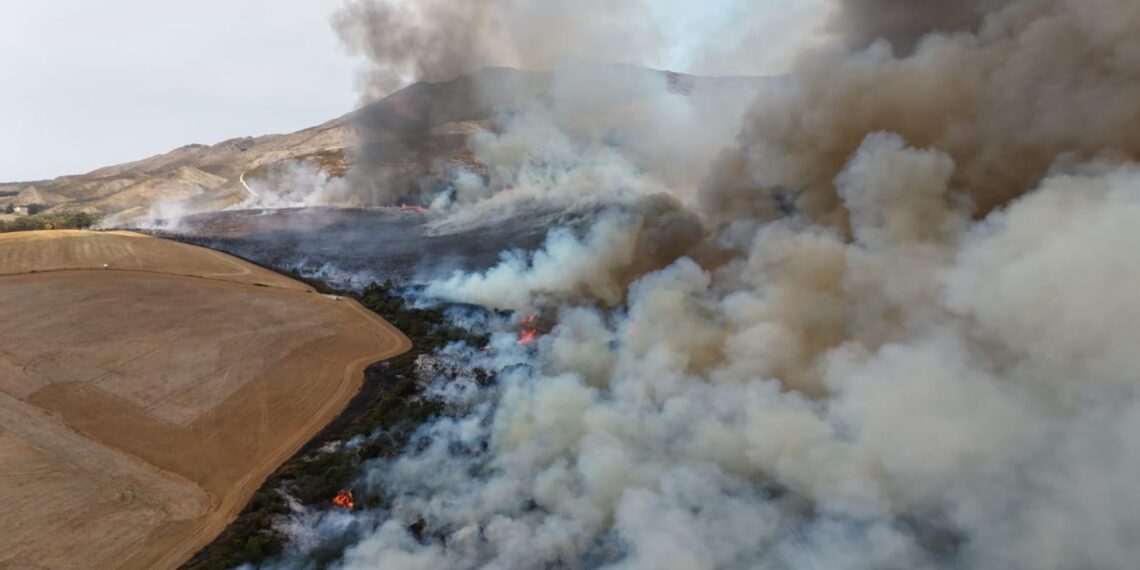
Some of the land in the Overstrand Municipality has been destroyed by wildfires. Photo: Overstrand Municipality

Some of the land in the Overstrand Municipality has been destroyed by wildfires. Photo: Overstrand Municipality

Share on FacebookShare on TwitterShare on WhatsApp

The ongoing wildfires in the Western Cape have caused havoc and major disruptions in the agricultural sector and the livelihoods of many residents. While the assessments are still ongoing, financial and arable land losses are expected to skyrocket.

Overstrand Municipality, one of the major affected areas, has called on residents and farmers to vacate their areas where necessary. Municipal manager Dean O’Neill stated that the costs of fires are estimated between R6 and R7 million since 4 January 2026.

“At present, it is estimated that a total of more than 33 000 hectares have burned in Pearly Beach, with just over 4 000 hectares burned in the Stanford fire.

“At the fire in Uilkraalsmond, the perimeter remains hot in the dense alien vegetation, and the fire lines continue to burn and creep,” he said.

Land lost to fires

O’Neill said farmers in the Pearly Beach and Stanford areas have suffered significant losses following the recent fires, with the situation continuing to escalate as more damage is assessed daily.

Firefighter battling with fire in the Overstrand municipality area during the recent fires. Photo: Overstrand Municipality

“Vast stretches of veld have burned away completely, leaving no grazing for livestock and game. Farmers with cattle, sheep, and game are now facing an urgent challenge: keeping their animals fed and watered in an environment where natural resources have been destroyed.

“In many cases, essential infrastructure such as water pipes, troughs, and containers has melted in the fires, further compounding the crisis. At this stage, farmers are especially in need of lucerne, preferably small or round bales,” he said.

Overstrand executive mayor, Ald Archie Klaas, said every gesture of support, no matter how small, helps farmers protect their animals and begin the long road to recovery.


Related stories
  • Veld fire training highlights need for farmer preparedness
  • Hidden cost: How fires destroy soil health and threaten farming
  • Veld fires could ignite food price hikes in SA
  • Beyond blame: The case for climate justice in livestock farming

Winelands fires ravaged vegetation

Earlier today, the Cape Winelands District Municipality’s Fire Services reported that the fire in the Wemmershoek area near Franschhoek was still active.

“The Winelands Fire Protection Association deployed aerial resources and, with assistance from Stellenbosch Municipality, focused on structure protection at Mont Rochelle, Chamonix Wine Estate, and surrounding farms,” the municipality stated.

Meanwhile, Drakenstein Municipality reported that the Du Toitskloof fire is also under control. Over the weekend, the fire crossed the mountain on the Paarl side in two spots, but quick action helped manage the spread.

Dawn Noemdoe, founder of HoneyatDawn, said while her bees were safe, she is worried about the fires that have been going on for over a week, and they were a threat to vegetation.

“The first worry is the bees themselves. If they are located in areas where the is fire, the risks of losing the colonies are there. The biggest risk is losing the actual infrastructure during this time of fires.

“The second area of concern is vegetation; wherever the fire is burning, we lose vegetation, which will mean there will be no natural resources that bees can rely on,” she said.

Counting the cost

Agri Western Cape and the olive industry told Food For Mzansi that they were still assessing which of their members were affected, as mopping up in some areas was starting, while in some places, the fires are still active.

South Africa Wine also stated that they have requested information from their colleagues working in the field and are awaiting feedback.

Meanwhile, Bergrivier Municipality’s municipal manager, adv. Hanlie Linde commended the district municipality and all responding agencies for their proactive approach and effective firefighting strategies.

“On behalf of Bergrivier Municipality, the broader Piketberg, Wittewater and Goedverwacht communities, as well as the private and agricultural sectors, I would like to thank all firefighters for their dedication and tireless efforts. This fire could have caused significantly more damage if it were not for your swift and decisive response,” Linde said.

READ NEXT: Sihlobo: These policies could shake up SA farming

Sign-up for the latest agricultural news delivered straight to your inbox every day with Mzansi Today!

Tiisetso Manoko

Tiisetso Manoko is a seasoned journalist with vast experience in community media. He possesses diploma in media studies majoring in journalism, certificate in civic leadership. He loves news from all angles with particular interest in local government, agriculture and politics. He is a staunch Mamelodi Sundowns Football club supporter.

Tags: Commercialising farmerInform meLivestock farmersVeld firesWestern Cape
News

Aucamp outlines strategy for biosecurity, trade, and infrastructure

by Tiisetso Manoko
2nd September 2026

In an exclusive interview with Food For Mzansi, agriculture minister Willie Aucamp outlines his vision to accelerate the AAMP, tackle...

Read moreDetails
Tobias Doyer, CEO of Grain SA. Photo: Supplied/Grain SA Facebook

Rising costs, climate risk push Swartland wheat farmers to the brink

2nd September 2026
Sick spuds: No need to panic as SA’s potatoes are banned in Zim

Potato turning point ahead as onions double in price year-on-year

1st September 2026
Early calf care: Key growth targets every cattle farmer must track

Early calf care: Key growth targets every cattle farmer must track

1st September 2026

How to align your farming cycles with long-term financial success

1st September 2026

Early calf care: Key growth targets every cattle farmer must track

Former electrical engineer builds farming powerhouse on tribal land

Tough times, hardy cattle: Why Mzansi farmers are choosing Nguni

This week’s agri events: 31 August – 03 September

Potato turning point ahead as onions double in price year-on-year

Join Food For Mzansi's WhatsApp channel for the latest updates!

JOIN NOW!
Next Post
South African livestock farms under increased security as weekly theft cases persist across provinces. Photo: Supplied/Food For Mzansi

Festive stock heists spark alarm across rural SA

THE NEW FACE OF SOUTH AFRICAN AGRICULTURE

With 21 global awards in the first six years of its existence, Food For Mzansi is much more than an agriculture publication. It is a movement, unashamedly saluting the unsung heroes of South African agriculture. We believe in the power of agriculture to promote nation building and social cohesion by telling stories that are often overlooked by broader society.

Honoured roots: A father’s legacy, a daughter’s farming dream

Gauteng farmers urged to harness massive urban market

Foot-and-mouth crisis hits SA dairy industry with R1-billion loss

Tough times, hardy cattle: Why Mzansi farmers are choosing Nguni

Dragon fruit thrives in KZN valley despite tough national season

Government hikes sugar import price, but industry warns of gap

  • Awards & Global Impact
  • Our Story
  • Contact Us
  • Cookie Policy
  • Privacy Policy
  • Copyright

Contact us
Office: +27 21 879 1824
News: info@foodformzansi.co.za
Advertising: sales@foodformzansi.co.za

Contact us
Office: +27 21 879 1824
News: info@foodformzansi.co.za
Advertising: sales@foodformzansi.co.za

  • Awards & Global Impact
  • Our Story
  • Contact Us
  • Cookie Policy
  • Privacy Policy
  • Copyright

Chat Options

I'm Lerato, your AI assistant!
No Result
View All Result
  • News
  • Changemakers
  • Lifestyle
  • Farmer’s Inside Track
  • Food for Thought

Copyright © 2024 Food for Mzansi

This website uses cookies. By continuing to use this website you are giving consent to cookies being used. Visit our Privacy and Cookie Policy.