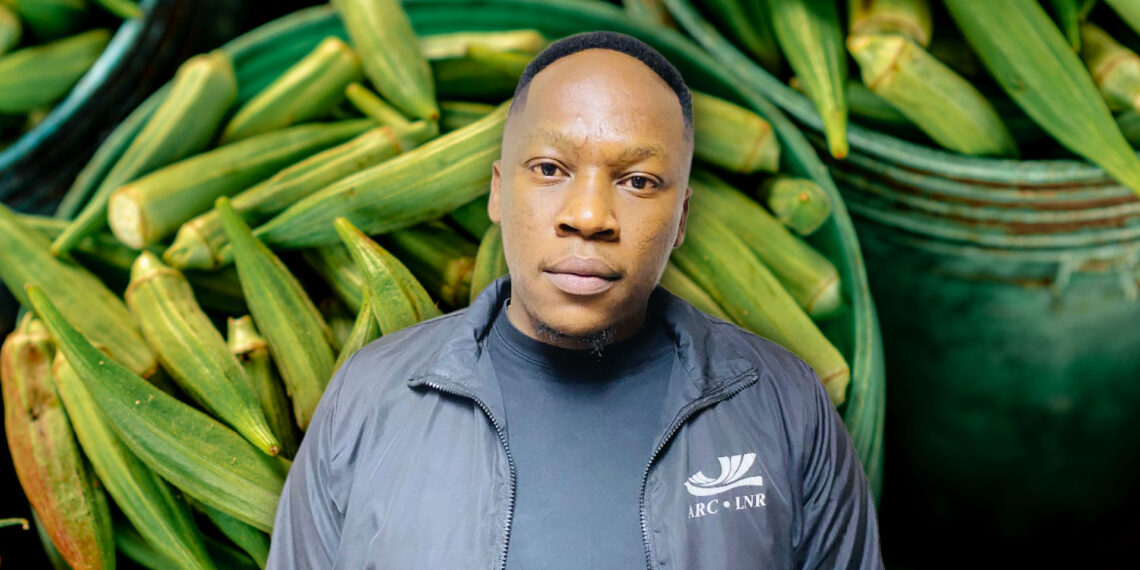
Glen Mendi of the Agricultural Research Council highlights how smallholder farmers in Mngeni village in the Eastern Cape are building resilience through indigenous crops, organic farming, and strong local partnerships. His research shows how community-led support can strengthen food security and rural livelihoods.
South Africa’s smallholder farmers continue to face challenges, including limited resources, unpredictable markets, and rising climate-related risks. Yet across the rural landscape, many are demonstrating extraordinary resilience. Mngeni Village, situated in Matatiele in the Eastern Cape, is one such community where farmers are embracing indigenous crops, organic farming, and local partnerships to build a more secure and sustainable food system.
During our recent visit to Mngeni village as part of the Agricultural Research Council’s Broadening the Food Base in South Africa project, we met a committed group of farmers determined to move beyond subsistence. These farmers are organised under the Kwangakungalunga Multi-Purpose Co-operative, established in 2022, which has steadily gained momentum with external support and strong community participation.
The cooperative has been significantly strengthened through the involvement of African Solutions to African Problems (ASAP). ASAP field officer Mfundo has played a crucial role, providing on-site training, guiding farmers through production challenges, and supporting them in improving their agricultural practices.
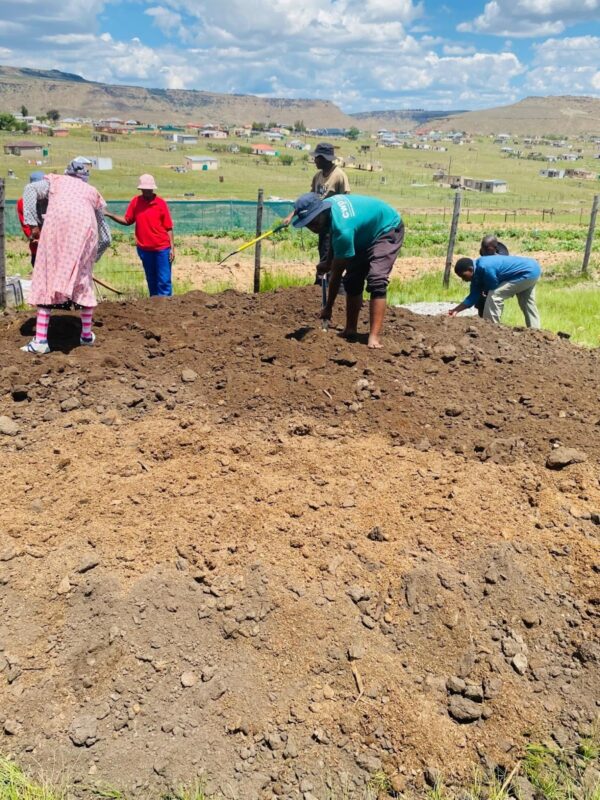
Through the programme, farmers have benefited from fencing, boreholes, improved facilities, organic manure, seeds, and continuous technical assistance. These investments have helped secure their fields, enhance crop performance, and increase consistency in their harvests.
While walking through the plots, one farmer shared, “We never go to bed hungry, thanks to the cooperative and ASAP.” These words reflect not only pride in their work but also a deep sense of collective achievement and mutual support within the community.
Turning to indigenous crops for nutrition and income
Most households in Mngeni continue to grow familiar vegetables such as spinach, cabbage, onions, and cucumbers. These crops are cultivated organically and mainly used for household consumption. However, a meaningful shift is emerging in a renewed interest in underutilised indigenous crops (UICs).
Some farmers are now experimenting with and reviving traditional crops such as:
- Okra
- Pumpkin (including pumpkin leaves)
- Beans
- Cowpeas (leaves and grain)
These crops are renowned for their exceptional drought tolerance, cultural significance, and high nutritional value. For many farmers, they also present new opportunities to diversify production and generate income.
Related stories
- Indigenous flowers: A new path to profit for SA farmers
- Indigenous farmers see little gain from rooibos agreement
- Steenhuisen sets an optimistic course for SA agriculture in 2026
- Good weather & more extension officers top farmers’ 2026 wishlist
Several farmers expressed their willingness to scale up okra production if reliable markets were available. As is the case in many rural South African communities, access to markets remains a significant barrier. Without access to price information, nearby buyers, or structured marketing channels, farmers remain confined to small-scale production for household use rather than pursuing commercial expansion.
Infrastructure strengthening local production
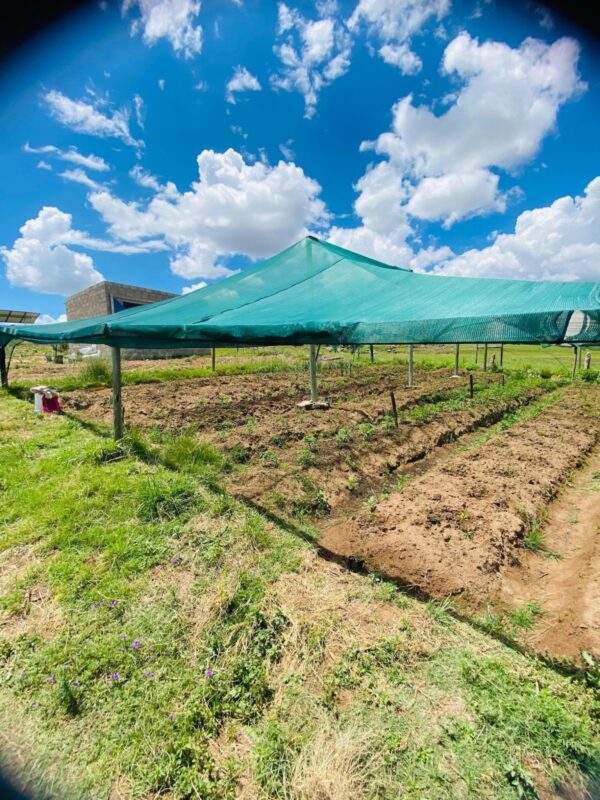
Land access in Mngeni is provided through the local traditional authority, with each farmer allocated an individual plot on communal land. One of the most critical investments from ASAP has been the installation of solar-powered water systems, which ensure consistent irrigation even during dry spells.
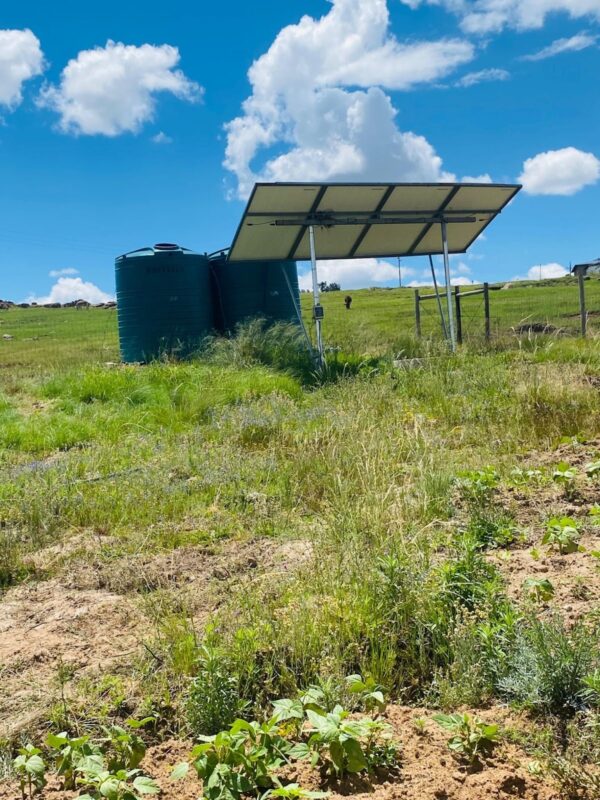
Shade net structures have been added to protect young crops from rising temperatures and strong winds, challenges that farmers say have become more severe over recent seasons. These improvements have not only enhanced crop quality but also encouraged farmers to think long-term, rather than focusing solely on short-term survival.
A model for local, sustainable agricultural development
The transformation unfolding in the village is about more than planting crops. It is a story of community agency, indigenous knowledge, and practical solutions shaped from the ground up. Reviving underutilised indigenous crops enables farmers to improve household nutrition, build resilience to climate variability, and open new pathways for income generation.
With continued extension support, stronger access to market information, and sustained investment in infrastructure, Mngeni’s farmers, through the Kwangakungalunga Multi-Purpose Co-operative, have the potential to expand production and contribute meaningfully to diversifying South Africa’s food systems.
Planting seeds for a resilient future
As food prices rise, climate conditions worsen, and reliance on only a few staple crops becomes increasingly risky, communities like Mngeni offer a blueprint for building resilience. Their approach is straightforward: Support smallholder farmers, diversify production, and revive indigenous crops that are both climate-smart and culturally rooted.
The farmers are not only producing vegetables and okra, but they are also cultivating dignity, stability, and hope. Their story shows that with the proper support, rural communities can drive meaningful local development and strengthen national food security. Extension officers must intensify their relationship with stakeholders, such as ASAP, and align their approaches and commitment with those of farmers.
With sustained institutional support, improved market linkages, and continued investment in production infrastructure, the farmers of Mngeni Village can play a meaningful role in diversifying South Africa’s food base.
Strengthening extension services, supporting the cooperative, and building markets for indigenous crops will ensure that the revival of crops such as okra, beans, pumpkin, and cowpeas contributes not only to household nutrition but also to long-term rural economic development.
Mngeni Village is already demonstrating what is possible when community commitment is matched with practical support. The next step is to ensure that this foundation is strengthened, scaled, and connected to broader agricultural development strategies.
- Glen Mendi is a research assistant in the economic analysis unit at the ARC. This article is based on his work with the ARC under the Centre of Excellence initiative, “Broadening the Food Base for Food System Resilience”, which promotes neglected, indigenous, and underutilised crops, insects, and animals in South Africa, with guidance from Dr Siphe Zantsi. The views and opinions expressed in this article are those of the authors and do not necessarily reflect the views or positions of Food For Mzansi.
READ NEXT: FANRPAN unveils decade strategy for Africa’s food systems