For the livestock industry to succeed in exporting its products, it needs a strong veterinary service and health system that can effectively handle animal diseases. This is according to the Western Cape minister of agriculture, economic development and tourism, Dr Ivan Meyer.
On Saturday, 5 October 2024, another successful Western Cape Provincial Vet’s Week ended. According to Meyer, Vet’s Week promotes veterinary services and seeks to improve biosecurity in the agricultural sector.
This event brings together the Western Cape department of agriculture’s veterinary services, the agricultural producers’ support and development programme, and several partners to provide information and create awareness of biosecurity and animal health.
“The Western Cape is responsible for 55% of South Africa’s primary agricultural exports. Almost 50% of these exports are livestock or livestock products,” Meyer said.
“A successful export-focused livestock industry depends on an efficient state veterinary service and animal health systems that can manage diseases, prevent frequent and widespread outbreaks, and support productivity and export opportunities.”

Addressing the veterinarian shortage
Meyer reiterated the crucial role of veterinarians in the livestock industry,
“It’s a stark reality that South Africa is facing a shortage of veterinarians, a situation that demands our immediate attention and action. A fully staffed veterinary service is a critical enabler to a thriving agriculture sector in the province. The agriculture sector creates jobs and drives economic growth,” Meyer noted.
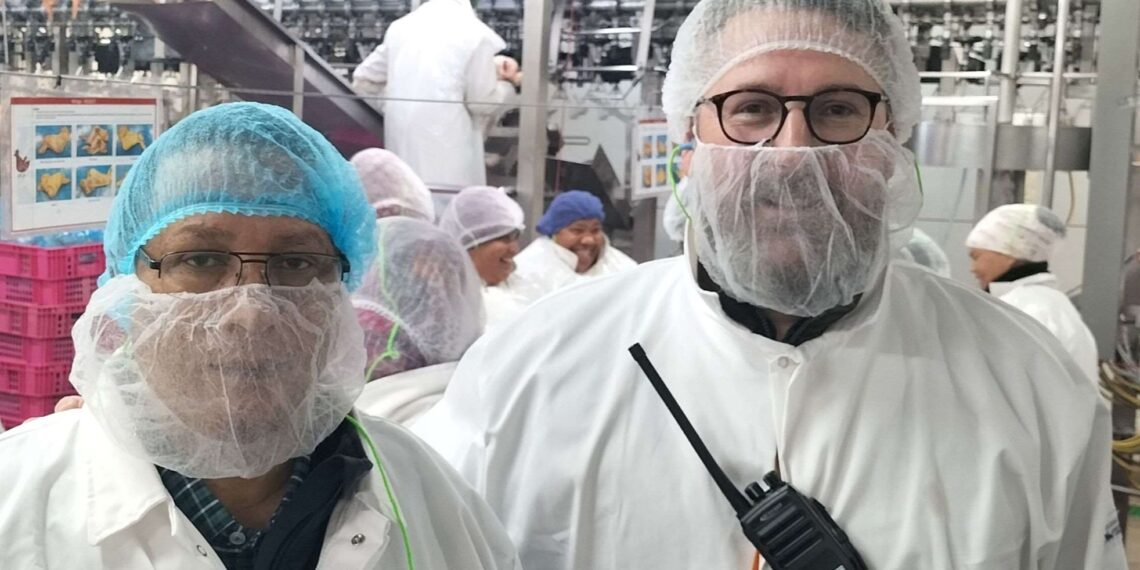
During a visit to Elgin Free Range Chickens in Grabouw, systems and resources manager Michelle Cameron said biosecurity is essential to their business.
Cameron said, “Biosecurity begins with our breeder and laying operations. This is then pulled through to our hatchery and grower farms, where dedicated trucks deliver feed to our chickens.”
Related stories
- Steenhuisen pledges urgent action on veterinarians’ conditions
- South Africa bleeds vets amid critical shortage
Unified approach to biosecurity
Meanwhile, Dr Ilse Trautmann, deputy director-general of agricultural research and regulatory services, said the Western Cape has a strategic and integrated approach to analysing and managing relevant risks to public health, animal and plant life, and associated environmental risks.
This approach aligns with One Health’s integrated and unifying approach to improving the health of animals, people, and ecosystems.

Trautmann said, “The importance of strong biosecurity systems has increased significantly over recent decades with globalisation, intensification of animal production systems, and concomitant increasing trade in food, plant, and animal products and international travel driving the spread of emerging or re-emerging diseases.”
According to Meyer, biosecurity protocols are strictly followed while transporting chickens and within the abattoir.
“We believe that biosecurity is everyone’s business. So, throughout the value chain from farm to fork, we should take the necessary steps to protect the integrity of agricultural produce. Doing so will support economic growth and help us create more jobs,” Meyer said.
READ NEXT: Wine tourism offers untapped potential for young jobseekers
Sign up for Mzansi Today: Your daily take on the news and happenings from the agriculture value chain