Monday, February 16, 2026
SUBSCRIBE
21 GLOBAL MEDIA AWARDS
Food For Mzansi
  • News
  • Changemakers
  • Lifestyle
  • Farmer’s Inside Track
  • Food for Thought
No Result
View All Result
  • News
  • Changemakers
  • Lifestyle
  • Farmer’s Inside Track
  • Food for Thought
No Result
View All Result
Food For Mzansi
No Result
View All Result
in News

Sugar crisis as Tongaat Hulett files for provisional liquidation

Tongaat Hulett has filed for provisional liquidation, sending shockwaves through the sugar industry. Without the "retention" payments held by the mills, many growers won't have the cash flow to make it to April. Stakeholders are calling for urgent state intervention to protect local livelihoods

by Lisakanya Venna
16th February 2026
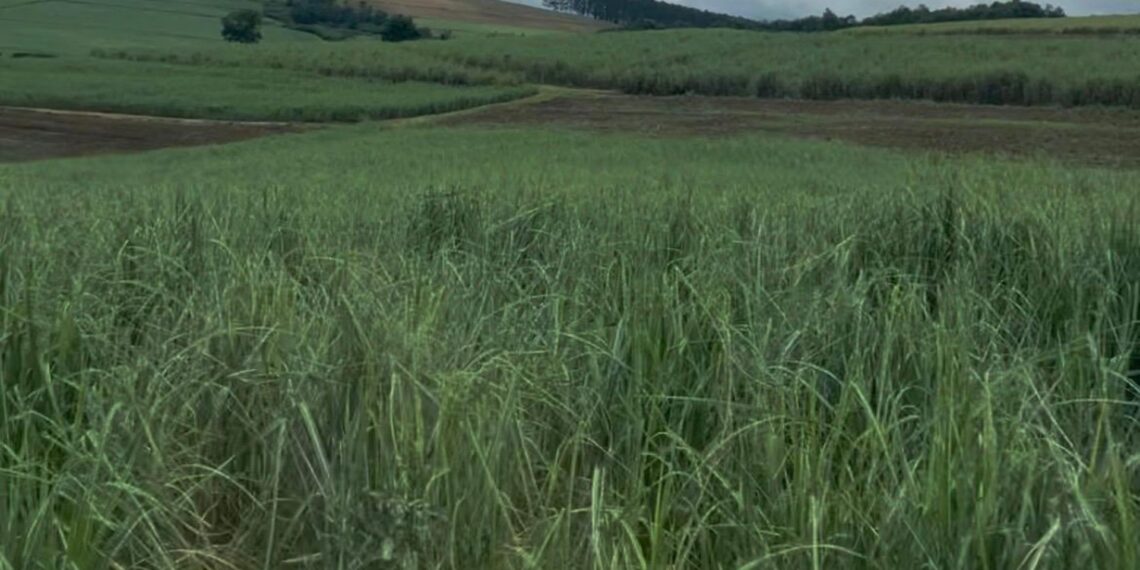
Sugarcane farmers in KwaZulu-Natal face an uncertain future as the liquidation of Tongaat Hulett threatens the survival of thousands of local growers. Photo: Lisakanya Venna/Food For Mzansi

Sugarcane farmers in KwaZulu-Natal face an uncertain future as the liquidation of Tongaat Hulett threatens the survival of thousands of local growers. Photo: Lisakanya Venna/Food For Mzansi

Share on FacebookShare on TwitterShare on WhatsApp

The South African sugar industry is facing a crisis of historic proportions following the news that Tongaat Hulett Limited (THL) has filed for provisional liquidation.

The collapse of the Vision Group rescue deal has forced Tongaat Hulett into provisional liquidation, sparking fears of a total industry shutdown that could leave millions of livelihoods and thousands of small-scale farmers in financial ruin.

This move comes after the lapse of sale agreements with the Vision consortium and a failure to secure vital funding from the Industrial Development Corporation (IDC).

The South African Farmers Development Association (Safda) has expressed serious concern over the collapse of the business rescue process. Safda said of the roughly 25 653 small-scale farmers in the country, 60% are located within the Tongaat Hulett catchment area. These 15 446 farmers, who supply the Maidstone, Amatigulu, and Felixton mills, are now facing a future of total uncertainty.

The cost of a crumbling industry

The infrastructure crisis within the sugar belt has only intensified these fears. Thandokwakhe Sibiya, chief operating officer at Safda, warned that the remaining operational mills lack the capacity to process the surplus cane left behind by Tongaat Hulett.

With the company currently supplying over a quarter of the local market, Sibiya predicts a ripple effect of disaster that will hollow out rural livelihoods, local economies, and the national fiscus.

“Our major concern is that this will open the floodgates for more imported sugar to flood South Africa. We are working tirelessly day and night to make sure there is a solution,” Sibiya said.


Related stories
  • From bitter to sweet: Tongaat Hulett farmers feel at ease
  • Small-scale fishers battle DFFE over linefish quota cuts
  • Sugar tax, cheap imports endanger rural livelihoods

Compounding this internal crisis is a perceived lack of support from the state. KwaZulu-Natal farmer Brad O’Neill echoed these concerns, arguing that unfavourable policy decisions are crushing the industry.

He pointed specifically to the government’s failure to shield local producers from international competition, noting that the “dumping” of cheap foreign sugar into the local market has driven prices down, leaving the entire industry vulnerable.

Farmers face financial collapse

SA Canegrowers chief executive officer, Thomas Funke, emphasised that the true value of the company lies in its functional, operating assets. He warned that if operational continuity is not secured, the entire value chain, from workers to transporters, will be severely destabilised.

SA Canegrowers stated that if the liquidation proceeds, the growers supplying Tongaat’s three mills and the entire industry will face immediate non-payment for cane, levies and other legislated funding requirements.

For individual farmers, the crisis is a threat to their very survival. KZN sugarcane grower Pratish Sharma warned that a mill closure would trigger an immediate financial collapse for local farming businesses.

Sharma explained that because the industry is currently in the “off-crop” cycle, growers have already exhausted their cash reserves on essential maintenance, such as planting, fertilising, and weed control.

“While farmers have received the bulk of their seasonal pay, the remaining 10%, known as the ‘retention’, is held by Tongaat Hulett to account for price fluctuations. In a low-margin industry like sugar, this final payment represents the farmer’s total profit. Without it, many growers will lack the liquidity to survive until the next season begins in April.

“As much as it is only 10%, you have to bear in mind that producing sugarcane is a low-margin business, so that 10% represents the profit that one would earn from any farming activities. There’s not really much prospect of any farmer making it to April without being paid their retention in March,” Sharma said.

READ NEXT: Bringing sorghum back: How Malebe is reviving indigenous grains

Sign-up for the latest agricultural news delivered straight to your inbox every day with Mzansi Today!

Lisakanya Venna

Lisakanya Venna is a junior journalist and content coordinator with varied multimedia experience. As a CPUT journalism alumni, she finds fulfilment in sharing impactful stories and serving as a reliable source of information.

Tags: Commercialising farmerIndustrial Development CorporationInform meSouth African Farmers Development AssociationSugar industryTongaat Hulett Limited

Related Posts

South Africa’s seed landscape is at a crossroads. While formal systems offer high yields, informal networks preserve vital biodiversity. Photo: Pexels

High-quality seeds, high stakes for smallholder farmers

16th February 2026
Participants get practical, hands-on training in pig production this week, covering everything from breeding and feeding to housing, hygiene, and farm management. Photo: Supplied/Food For Mzansi

This week’s agri events: 16 – 20 February

16th February 2026

Small-scale fishers battle DFFE over linefish quota cuts

Harvesting love: How farming couples balance business & romance

The abalone crisis: Why SA’s coastal war never ends

SA agricultural exports surge but face logistical strain

Ramaphosa pledges 28m FMD vaccines, 10 000 extension officers

Wine harvest event unites heritage and modern leadership

For these farmer couples, love may seem simple, but it works wonders for heart and soul: Mbali Sithole & Dumisani Biyela, Phelisa Ndayi & Lubabalo Bunu.
Photos: Gareth Davies
News

Harvesting love: How farming couples balance business & romance

by Vateka Halile
14th February 2026

Running a farm demands immense sacrifice, but you don't have to carry the load alone. Discover how couples navigate the...

Read moreDetails
Nomasonto Msibi is an assistant teacher in the mornings who spends her after-hours farming, committed to growing her business and making a meaningful difference in her community. Photos: Supplied/Food For Mzansi

Breaking new ground: Msibi trades marketing for mixed farming

13th February 2026
Abalone poaching remains one of South Africa’s most entrenched environmental crimes. Syndicates, drugs, and economic desperation sustain a black market worth millions. Photo: South African National Biodiversity Institute

The abalone crisis: Why SA’s coastal war never ends

13th February 2026
South Africa's agricultural exports are poised for record growth despite the challenges the sector faces. Pixabay

SA agricultural exports surge but face logistical strain

13th February 2026
“We know that despite our achievements, South Africa remains a highly unequal society,” said President Cyril Ramaphosa in his Freedom Day address at the Union Buildings in Pretoria today. Photo: Supplied/GCIS

Ramaphosa pledges 28m FMD vaccines, 10 000 extension officers

12th February 2026

Standerton proves partnerships can power rural transformation

This week’s agri events: 16 – 20 February

Breaking new ground: Msibi trades marketing for mixed farming

Sugar crisis as Tongaat Hulett files for provisional liquidation

Bringing sorghum back: How Malebe is reviving indigenous grains

Join Food For Mzansi's WhatsApp channel for the latest updates!

JOIN NOW!

THE NEW FACE OF SOUTH AFRICAN AGRICULTURE

With 21 global awards in the first six years of its existence, Food For Mzansi is much more than an agriculture publication. It is a movement, unashamedly saluting the unsung heroes of South African agriculture. We believe in the power of agriculture to promote nation building and social cohesion by telling stories that are often overlooked by broader society.

Sugar crisis as Tongaat Hulett files for provisional liquidation

Cane to craft: Brad O’Neil blends legacy and innovation in sugar

High-quality seeds, high stakes for smallholder farmers

This week’s agri events: 16 – 20 February

Bringing sorghum back: How Malebe is reviving indigenous grains

Standerton proves partnerships can power rural transformation

  • Awards & Global Impact
  • Our Story
  • Contact Us
  • Cookie Policy
  • Privacy Policy
  • Copyright

Contact us
Office: +27 21 879 1824
News: info@foodformzansi.co.za
Advertising: sales@foodformzansi.co.za

Contact us
Office: +27 21 879 1824
News: info@foodformzansi.co.za
Advertising: sales@foodformzansi.co.za

  • Awards & Global Impact
  • Our Story
  • Contact Us
  • Cookie Policy
  • Privacy Policy
  • Copyright
No Result
View All Result
  • News
  • Changemakers
  • Lifestyle
  • Farmer’s Inside Track
  • Food for Thought

Copyright © 2024 Food for Mzansi

This website uses cookies. By continuing to use this website you are giving consent to cookies being used. Visit our Privacy and Cookie Policy.