Boipelo Molefe has always been an over-achiever. She is one of the extraordinary women selected for the Corteva Women Agripreneur 2022, a year-long blended development programme at the Gordon Institute of Business Science (GIBS) Entrepreneurship Development Academy (EDA).
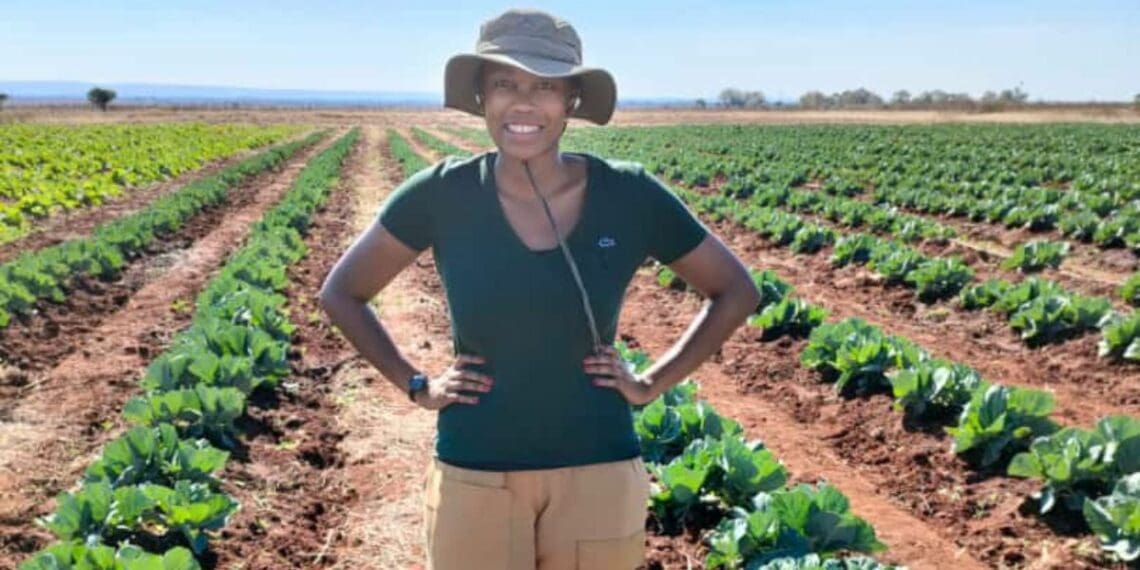
As deputy head girl, captain of the hockey team, and editor of the school newspaper, Molefe showed her trailblazing qualities early. Now, at 29, she is running her own farming operation, Mpelegeng farm in Limpopo, and helping change lives along the way.
Farming was never a childhood dream for Molefe. Her fascination with the sector started when she witnessed harvesting content on social media that planted the farming seed in her brain.
“I started following a lot of farmers [online]. [I watched] how they would plant their seedlings and be fruitful and grow into an actual vegetable or fruit. I thought ‘Okay, so you [are] literally feeding people from this little. Wow, nature really does give back’.”
By trade, Molefe is in logistics management. She graduated from the University of Johannesburg in 2016 and started working for a large logistics company straight out of university. Within two years, Molefe had worked her way up the company food chain and was promoted to operations manager at the company’s Belgium branch.

“I wanted to have a farm, and when Covid hit, I just thought, ‘I can’t do this job anymore’. Something said to me ‘start farming’ and I started farming. That’s really how it just happened. I came back to South Africa and started from there.”
A short but fruitful farming journey
Officially, Molefe has been farming since the end of last year. A first-time crop farmer without any farming history in her family, she was still able to produce her first harvest.

“That’s very rare. And I think it’s because I’ve had so much help, and my mentor has been so great. He’s really just been feeding me with knowledge.”
Molefe met her mentor, Robert Ranuo, while she was searching for farmland in Limpopo. She explains that she was talking to someone who she hoped to lease land from when he arrived to visit the same person.
“He asked what I am doing, and I told him. And the [landowner] told me that he’s actually a very good farmer. I just asked him to help me out because I’m starting out and I really don’t know anything. And that’s how it happened. He’s been great.”
Overcoming challenges
While Molefe may have had a successful first harvest, her journey so far has not been without challenges. Like many farmers, she has struggled to get access to finance and has poor weather threatening her crops.
“So far, I think the biggest challenge has been finance. I think I underestimated just how expensive it would be.”
Molefe farms outside, which means her crops are exposed to the elements.

“The weather has been a great challenge because I farmed outside. With all the rains that have been going on, it’s just been a nightmare. Also finding a market, especially if you just starting farming, it’s been very hard.”
Despite the challenges, she is determined to continue farming.
“Knowing that I did actually grow my own crops just gives me the motivation to know that I can do more. I’ve also got a lot of support from my family, so there’s no reason to quit. I know it’s hard, and it’s my first time, not just in agriculture, but in business. But I’ve learned that things are doable. You just have to start. So, I have no reason to quit.”
Giving back to the community
For Molefe, community upliftment is hugely important. At the moment, she is using her business as a vehicle for change.
“Going into it, I realised that farmworkers live in extreme poverty. [And I] want to make their lives easier. So, I think for me, farming has helped me really expose myself to a lot of people and because of that, I see the [hardship] that they go through. So I try by all means not to give them that experience on my farm. And to really give them their worth.”
Molefe says that in the region in Limpopo where she farms, many of the youth become farmworkers straight out of high school. She knows that their choices are limited, so she uses her business to provide them with additional skills.
“I try giving them skills you can actually use in business. I teach them the most basic things like bookkeeping, give them responsibilities like record keeping, instructing others, and just knowledge that I also didn’t have, like how to take care of plants and how to make sure that the soil is ready.”
Molefe’s tips for aspiring women farmers
- Get as much help as you can. You have to learn and grow, and you won’t learn how to grow stuff using Google. Get as much help as you can. Don’t be afraid to ask questions, even the questions you think are stupid.
- Do your research but ask questions. Everybody says, ‘do your research’. But it gets boring, especially if you didn’t study it and you didn’t have an initial interest in it. So, ask people who have been in it already. Go and see what people are doing and how they do it because everybody does it so differently and everybody is successful in their own way.
- Find what makes you happy and what you like doing and go for it. Surround yourself with people who do it too.
ALSO READ: New #SoilSistas welcomed with amazing Jozi race
Get Stories of Change: Inspirational stories from the people that feed Mzansi.