
In this moving article, Dr Marc Wegerif captures the trials and efforts of a Gauteng farmer whose life was turned upside down by Covid-19. He keeps pushing, though, partly because his workers depend on him. While the future remains uncertain the farmer says, “What I do every morning now is just to wake up and be hopeful.”

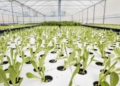
In January 2020 Thulani* looked like a very successful and entrepreneurial black farmer with a quality product and a niche high value market. He was growing micro-greens, herbs and edible flowers for upmarket restaurants, hotels and caterers around Johannesburg and Pretoria.
The produce gets picked in the morning and distributed in refrigerated delivery vans to be eaten fresh the same day. He paid 22 full-time farmworkers above the minimum wage, made UIF contributions for all of them, and had set up and contributed to their pension funds.

None of the workers had pension funds before working for Thulani.
There was also a piece of land where the workers grew their own vegetables; using their skills to produce for their own consumption.
Thulani said he believed in ensuring reasonable pay and conditions for the workers and that they deserved it. These workers have high-level skills, which are needed for the proper soil preparation, care for the plants, and harvesting that result in produce that can meet the requirements of the best restaurants.
Battle for survival
Thulani bought the 40 hectare farm, about an hour’s drive outside Johannesburg, in 2018. The farm purchase, including all the equipment, had been financed through partnering with a black-owned investment company and getting a commercial bank loan.
No assistance was received from the government, but with sales of more than R300 000 per month, Thulani could meet the loan repayments and cover the other costs with a reasonable profit left over.

He also liked the farm lifestyle – having space out of the city – for himself and his family.
When I spoke to Thulani in January 2021, in the middle of the second wave of the coronavirus pandemic in South Africa, the first thing he said was, “I don’t know how long I will survive.”
While we frequently hear about the disastrous impacts of the Covid-19 regulations on the restaurant and hotel industry, far less has been said about the impact on the farmers who supply that industry.
With the hard lockdown in March 2020, which included the closure of all restaurants and hotels and the end of events, such as conferences and large weddings, Thulani’s market disappeared completely. Suddenly, zero sales.
He only started to get orders again in July after the lockdown restrictions were relaxed and some of his clients resumed operations. But, the restaurant and hotels continued to have far less business than before Covid-19.
Retaining market share
A particular blow was experienced due to the stopping of large events they used to cater for – such as meetings, conferences and weddings.
By November 2020, Thulani was still only generating about 50% of his pre-Covid-19 sales.
The costs, however, remained as he kept on his workers and tried to maintain operations.
Business improved in late November and December with restaurants open and alcohol being sold again, although large events were still not allowed. Thulani estimated that in December he briefly got back to about 75% of his pre-Covid sales.
The adjusted level three lockdown, including the new alcohol ban, had turned this recovery around though, with sales in January less than half of what he needed.
ALSO READ: Battling Covid-19 in a rural community
Now, he explained, we are in “this awkward situation where we are having to have our vehicles on the road for very little deliveries. You know, we are sort of just trying to keep going so we don’t lose contact with our clients. The problem with a situation like this is they find somewhere else to buy, then we are in trouble.”
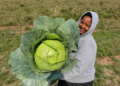
One strategy Thulani employed to keep farming was to start producing low-cost, mature green crops, such as spinach and cabbage, for sale to street traders. This did bring some income, but it is a low-margin business that also brought new challenges.

The street traders did not understand Thulani’s system of placing orders in advance. In one incident, traders fought over the produce when some who had not ordered also wanted to buy.
Another time a driver was detained and threatened when traders wanted more produce than he had.
Nevertheless, Thulani continues to supply this market and generates some income from it.
The other predicament that he faces in this regard is that if he plants more for the street trader market, he will not have the land and space to produce for the more lucrative restaurant and hotel market if that expands again.
Crop diversification
In addition to the drastic cuts in demand from his target market, Thulani has not been able to increase his prices due to his clients being under economic pressure and competition from other farmers who are also desperate to survive.
At the same time input costs have risen. This includes farm production inputs, but also other necessities, such as packaging materials that are imported.
Thulani faces many of the typical challenges that farmers experience when trying to deal with a fast-changing market.
Changing what you grow is not straightforward or quick. He has considered shifting to growing garlic and ginger – we have all heard about the increasing demand and prices for these – but he and his workers don’t have experience growing these crops.

They will have to prepare the soil to suit the new plants and experiment with production in the environment of that particular farm.
He is starting with garlic, but the other problem is that it takes three months to mature. Ginger needs at least eight months before it can be harvested and older plants give better quality.
By that time the market might be flooded with ginger and the current high-prices could drop steeply. These are also months that Thulani might not have.
“The point is, really every day we are thinking about various options… We sort of said, ‘Let’s give it another month, so that is how we are operating now, just give it one more month to see what happens,’” he said.
As the farm has been running at a loss for months, the future is precarious.
Thulani survives, for now, on a loan arrangement with his business partners, but says, “I don’t think it is going to be for long.” So far, he has kept on all the workers, but he says, “It is a thing that is top of mind at the moment. What’s going to happen? Something is going to have to give at some point.”
Support for farmers
Aside from any humanitarian reasons for keeping on the workers, Thulani knows that he needs their skills, or will, if demand for his crops picks up again, as he hopes it will.
Despite being well informed and having access to the internet and other means of communication, the only Covid-19 relief Thulani received was a limited amount of UIF for four months. The amounts varying, with no explanation, from R4 000 one month to a high of just over R30 000 (still less than a third of his wage bill) and then down to less than R6 000 again.

Now they seem to have stopped paying completely. Thulani has tried to access assistance. “We fought, we tried to get things sorted out,” he said, but to no avail.
There are farmers who have not been as badly affected by Covid-19, depending on their crops and markets, but Thulani is not alone in experiencing serious challenges and frustrations with the lack of support.
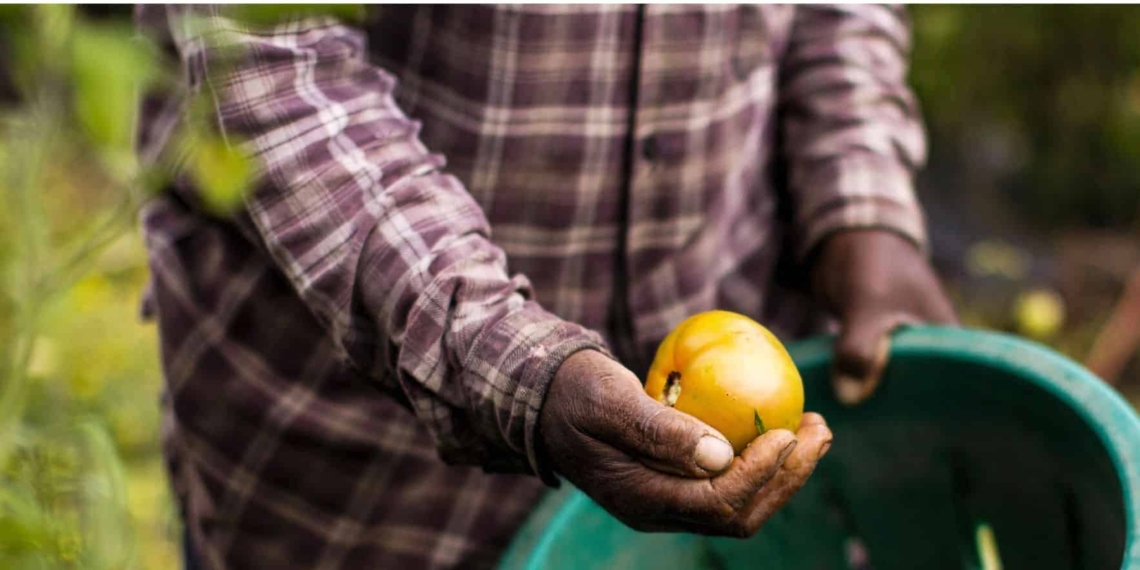
Another black farmer I visited in January said the demand for produce had dropped. As a result she had ended up reducing her regular workforce from over 20 people to just seven. She had applied for and received some UIF payments, but only in July 2020 and that was for the first two months of lockdown, March and April.
She applied for other Covid-19 funds and explained that “there was time I made applications, spent almost a month making applications. I applied at NYDA, Small Business Development, DTI.
“There was this general one from the premier’s office, the department of agriculture. There were so many funds. We submitted applications. You know, the follow-ups and the requirements that they want. Oh my God, you get tired. I better go and work for myself.”
There is hope…
Thulani also perseveres despite the lack of support. He reported that sales started to slowly pick up after the relaxation of lockdown restrictions on 1 February 2021, but they have not yet gone back to the levels achieved in November and December.
Typical of the uncertainties of farming, heavy rain damaged some of his crops and slowed planting just as the market started to improve. Thulani does see some light at the end of the tunnel, but he notes that planning large conferences and events like weddings takes a long time. He doesn’t think that business will be back to normal for at least another year.
ALSO READ: ‘A school of refuge amid Covid-19’
One of the biggest problems for Thulani and other farmers is the continued uncertainty, which makes the planning they have to do almost impossible.
Will we face a third wave of Covid-19? How will the government respond and when? What will the impact on the market be? Will the vaccines really be widely rolled out?
Experience has sadly shown that despite all the talk of relief packages and billions of Rands, there is very little, if any support, forthcoming for farmers and their workers who are negatively affected. It would be just one more tragedy of the Covid-19 pandemic if otherwise successful black farmers go out of business.
For now, Thulani says, “What I do every morning is just to wake up and be hopeful.”
*The farmer’s real name is withheld to protect his identity.