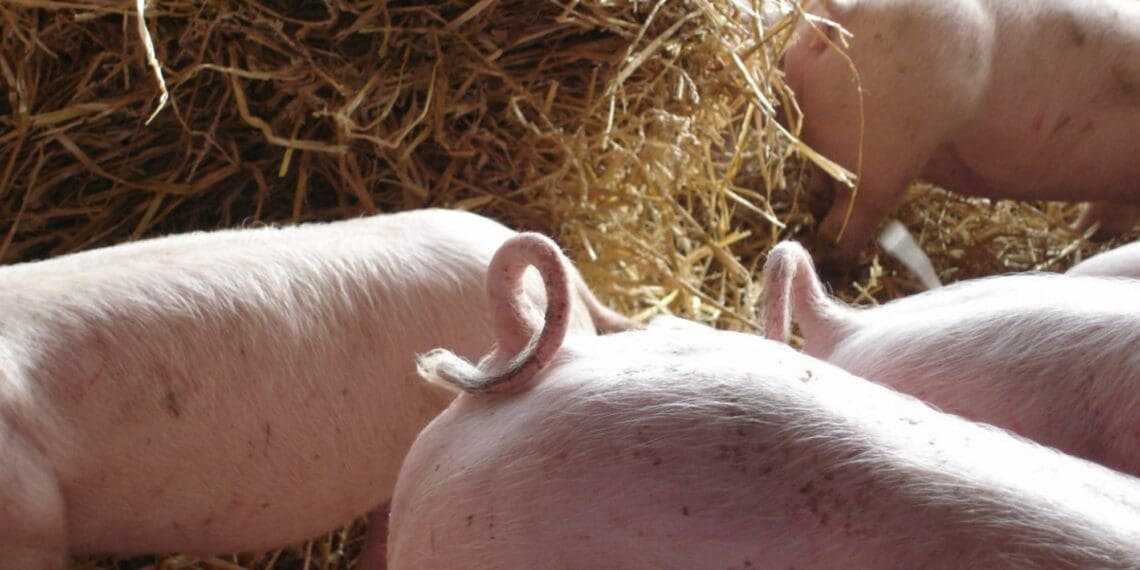
If a pig draws blood while tail biting, the natural attraction of pigs to the smell and taste of blood can result in a chain reaction among the pigs in the group and consequently tail biting can spread, writes Retha Gericke, a technical advisor at Meadow Feeds.

Pigs are naturally curious animals that tend to use their mouths to explore their environment and objects of interest. While this behaviour is harmless if properly managed, it can also manifest into the behavioural problem of tail biting.
Tail biting can be sporadic or chronic and is a behavioural problem most commonly found in growing pigs. It can result in large economic losses due to medical treatment expenses, secondary infections, loss in weight gain, carcass condemnations, and the death of pigs.
Tail-biting triggers
While natural behaviour is a contributor, tail biting can also be triggered by numerous environmental, management or nutritional factors, such as the following:
- Temperature: Pigs are very sensitive to heat stress as they are unable to perspire. Biting can be triggered by heat-stressed pigs and is more commonly found during frequent daily temperature variations rather than during consistent temperatures outside the pigs’ thermoneutral zone.
- Ventilation: Good air flow and quality are important to keep pigs stress-free. Increased humidity and drafts from incorrect ventilation, increase the occurrence of tail biting.
- Lighting: Lights that are too dim, or too bright or pigs which are subjected to less than six hours of darkness per day can cause aggression and tail biting.
- Stocking density: When pigs have to compete for feed and drinking space, it can result in aggression, fighting and consequently increased tail and ear biting. Mixing pigs with poor body weight uniformity within the group may increase tail-biting occurrence.
- Nutrition: When pigs are challenged by a feed shortage, abrupt changes in diets or inadequate access to quality water and feed, they are more prone to tail biting. Feed quality concerns that may contribute to tail biting include inadequate salt and mineral levels, the presence of mycotoxins or nutrient deficiencies in the diet.
- Tail length: Pigs that haven’t been tail-docked are more susceptible to tail biting whilst also encouraging the behaviour to manifest. Tail-docking to the correct tail length is a successful preventative measure.
Prevention and treatment
With tail biting recognised as a global welfare concern for commercial pig production, prevention and fast intervention are seen to be vitally important.
- Rooting material: Providing pigs with alternative objects to chew and play with, has been proven to be a successful intervention strategy with tail-biting challenges that rely on the naturally curious behaviour of pigs as a distraction.
Examples of rooting material include chains, lick blocks, ropes, garden hoses, tyres and swinging water drinkers. The choice of rooting material is dependent on how well the pigs respond to it, and it must be able to withstand frequent use, remain relatively clean and be available to all pigs in the pen.
- Proper tail-docking: Ensure pigs have a uniform and correct tail length.
- Isolation: Inspect pigs a minimum of twice daily to timeously intervene and treat pigs. Move the pigs that are biting tails to a separate pen to prevent the behaviour from spreading. It is not always the larger more aggressive pigs that are the tail biters. Injured pigs should be moved to a hospital pen and treated.
- Feed: Ensure the provision of a constant, reliable and well-balanced feed supply that meets the recommendations of the pig breeding company at all times. Meadow Feeds has a wide variety of high-quality pig feed products. Each batch of feed is measured to ensure that the stringent quality standards are consistently met.
Minimising economic losses and improving pig welfare by efficiently preventing, managing and treating tail biting is key to a successful and profitable pig farming enterprise.
- Retha Gericke (MSc. Agric. Animal Science) is a technical advisor at Meadow Feeds. For more information, contact her at Retha.Gericke@meadownatal.co.za.
READ NEXT: Get the best out of your pigs’ genetics
Sign up for Farmer’s Inside Track: Join our exclusive platform for new entrants into farming and agri-business, with newsletters and podcasts.