Saturday, October 24, 2026
SUBSCRIBE
22 GLOBAL MEDIA AWARDS
Food For Mzansi
  • News
  • Changemakers
  • Lifestyle
  • Farmer’s Inside Track
  • Food for Thought
No Result
View All Result
  • News
  • Changemakers
  • Lifestyle
  • Farmer’s Inside Track
  • Food for Thought
No Result
View All Result
Food For Mzansi
No Result
View All Result
in News

Tradition meets science: Mzansi embraces edible grasshoppers

In rural Limpopo, generations uphold culinary heritage by savouring edible grasshoppers, fostering a blend of traditional wisdom and scientific discovery. Researchers now collaborated with locals, uncovering 36 genetic species

by Ivor Price
14th October 2023
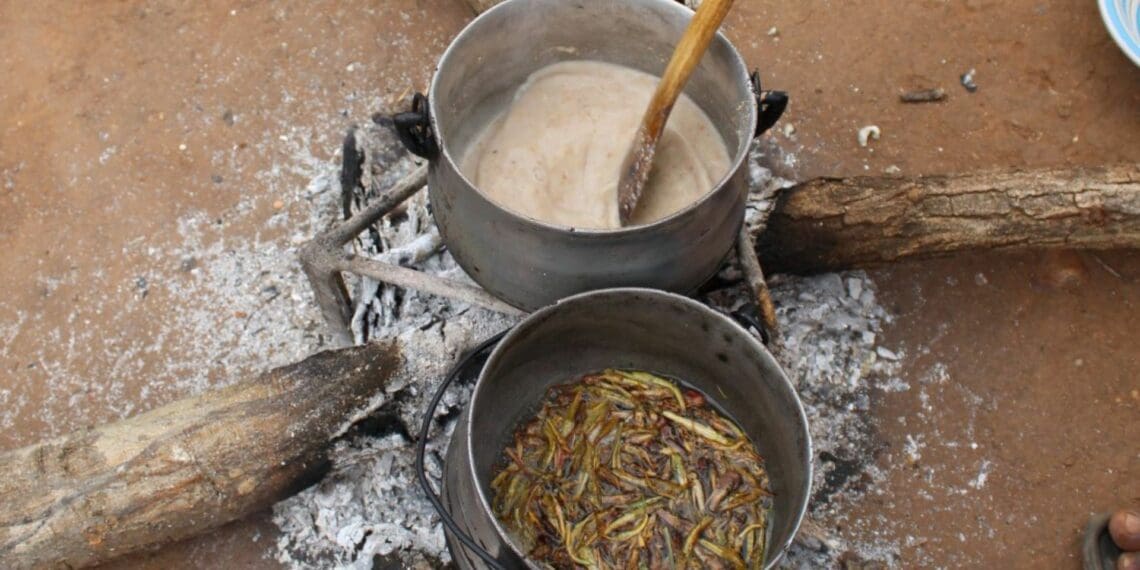
Researchers from Stellenbosch University and the University of Limpopo collaborated with community members, unveiling a diverse array of 36 grasshopper species, merging ancient knowledge with cutting-edge genetic insights. Photo: Supplied/Stellenbosch University

Researchers from Stellenbosch University and the University of Limpopo collaborated with community members, unveiling a diverse array of 36 grasshopper species, merging ancient knowledge with cutting-edge genetic insights. Photo: Supplied/Stellenbosch University

Share on FacebookShare on TwitterShare on WhatsApp

In the rural heartlands of Limpopo, tradition and science have joined forces to unlock the potential of a unique culinary delight: edible grasshoppers. For generations, residents of these rural communities have relished these insects as a cherished part of their diet and cultural heritage, preparing them in various ways, including frying them as a crispy snack or simmering them with tomato and onions to accompany pap, a local staple.

What sets these communities apart is their intimate knowledge of local grasshopper species, each identified by distinct vernacular names specific to the community’s language. This indigenous wisdom, coupled with scientific expertise, has enabled researchers from Stellenbosch University, the University of Limpopo, and the University of Strasbourg in France to delve into the world of edible grasshoppers.

The study, published recently in the international journal Biodiversity and Conservation, is ground-breaking. Researchers collaborated closely with community members, who not only assisted in collecting grasshopper specimens but also shared their culinary traditions.

By combining this traditional knowledge with DNA barcoding, the researchers unveiled a staggering diversity of 36 genetic species, including seven previously undocumented grasshopper species consumed in Limpopo.
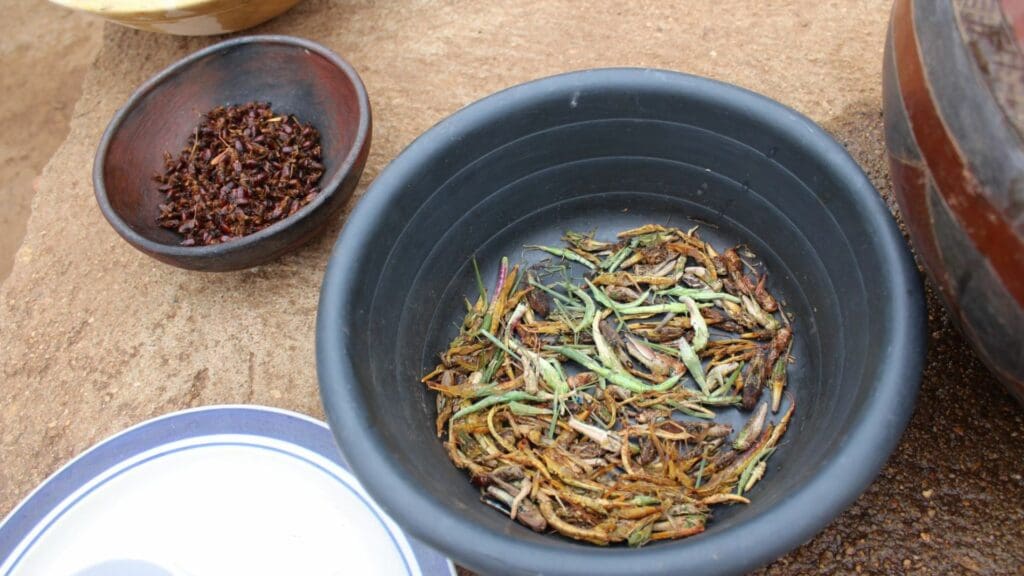
In rural Limpopo, generations uphold culinary heritage by savouring edible grasshoppers, fostering a blend of traditional wisdom and scientific discovery. Researchers now collaborated with locals, uncovering 36 genetic species. Photo: Supplied/Stellenbosch University

Preserving heritage, nurturing innovation

“Traditional knowledge has been essential in this study,” said Dr Barbara van Asch, one of the researchers involved in the project. “The expertise of community members in identifying grasshoppers was impressive, and many of the ethno-species matched with the genetic data.”

This collaborative effort is crucial in a region where edible grasshoppers play a significant role in the local diet. What makes this research particularly important is its potential to bridge the gap between tradition and modern commercial practices. While edible insects have been farmed at a large scale in Asia, South Africa has lagged behind due to a lack of comprehensive knowledge about the local grasshopper species.

“Being an already well-known food resource, commercial exploitation of grasshoppers could assist in addressing food insecurity, elevating traditional food cultures, and promoting economic development in South Africa,” explained the researchers. “However, the challenge lies in linking nutritional properties and biological characteristics with specific species names.”

This study represents a pioneering step towards accurate documentation of South Africa’s edible grasshoppers. The utilisation of DNA barcodes not only identified distinct genetic species but also linked them to their vernacular names, preserving invaluable cultural and biological diversity for future generations.

Moreover, the findings emphasise the importance of preserving local knowledge in the face of increasing urbanisation and modernisation.

READ NEXT: Bird flu: It’s safe for consumers to eat chicken, eggs

Ivor Price

Ivor Price is a multi-award-winning journalist and co-founder of Food For Mzansi.

Godongwana unveils fuel relief and R10 billion El Niño buffer
News

Godongwana unveils fuel relief and R10 billion El Niño buffer

by Tiisetso Manoko
21st October 2026

Finance minister Enoch Godongwana has announced key measures to buffer South Africa’s agricultural sector against global oil shocks and El...

Read moreDetails

Smart irrigation: Precision tools boost crop yields while cutting costs

21st October 2026
Record farm exports overshadowed by growing drought disaster

By-laws vs. livelihoods: Barriers facing WC smallholder farmers

21st October 2026

CPAs urged to register for free governance support toolkits

21st October 2026

Potatoes and tomatoes plunge while avocado prices soar

20th October 2026

FNB puts relationships at the heart of commercial farming

Agda conference to tackle finance, market access and agri growth

Eskort announces Herman Janse van Rensburg as group CEO

Stop the rot: Four steps to slash post-harvest losses

Potatoes and tomatoes plunge while avocado prices soar

Join Food For Mzansi's WhatsApp channel for the latest updates!

JOIN NOW!
Next Post
Climate change: 'Smart farming is the only way to go' – farmers

Climate change: ‘Smart farming is the only way to go’ – farmers

THE NEW FACE OF SOUTH AFRICAN AGRICULTURE

With 21 global awards in the first six years of its existence, Food For Mzansi is much more than an agriculture publication. It is a movement, unashamedly saluting the unsung heroes of South African agriculture. We believe in the power of agriculture to promote nation building and social cohesion by telling stories that are often overlooked by broader society.

Agda conference: Why giving farmers land isn’t enough

Limpopo teen farmer turns dream into growing poultry business

How to protect poultry from damaging sticktight flea infestations

Eskort announces Herman Janse van Rensburg as group CEO

Agda pushes for pathways to commercialise emerging farmers

Karoo sheep tallow finds new purpose in Mzansi beauty brand

  • Awards & Global Impact
  • Our Story
  • Contact Us
  • Cookie Policy
  • Privacy Policy
  • Copyright

Contact us
Office: +27 21 879 1824
News: info@foodformzansi.co.za
Advertising: sales@foodformzansi.co.za

Contact us
Office: +27 21 879 1824
News: info@foodformzansi.co.za
Advertising: sales@foodformzansi.co.za

  • Awards & Global Impact
  • Our Story
  • Contact Us
  • Cookie Policy
  • Privacy Policy
  • Copyright

Chat Options

About this assistant

This feature generates automated answers summarised from Food For Mzansi articles. By using it, you are interacting with an AI system (provided by Google), not a human. AI can make mistakes. Please refer to the source articles for verification and citation purposes.

Our staff do not check or moderate Lerato’s answers in advance, but may review some later. Our journalists continue to write and edit all the articles Lerato uses as sources.

To estimate unique and returning web users, we store a random browser ID in this browser. WhatsApp users are counted by phone number. The same person using both channels may be counted twice.

I'm Lerato, your AI assistant!
No Result
View All Result
  • News
  • Changemakers
  • Lifestyle
  • Farmer’s Inside Track
  • Food for Thought

Copyright © 2026 Food for Mzansi