Environmental scientist and entrepreneur Samkelisiwe Chunda is turning climate challenges into commercial opportunities through her enterprise, Sibayeni Metrofarming.
Managing 25 hectares of climate-resilient crops, hydroponics, and her proprietary PEAR-H2O™️ hydrogel technology, she bridges high-level research with sustainable agriculture. This vision secured her third place at the Agricultural Development Agency (Agda) awards.
Entrepreneurial roots took hold early for Chunda. Growing up in Sibayeni, a village in the Nkomazi Municipality of Mpumalanga, her introduction to enterprise began at age 11 behind the counter of her grandparents, Nelly and Dan Marshall’s local shops.
Her early education began at Mbazima Primary School, followed by Siboshwa Primary School, before she completed her high school studies at Mambane Secondary School. While her mother, Ruth Chunda, worked as an agricultural extension officer, exposing Chunda to the broader sector, it was her early hands-on business experience alongside her family that ignited her commercial mindset.
“That experience developed my entrepreneurial spirit and gave me an early appreciation for business,” Chunda reflects.
Related stories
- Seedlings to software: Mofokeng’s path to commercial success
- Eastern Cape farmer bets on poultry and grows a diverse business
- Palesa proves small-scale farming can feed communities, retailers
- Rising from storm loss: Sinethemba Gebashe’s egg triumph
Laying a solid foundation in science
Driven to understand the mechanics of natural systems, Chunda built an extensive academic foundation. She earned a BSc and honours in environmental science, later securing a project management diploma in 2007, an MBA in climate-smart agriculture, and progressing toward a PhD focusing on the economic viability of agrivoltaics in South Africa.
Her professional career started as a laboratory assistant at the University of Zululand, followed by a position at the South African Ports Authority in Richards Bay managing alien plant species.
She later served as an information officer at the South African National Biodiversity Institute (Sanbi) and worked as an agricultural scientist at the Gauteng department of agriculture and rural development (GDARD). Between 2006 and 2016, she served as an environmental officer for the City of Tshwane.
Yet, as she managed public-sector agricultural initiatives, Chunda saw unaddressed gaps and business opportunities in the field.
Jumping ship: Calculated risks pay off
“My background in environmental science, agriculture, and business has shaped my approach to farming and innovation,” she explains.
“I eventually realised that I did not only want to contribute to agriculture through government programmes; I wanted to become an entrepreneur and build something myself. That was when I decided to jump ship and pursue farming as a business.”
Chunda began her agricultural venture on family land in 2013, initially self-funding operations using her salary. When she officially stepped away from formal employment to focus on her business full-time, she reinvested her pension directly into infrastructure and expansion.
“It was a journey of taking calculated risks and investing what I had earned over the years,” she says. “I did not start with significant external funding or fully established commercial farming infrastructure. I started with the resources available to me, learned through experience, and gradually expanded.”
In 2018, she formally registered the business as Sustainable AgriTech Systems, trading as Sibayeni Metrofarming. Starting on approximately one hectare with greenhouse tunnels, she initially cultivated spinach, lettuce, tomatoes, mint, and herbs, later introducing rabbit farming.
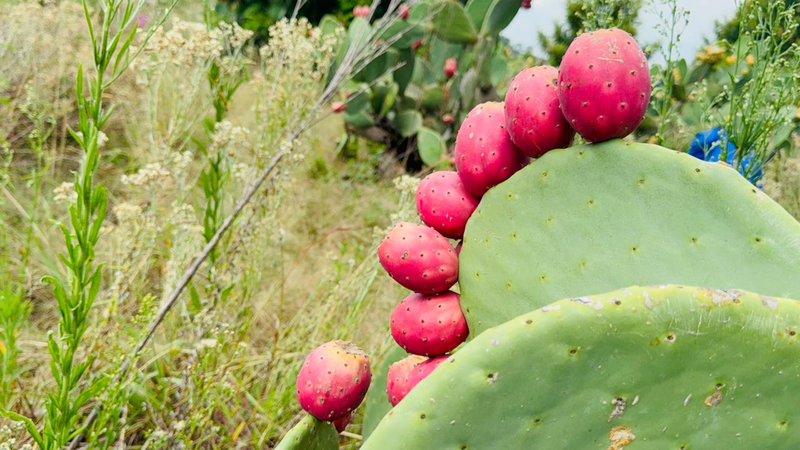
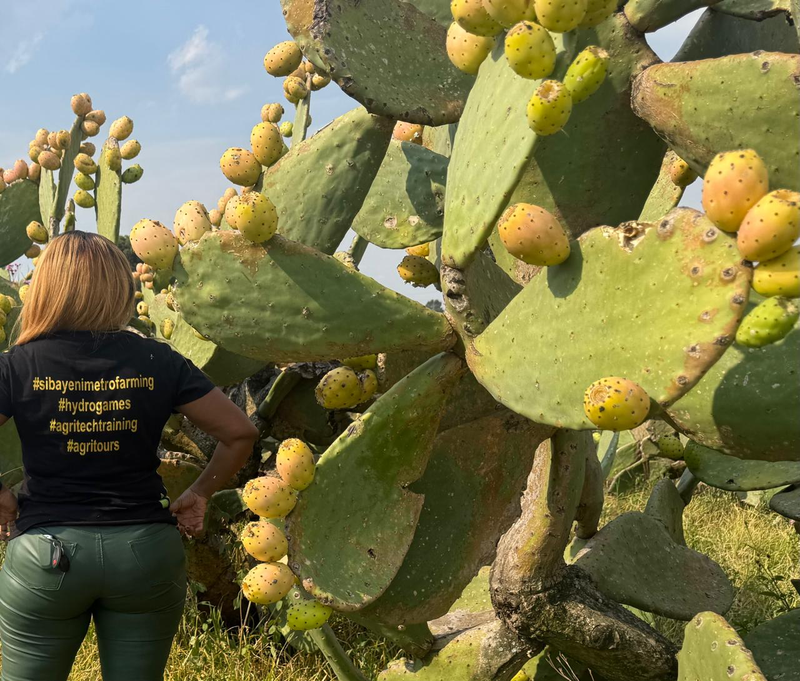
Today, Sibayeni Metrofarming spans roughly 25 hectares, with 16 hectares dedicated to prickly pear cultivation. The enterprise has expanded into indigenous fruits, beekeeping, hydroponics, and rabbit production, while actively researching integrated value chains in renewable energy, water-smart agricultural technologies, and food processing.
Value addition and technical innovation
Sibayeni Metrofarming focuses on extracting maximum value across the agricultural supply chain. Beyond supplying fresh produce to major distribution points, including Food Lovers Market, the Johannesburg International Fresh Produce Market, and the Tshwane Market, the business caters to industrial, cosmetic, and medicinal buyers.
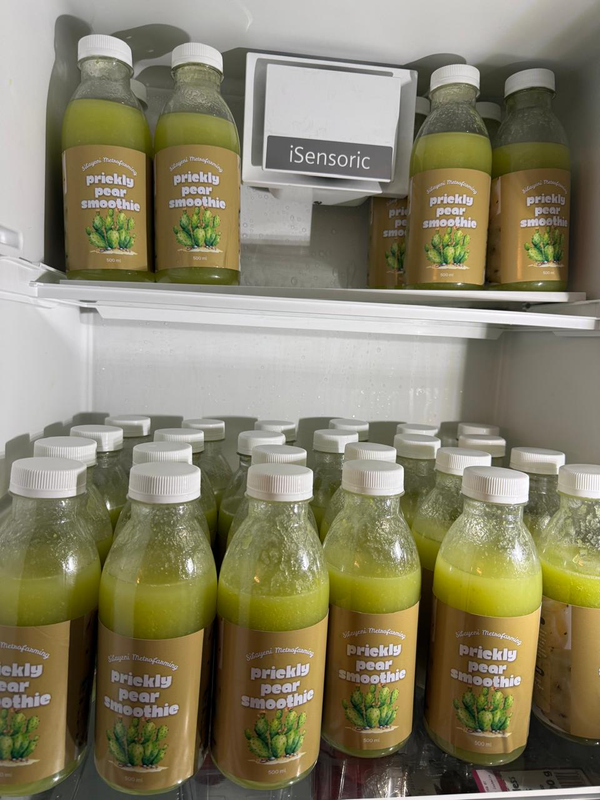
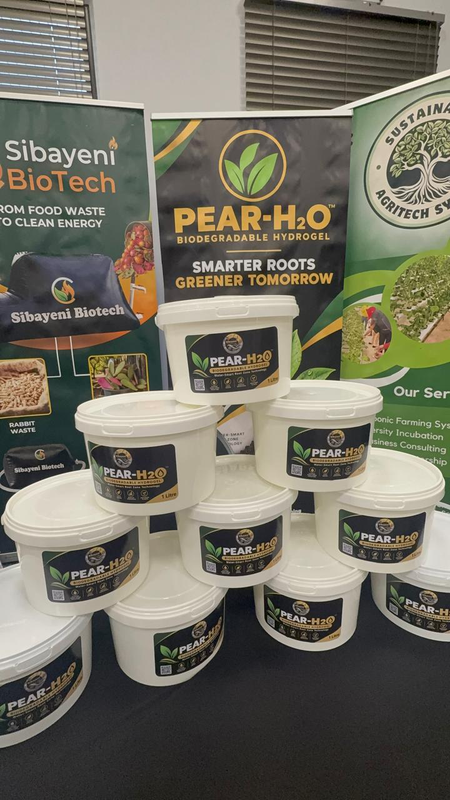
Product development efforts include fresh prickly pears, juices, teas, seed oils, and a proprietary biodegradable hydrogel technology, PEAR-H2O™️.
“Our focus is on demonstrating how agriculture can contribute to food production, water conservation, renewable energy, and agro-processing,” Chunda explains. “We are not only producing fresh prickly pears; we are exploring ways to unlock the value of the entire plant.”
Her drive for innovation led her to national recognition through Agda. “I saw the call for applications a day before the closing date on LinkedIn, and I decided to give it a shot,” Chunda recalls.
Her pitch stood out among top emerging entrepreneurs nationwide. Being recognised through the Agda awards proved to be an important milestone, securing third position overall alongside a R24 000 prize package.
“However, my greatest achievement is seeing the potential of agriculture to create opportunities, solve real challenges, and inspire others, particularly young people and women.”
Overcoming operational hurdles and looking ahead
Navigating commercial agriculture requires managing capital requirements, high infrastructure costs, specialised processing equipment, and unpredictable weather patterns. Sibayeni Metrofarming addresses these headwinds through climate-resilient crop selection, strategic partnerships, and water-efficient practices.
Currently supporting 16 staff members – five permanent employees and 11 seasonal workers – the enterprise serves as an employment engine for local youth and agricultural scientists as operations grow.
Looking forward, Chunda aims to establish a fully operational processing facility, scale PEAR-H2O™️ production, advance agrivoltaic systems, and position Sibayeni Metrofarming as a demonstration centre for emerging farmers.
Her advice for the next generation of agricultural leaders emphasises practical execution and strategic vision: “Start with what you have, and do not wait for perfect conditions. Farming is a business, and aspiring farmers must understand their markets, production costs, and the value of what they are producing. Embrace innovation, technology, and value addition.”
READ NEXT: Food For Mzansi celebrates 9 years with new #FFM magazine